Toronto’s Best West End Hard Lofts: 15 Iconic Brick and Beam Buildings Ranked by 2026 Price Per Square Foot
Not all lofts are created equal. In Toronto, the word “loft” gets used generously. Some properties earn the label because they have a brick accent wall and an industrial light fixture. Others are the real thing. They have height, history, structure, and presence.
If Willy Wonka handed out golden tickets for “exposed brick,” half the city would qualify for this list.

But real Toronto hard lofts are not decorative. They are structural. They were factories, warehouses, workplaces. They have volume, grit, and history you cannot fake with staging. This article focuses on the latter.
Over the past 365 days, I analyzed the average price per square foot for 15 of Toronto’s most iconic west end hard loft buildings, using recent sold data from buildings in Queen West, Roncesvalles, The Junction, Liberty Village, Little Italy, and the Junction Triangle. I ranked them from highest to lowest to see what buyers are actually paying for authentic brick-and-beam loft living.
Before we get to the ranking of the best west-end loft buildings in Toronto, it’s important to explain how these properties were selected.
WHAT MAKES A TORONTO HARD LOFT ICONIC?
Every building on this list was intentionally selected based on three criteria that, in my opinion, define an icon hard loft.
1. TRUE LOFT PROPORTIONS
The space must have meaningful ceiling height, open layouts, and structural elements that create real volume. If a unit feels segmented, compressed, or overly condo-like, it did not qualify.
2. AUTHENTIC CONVERSION WITH HISTORY
If it was once a chocolate factory, a church, a glove factory, or a warehouse, that past should still be visible in the bones of the building. These spaces were not designed to imitate character. They earned it.
3. THE “IT” FACTOR
This is about uniqueness. It is the architectural detail that makes a building instantly recognizable in the market. It might be cathedral ceilings, spiral staircases, arched warehouse windows, massive timber beams, or unusual layouts. It is the aesthetic distinction that makes buyers remember the building long after they leave.
The result is a ranked list of Toronto’s best west end hard loft buildings based on what they have actually traded for per square foot over the past year. Some prices will confirm what you expected. Others may shift your perspective. Either way, the numbers tell a story.
2026 West End Hard Lofts: Price Per Square Foot Ranking
| Rank | Building | Address | Neighbourhood | Avg $/SqFt |
|---|---|---|---|---|
| 1 | Robert Watson Lofts | 363 Sorauren Ave | Roncesvalles | $1,299 |
| 2 | Candy Factory Lofts | 993 Queen St W | Queen West | $1,223 |
| 3 | Feather Factory Lofts | 2154 Dundas St W | Roncesvalles | $1,203 |
| 4 | Columbus Lofts | 1 Columbus Ave | Roncesvalles | $1,200+ |
| 5 | Chocolate Company Lofts | 955 Queen St W | Queen West | $1,150-1,200 |
| 6 | The Church Lofts | 701 Dovercourt Rd | Little Italy | $1,127 |
| 7 | Argyle Lofts | 183 Dovercourt Rd | Beaconsfield Village | $1,075 |
| 8 | Victoria Lofts | 152 Annette St | The Junction | $1,048 |
| 9 | Abbey Lofts | 384 Sunnyside Ave | Roncesvalles | $1,036 |
| 10 | Brock Lofts | 27 Brock Ave | Parkdale | $1,035 |
| 11 | Tip Top Lofts | 637 Lake Shore Blvd W | Fort York | $1,031 |
| 12 | Toy Factory Lofts | 43 Hanna Ave | Liberty Village | $1,017 |
| 13 | West 40 Lofts | 40 Westmoreland Ave | Dovercourt | $851 |
| 14 | Wallace Station Lofts | 371 Wallace Ave | Junction Triangle | $846 |
| 15 | Foundry Lofts | 1100 Lansdowne Ave | Junction Triangle | $756 |
ROBERT WATSON LOFTS
📍 363 & 369 Sorauren Ave
Neighbourhood: Roncesvalles
Avg $1,299 per square foot




BUILDING HISTORY & LOFT DETAILS
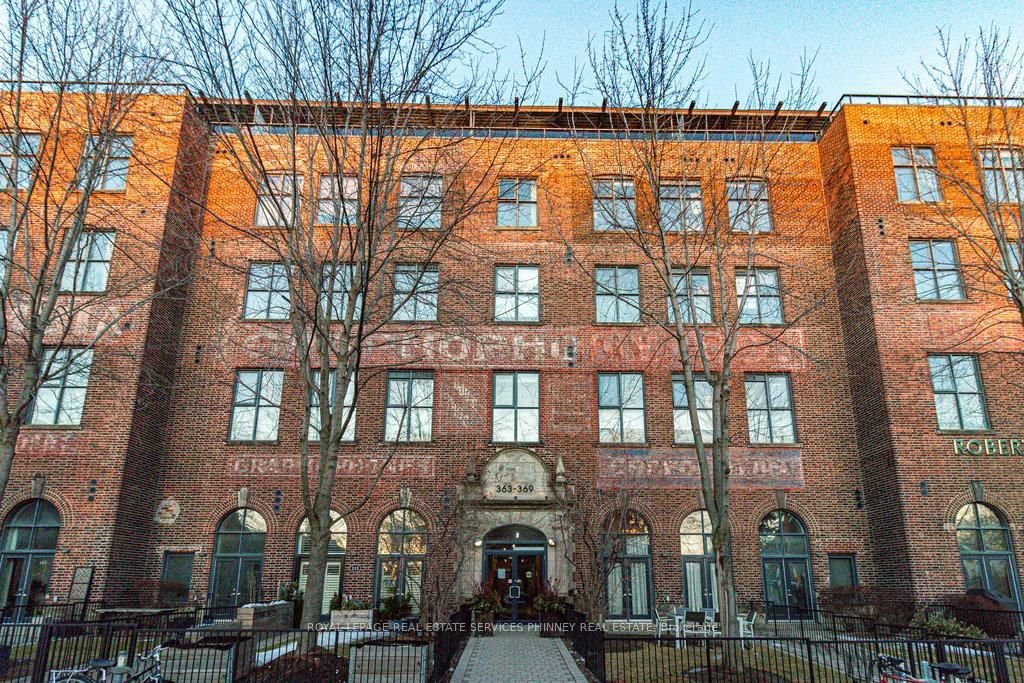
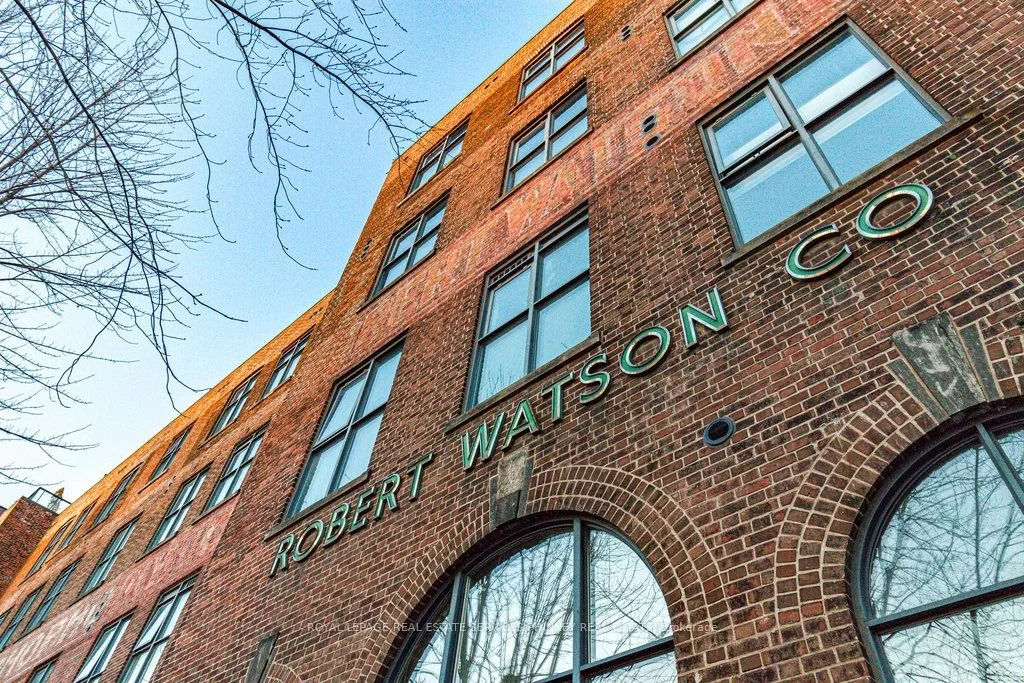
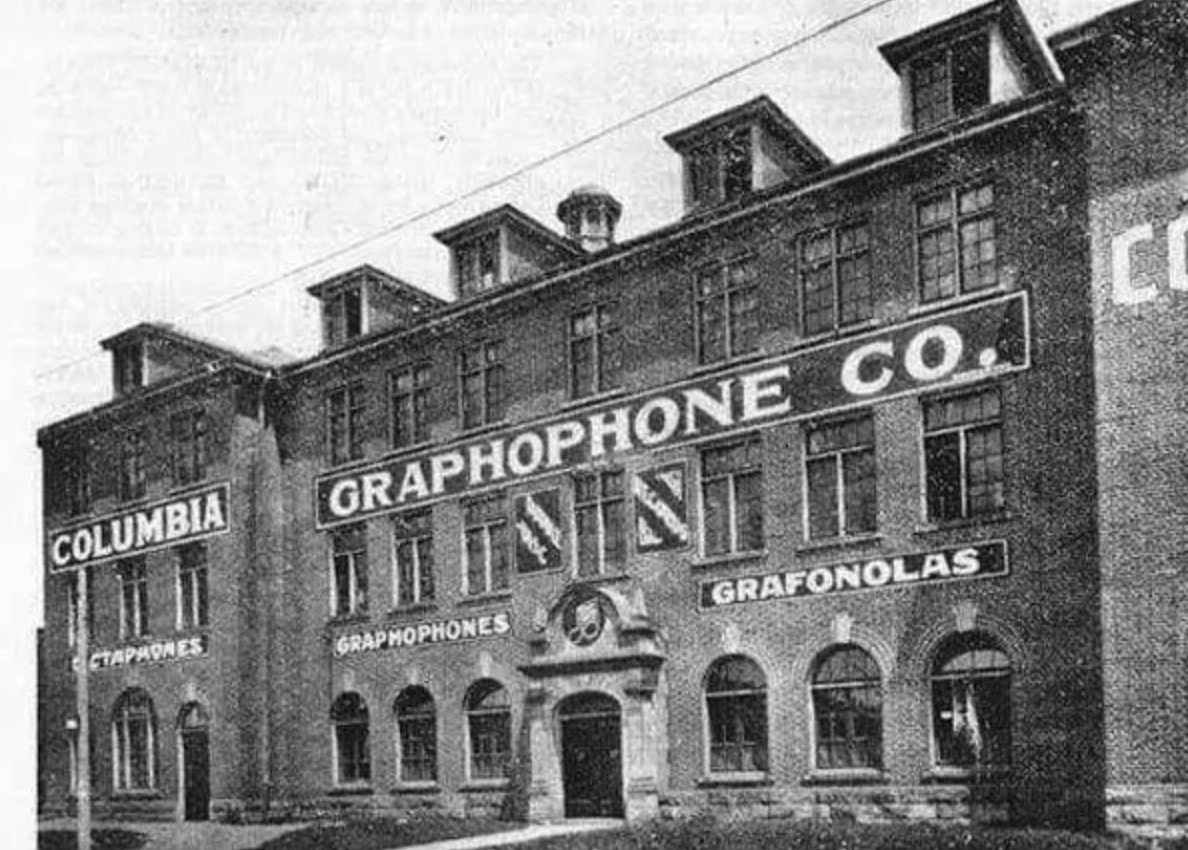
Robert Watson Lofts was originally built in 1912 by the Columbia Graphophone Company, a major early manufacturer of phonographs and recorded music equipment. This was not light industrial use. It was production tied to the early sound recording industry, which explains the strength and scale of the structure today.
The industrial origin matters because it defines the bones. Thick masonry walls, large warehouse windows, and heavy structural framing were built for manufacturing, not marketing. That integrity is what gives the building its authenticity.
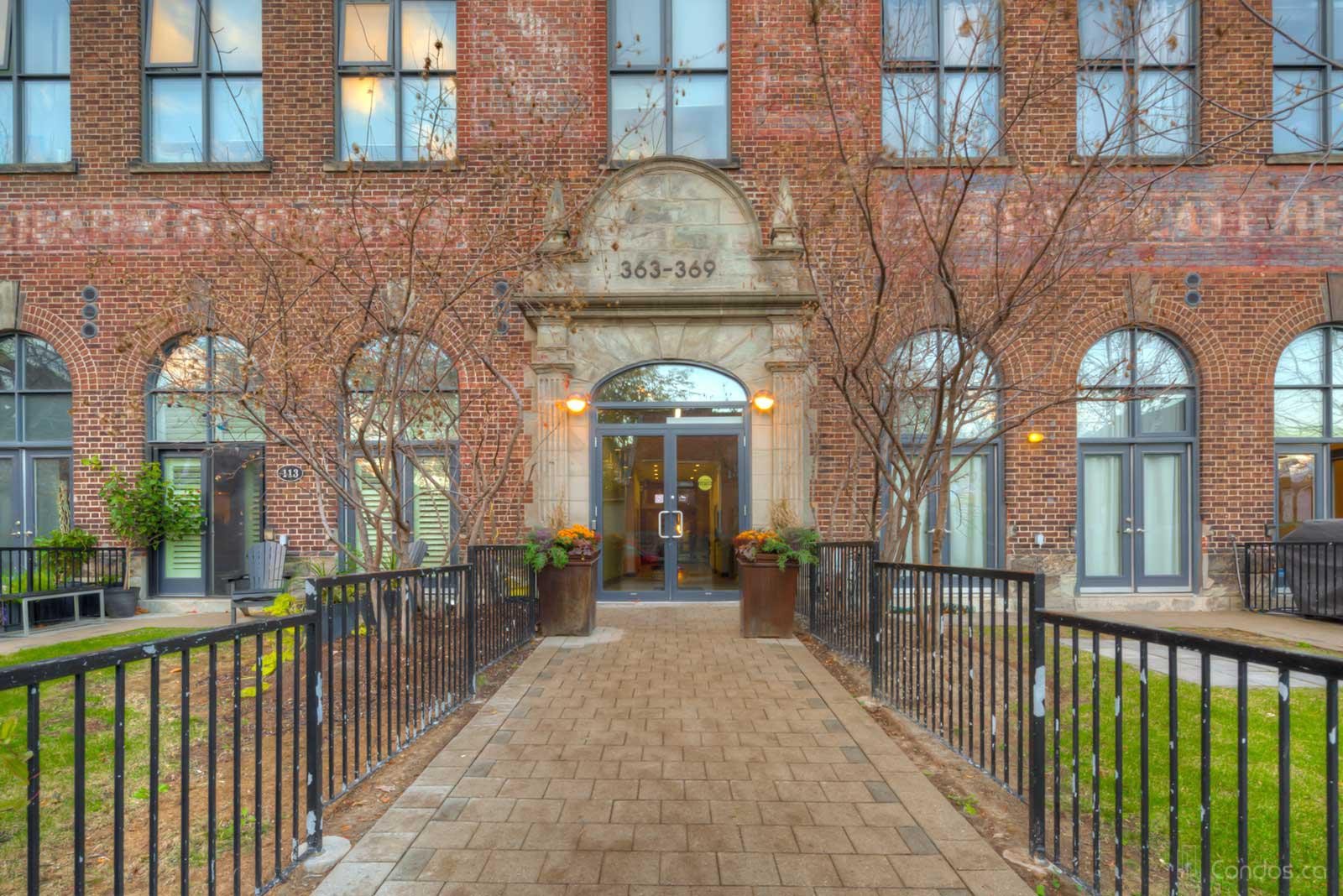
The 2007 conversion preserved that industrial identity rather than softening it. The original brick façade and warehouse window rhythm still set the tone from the street. Inside, the defining feature is proportion. It reads as a true hard loft without relying on trendy finishes to signal it. The structure does the work.
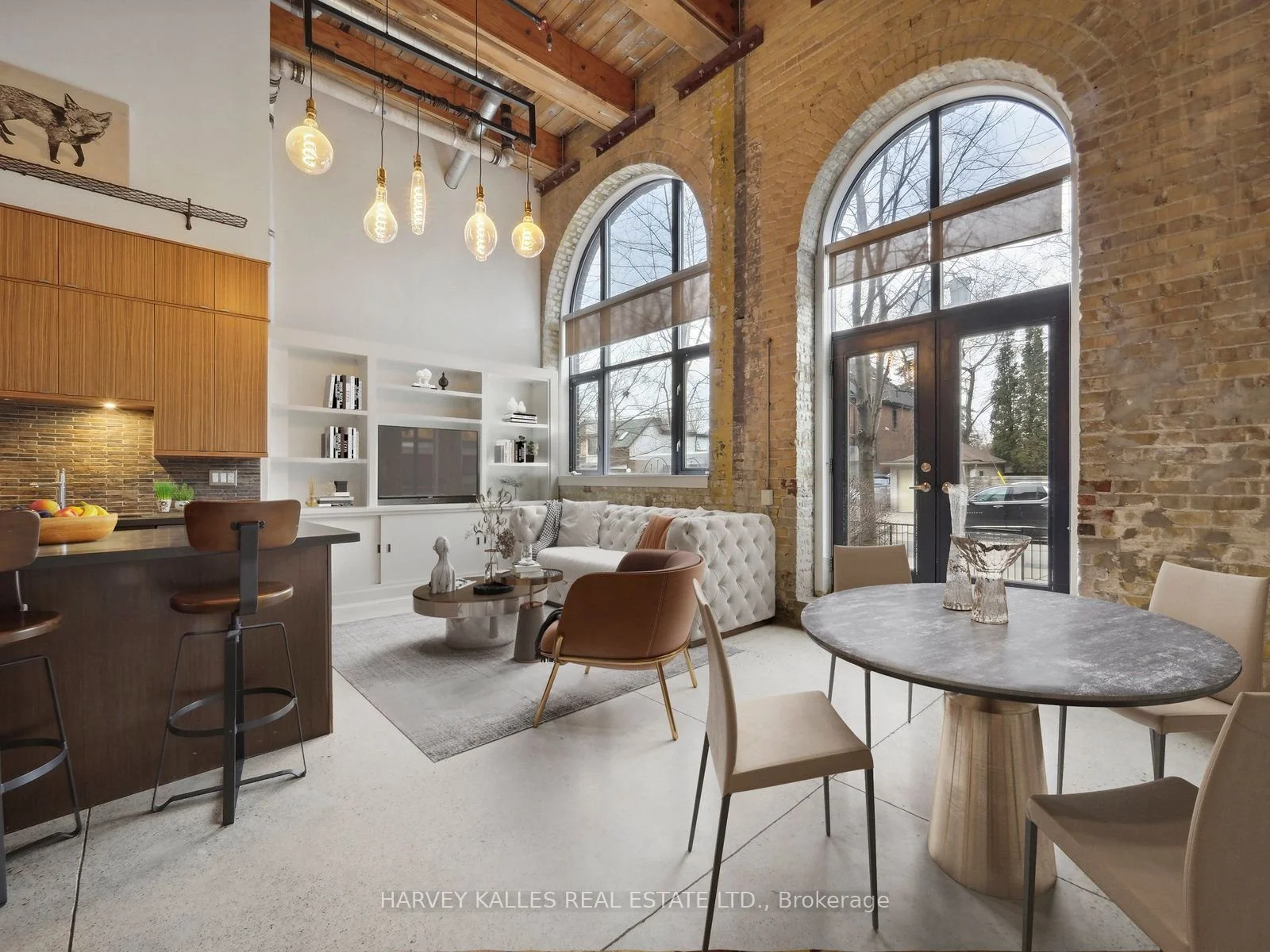
Architecturally, it checks the hard loft boxes in a way that feels effortless: arched warehouse windows, exposed brick, and ceiling heights generally ranging from 10 to 13 feet. Many suites are multi-level, which changes how the space lives. It is not just square footage. It is vertical volume and light penetration.
At $1,283 per square foot, the pricing reflects a rare overlap: strong west-end neighbourhood fundamentals, limited comparable hard loft supply, and an ownership base that tends to hold long term. That combination is usually where resale strength lives.
KEY FACT
//
KEY FACT //
Original Use: Columbia Graphophone Company Factory
Built: 1912
Converted: 2007
Storeys: 6
Units: 153
Ceiling Heights: 10–13 ft
Unit Size Range: 427 sqft - 1490 sqft
Market Personality:
Premium west-end hard loft with a strong community feel and consistent demand.
Buyer Profile:
Design-savvy Roncy loyalists, couples upgrading from condos, and downsizers who want character without chaos.
Architectural Details:
• Arched warehouse windows
• Polished concrete floors
• Mixture of modern & authentic finishes
• Exposed brick
Amenities:
• Gym
• Party/meeting room
• Guest suites
• Visitor parking
• Rooftop deck
• Landscaped courtyard
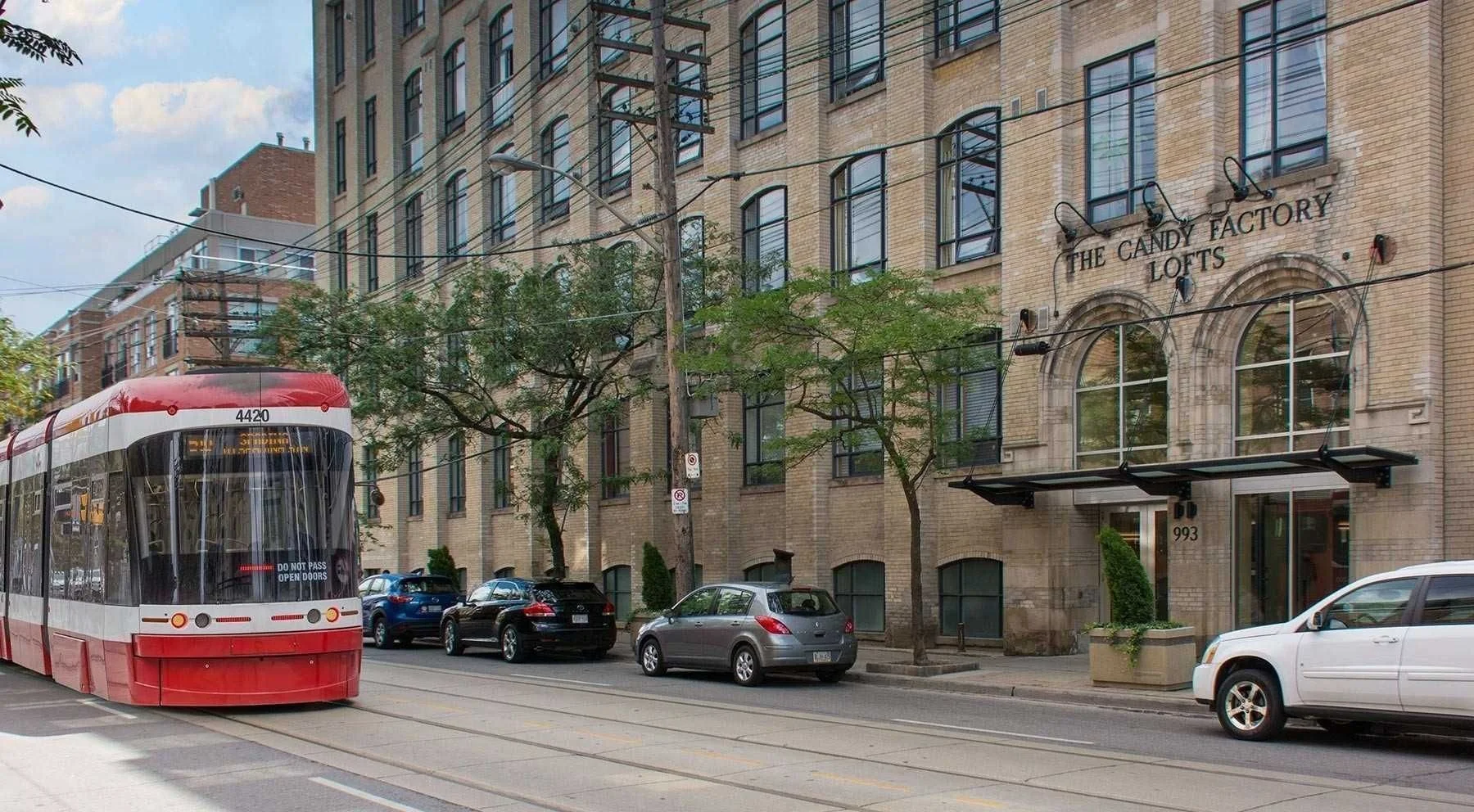
CANDY FACTORY LOFTS
📍 993 Queen St W
Neighbourhood: Queen West
Avg $1,223 per square foot





BUILDING HISTORY & LOFT DETAILS
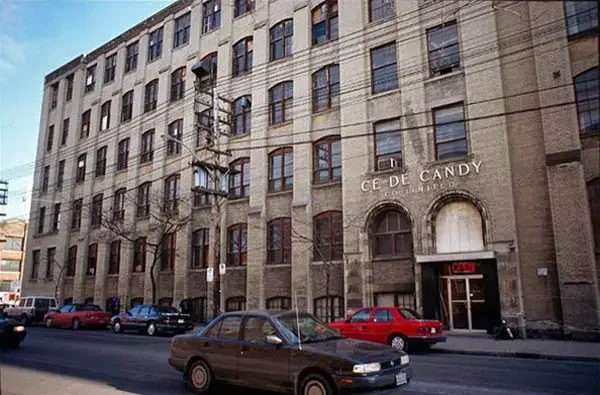
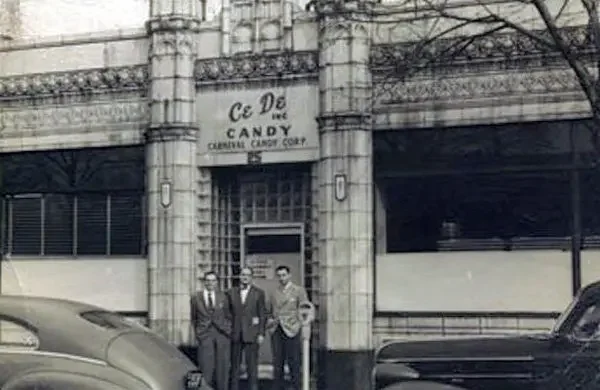
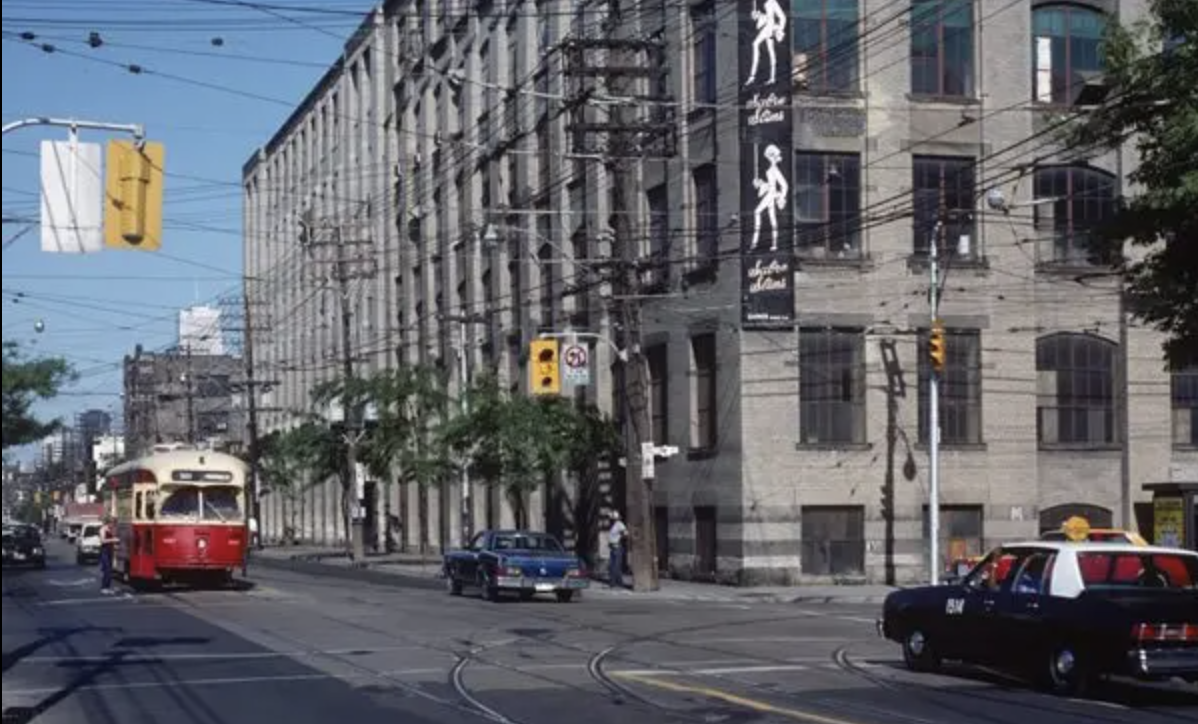
Candy Factory Lofts was originally built in 1907 and later became home to the Ce De Candy Company, the manufacturer behind Rockets candy. Long before Queen West became what it is today, this building functioned as a working industrial facility. That origin story matters, because the architecture was designed for production, not aesthetics.
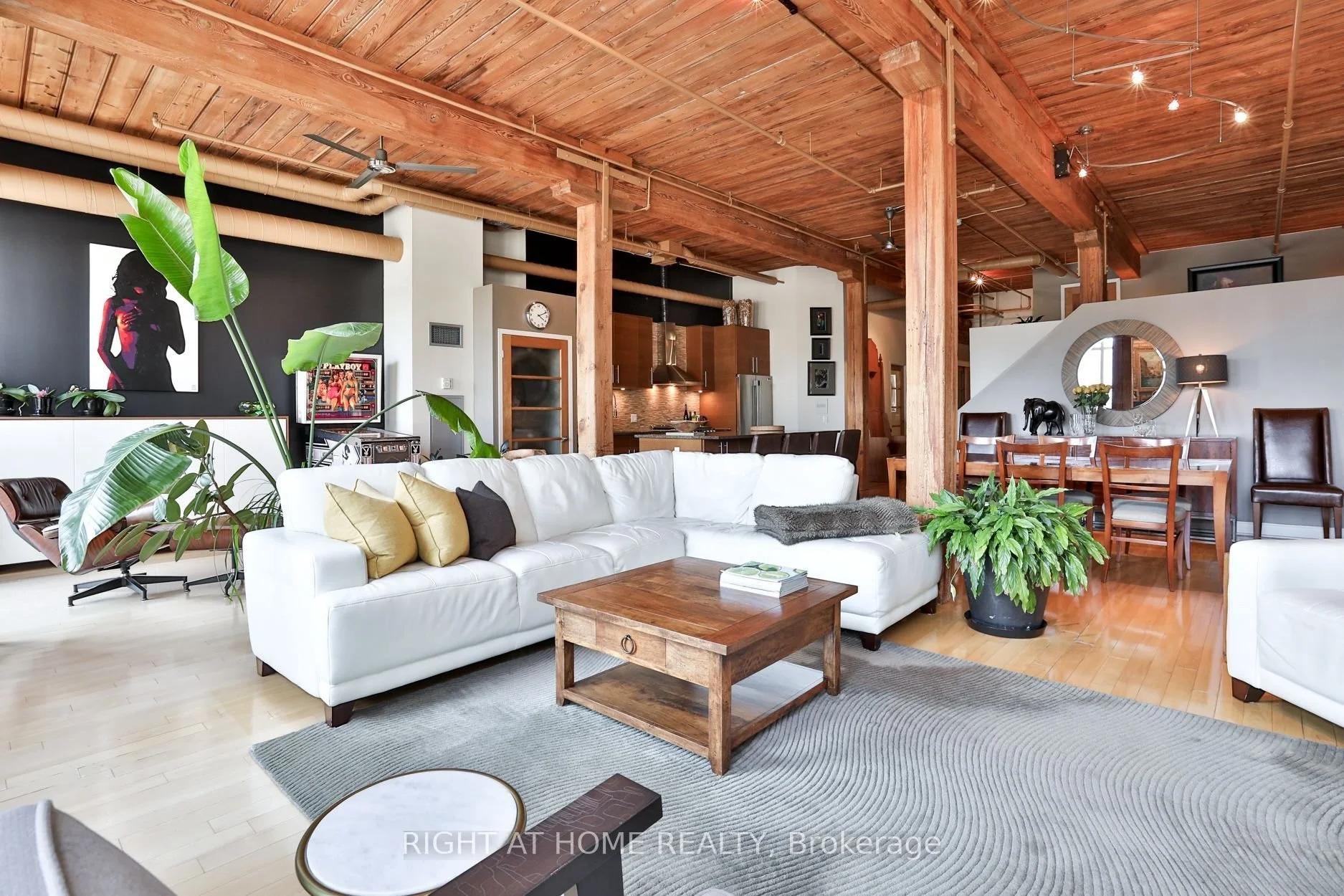
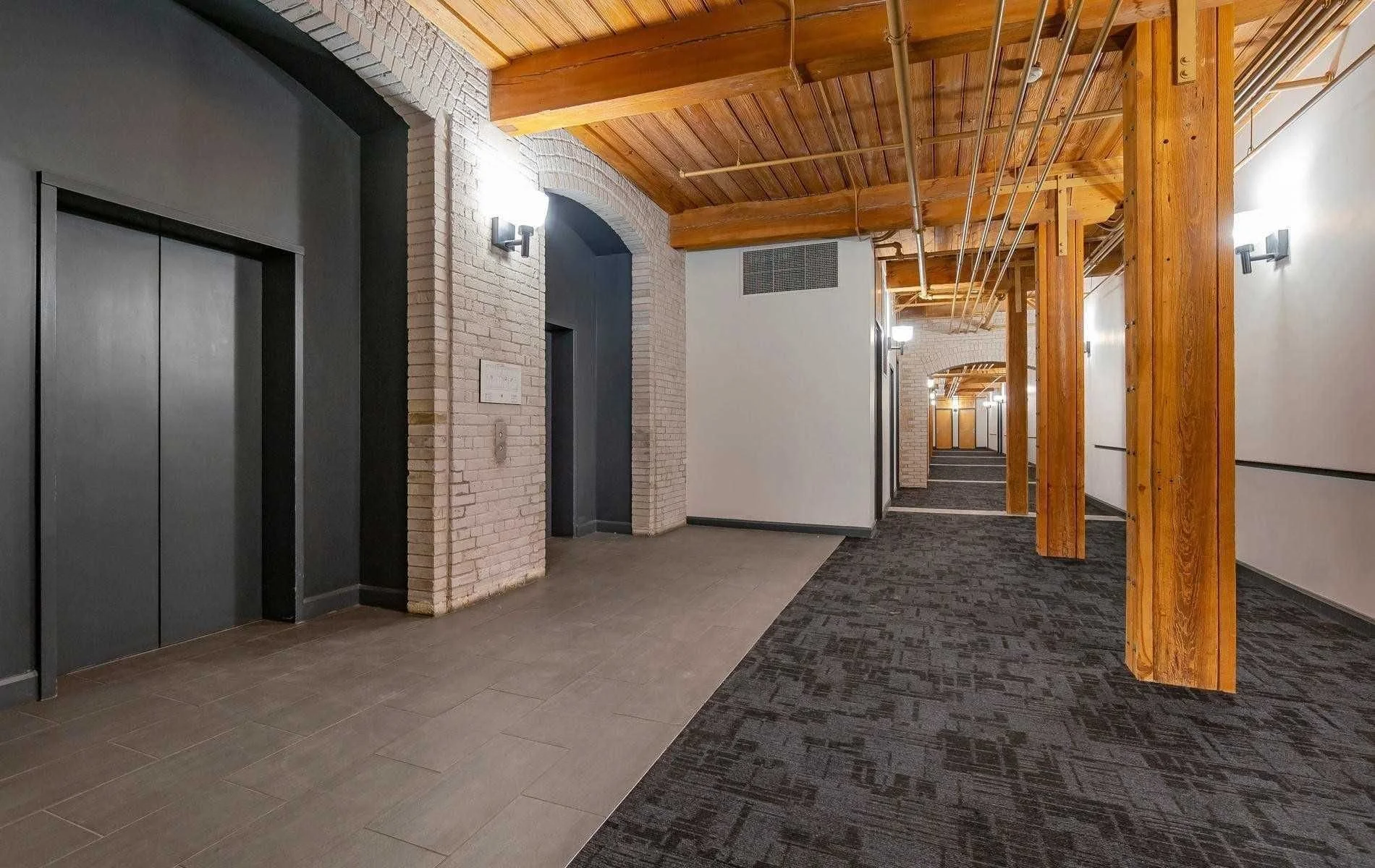
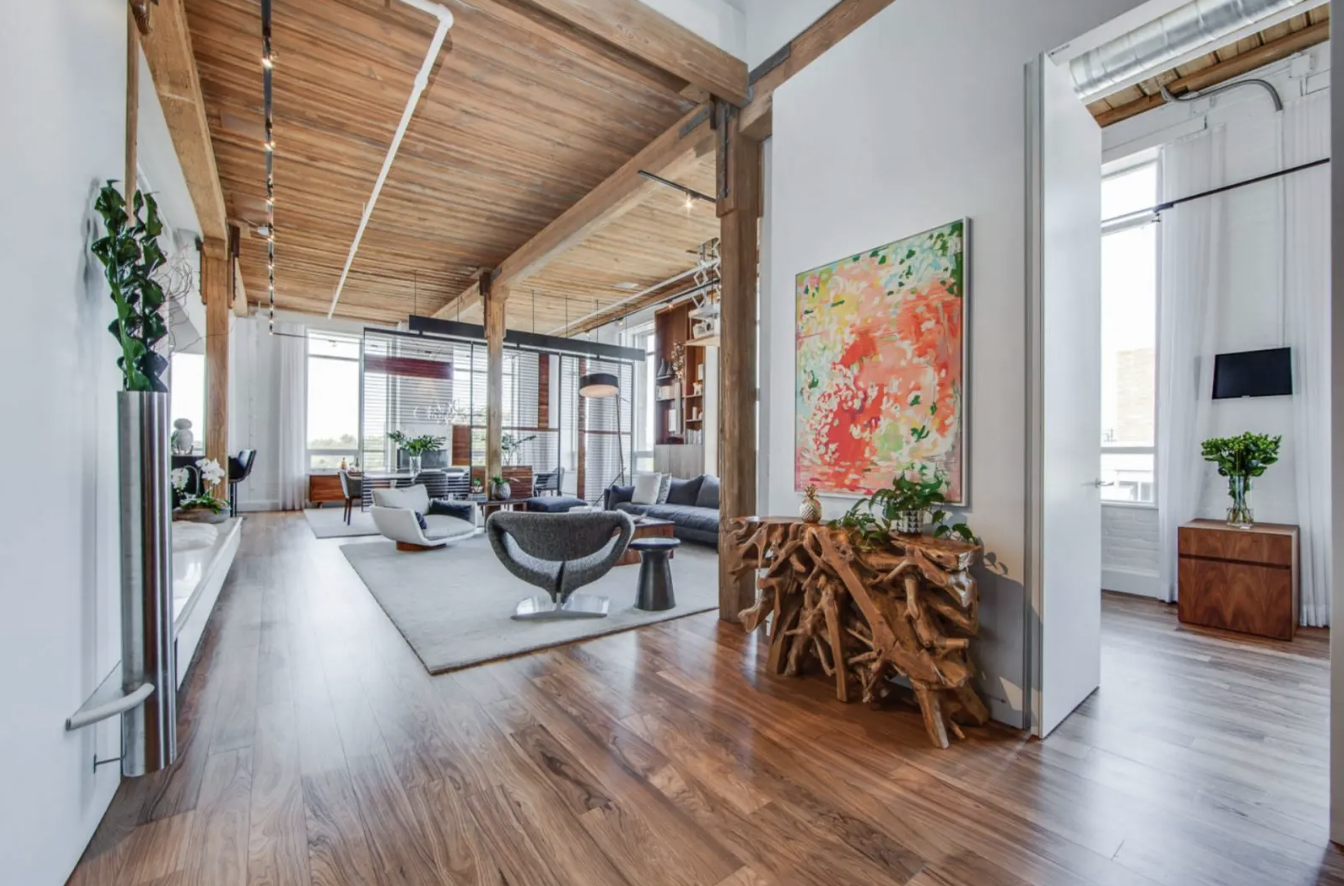
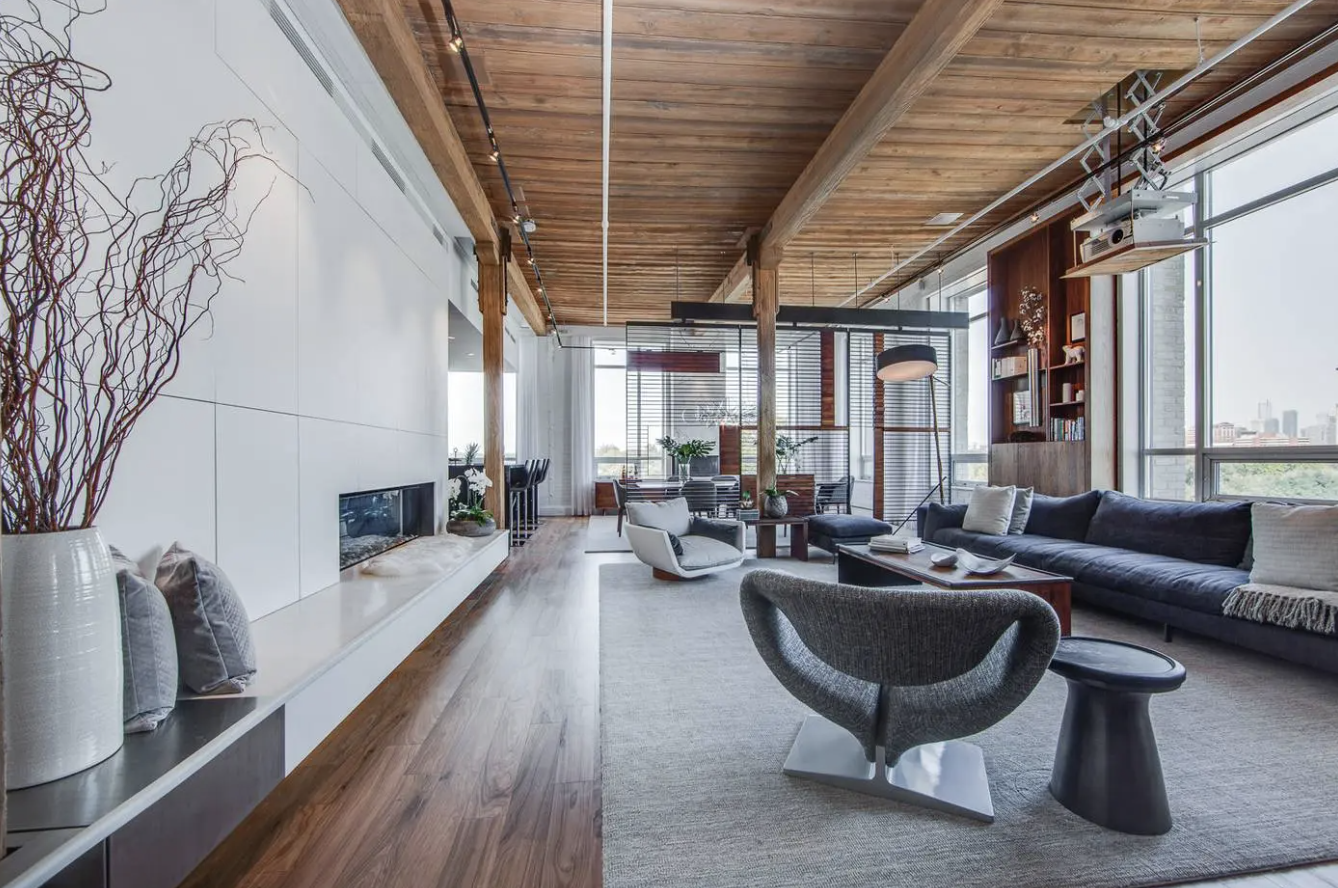
When the building was converted in 1999, the industrial structure remained intact. This is true post-and-beam construction, where the timber columns and beams are structural, not decorative. The brick is original. The windows are oversized factory-grade openings. The floorplates feel expansive because they were never designed for condo efficiency.
Ceiling heights range from 10 to 14 feet, delivering the scale buyers expect when they say they want a real loft. The proportions are honest. The materials are permanent. The volume is immediate.
At $1,223 per square foot, the premium reflects architectural credibility, limited comparable supply, and a strong end-user ownership base. Candy Factory does not rely on luxury branding to justify its value. The structure carries it.
KEY FACTS
//
KEY FACTS //
Architectural Details:
• Heavy timber beams
• Spiral staircases
• Exposed brick throughout
• Large multi-pane factory windows
• True brick-and-beam construction
Amenities:
• Gym
• Party/meeting room
• Guest suites
• Visitor parking
• Rooftop Deck
Original Use: Ce De Candy Company factory
Built: 1907
Converted: 1999
Storeys: 6
Units: 121
Ceiling Heights: 10–14 ft
Unit Size Range: 823–1,482 sq ft
Market Personality:
Premium Queen West hard loft with established reputation, low churn, and consistent resale strength driven by true industrial credibility.
Buyer Profile:
Design-aware end-users, established professionals, and long-term holders who value authentic brick-and-beam architecture over trend-driven finishes or glass-tower amenities.
COLUMBUS LOFTS
📍 1 Columbus Ave
Neighbourhood: Roncesvalles
Avg $1,200+ per square foot*

BUILDING HISTORY & LOFT DETAILS
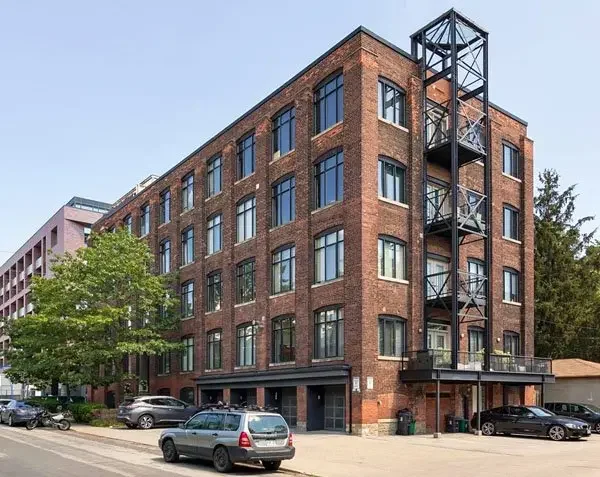
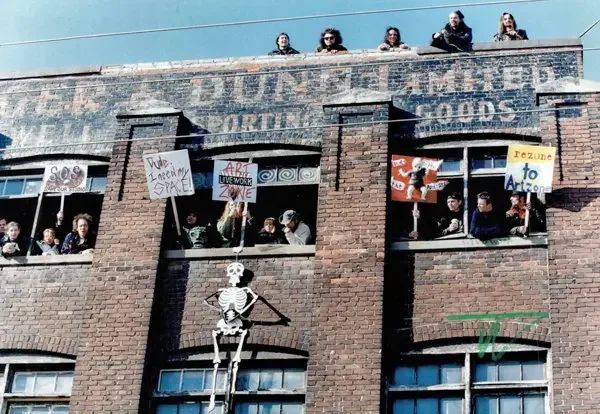
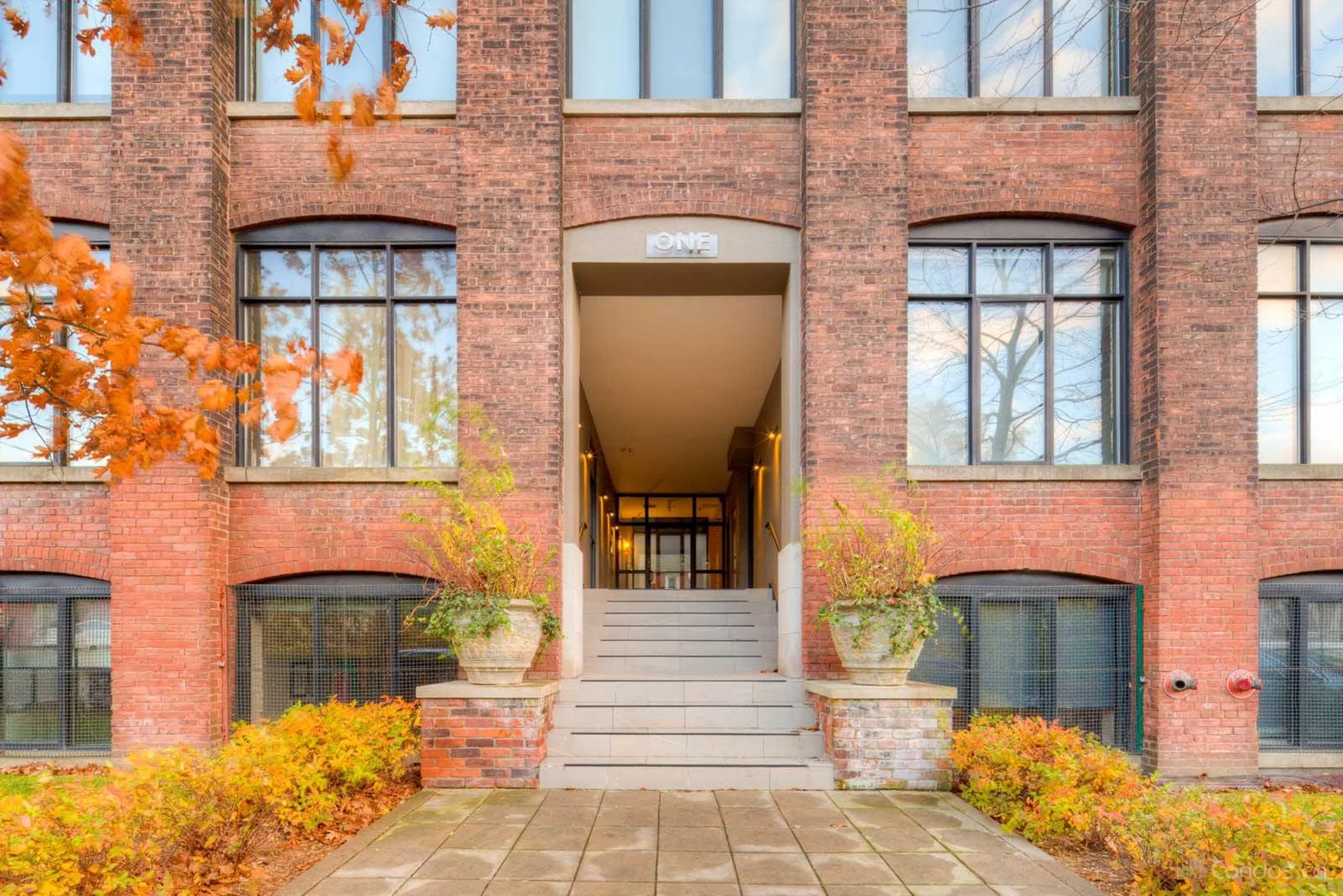
Columbus Lofts was originally constructed in the early 1900s for Winnett & Wellinger Co., a manufacturer of leather goods and athletic equipment. This was a working industrial facility, built for production and storage, not residential efficiency. That industrial origin explains the scale of the windows, the depth of the floorplates, and the strength of the structure.
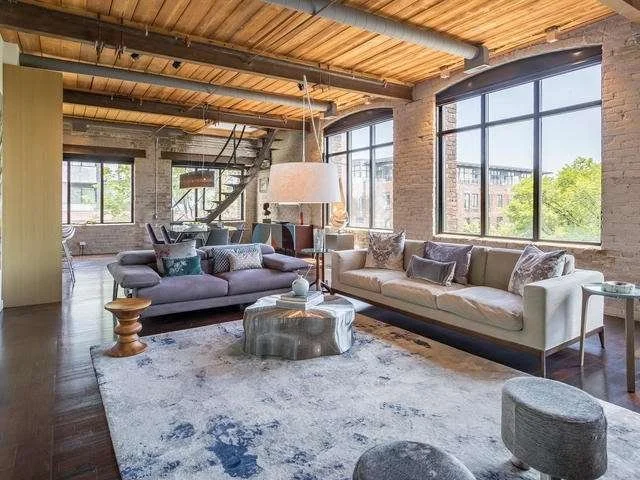
The building was converted in 1996, making it one of the earlier true hard loft conversions in the west end. Importantly, the conversion preserved what defines a real loft: oversized warehouse windows, exposed structural elements, and wide, open layouts that were never carved down to maximize unit count.
With just 10 units, Columbus behaves more like a loft house collection than a condo building. Inventory is rare. Turnover is limited. Scarcity is built into the math.
Ceiling heights generally range from 10 to 14 feet, and the suites are notably large compared to most hard loft inventory. Some units feature private elevator access, further reinforcing the sense of privacy and exclusivity.
Pricing here is not simply about price per square foot. It reflects scale, light, and the reality that a boutique Roncesvalles hard loft of this size is nearly impossible to replicate.
*Data on cost per square foot here is limited due to limited units/sales per year
KEY FACTS
//
KEY FACTS //
Architectural Details:
• Large warehouse windows
• Private elevator access in select units
• Gas fireplaces
Amenities:
• Elevator
• Secure entry
• Quiet building
• Private parking
• Select Rooftop terraces
Original Use: Winnett & Wellinger Co. factory
Built: Early 1900s
Converted: 1996
Storeys: 4
Units: 10
Ceiling Heights: 10–14 ft
Unit Size Range: 1310 sqft - 2280 sqft
Market Personality:
Ultra boutique. Very low turnover. Trades like a private collection, not a condo building.
Buyer Profile:
High-net-worth buyers who want townhouse-scale loft living without condo density.
CHOCOLATE COMPANY LOFTS
📍 955 Queen St W
Neighbourhood: Queen West
Avg $1,150 - 1200 per square foot*


BUILDING HISTORY & LOFT DETAILS
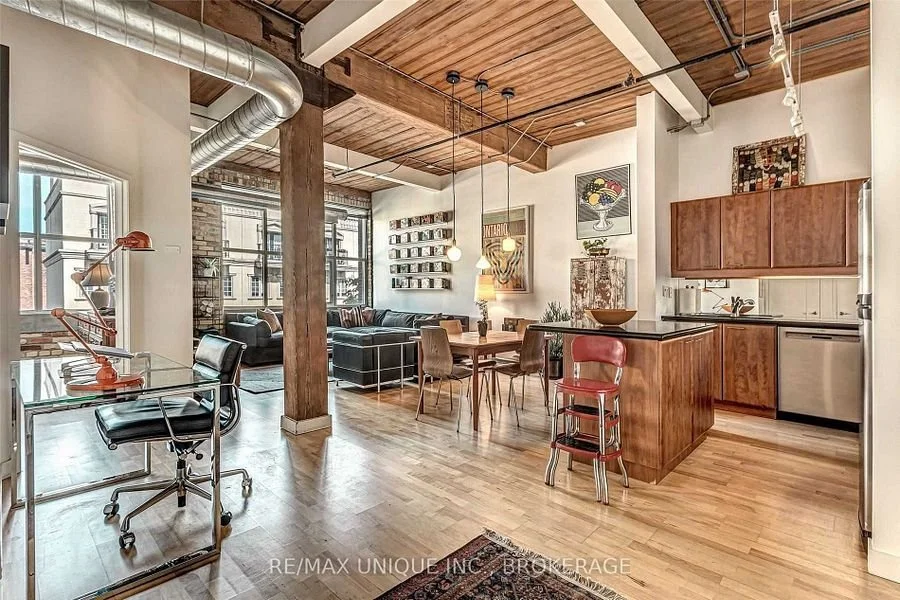
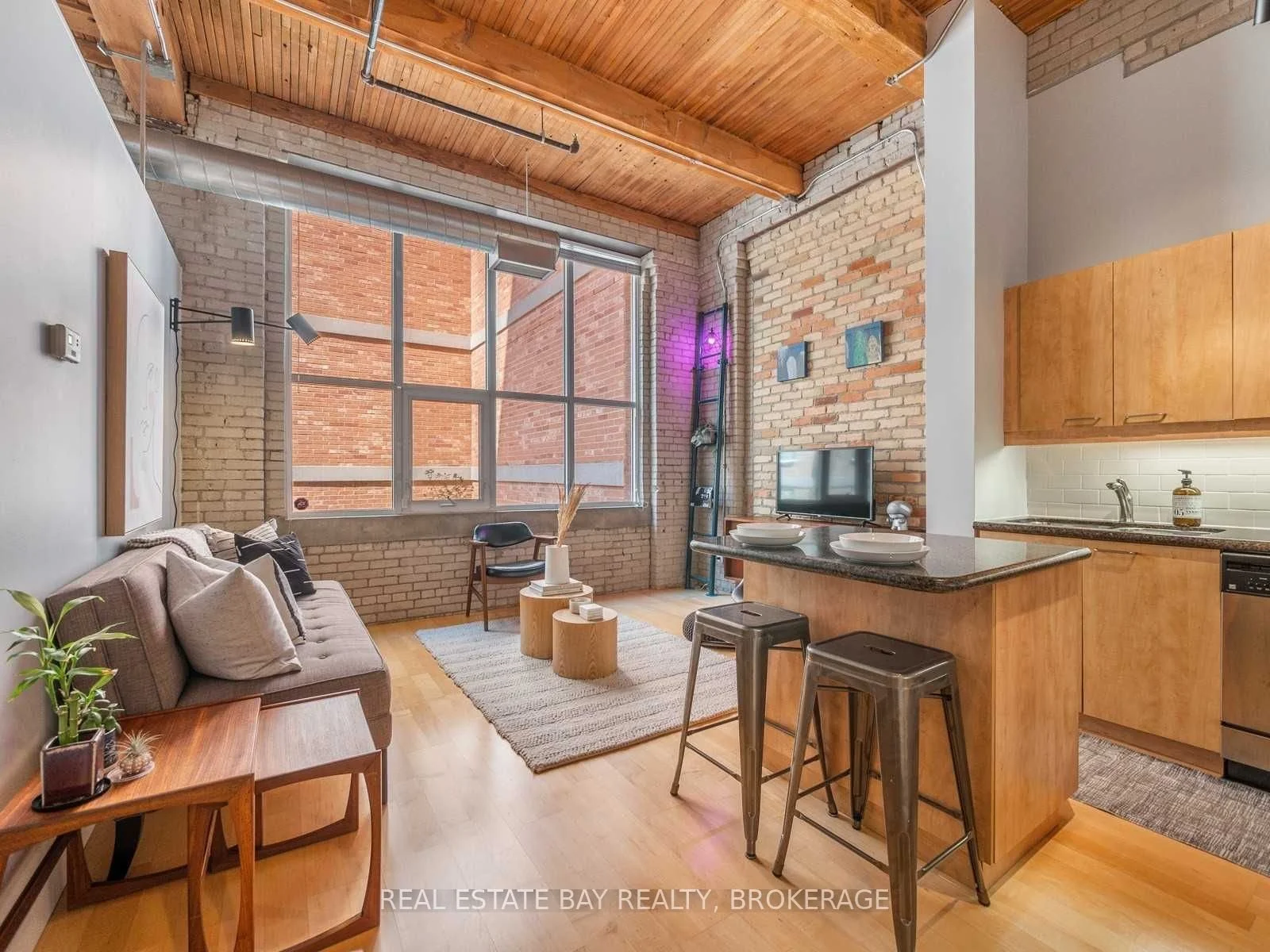
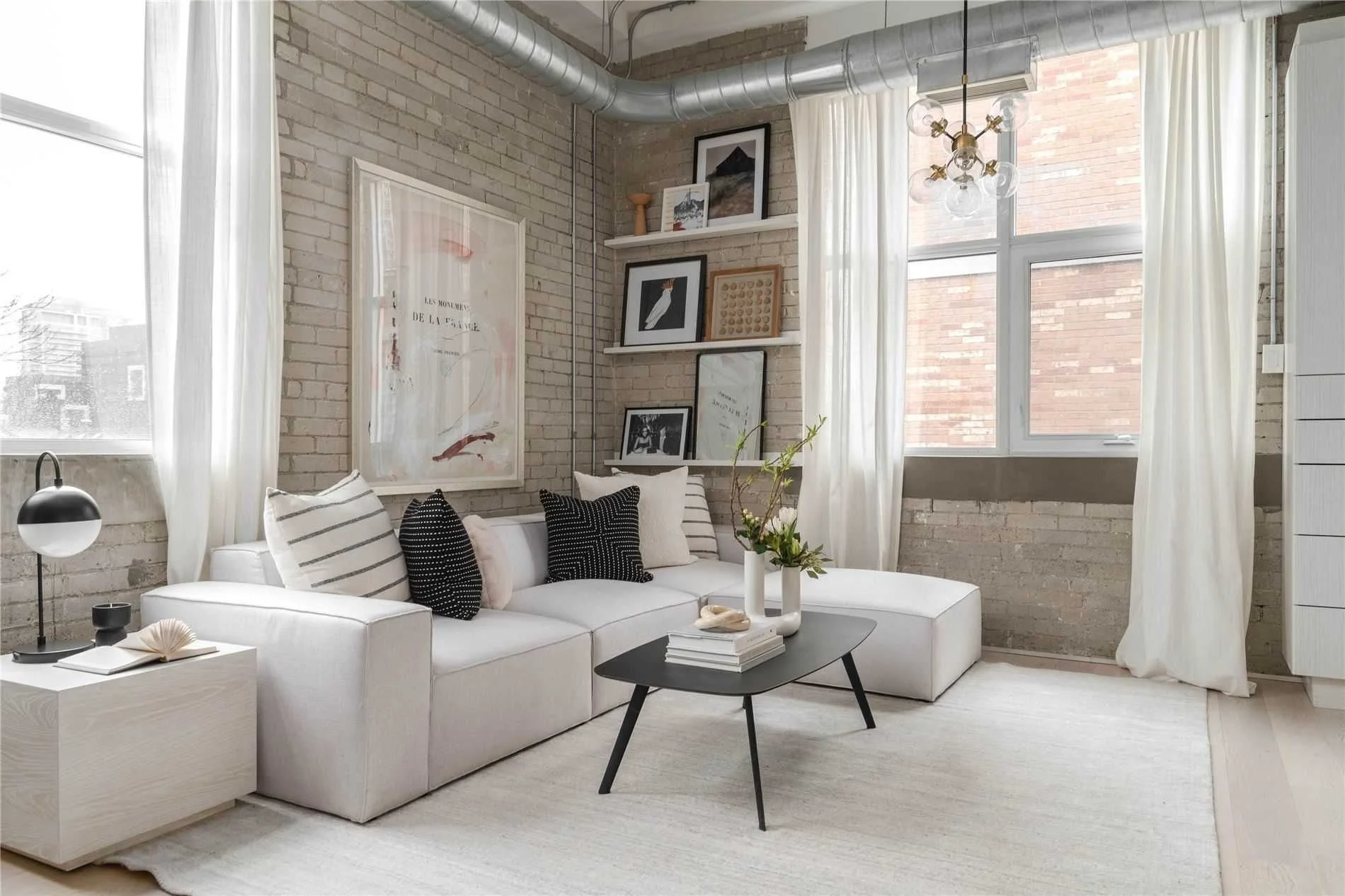
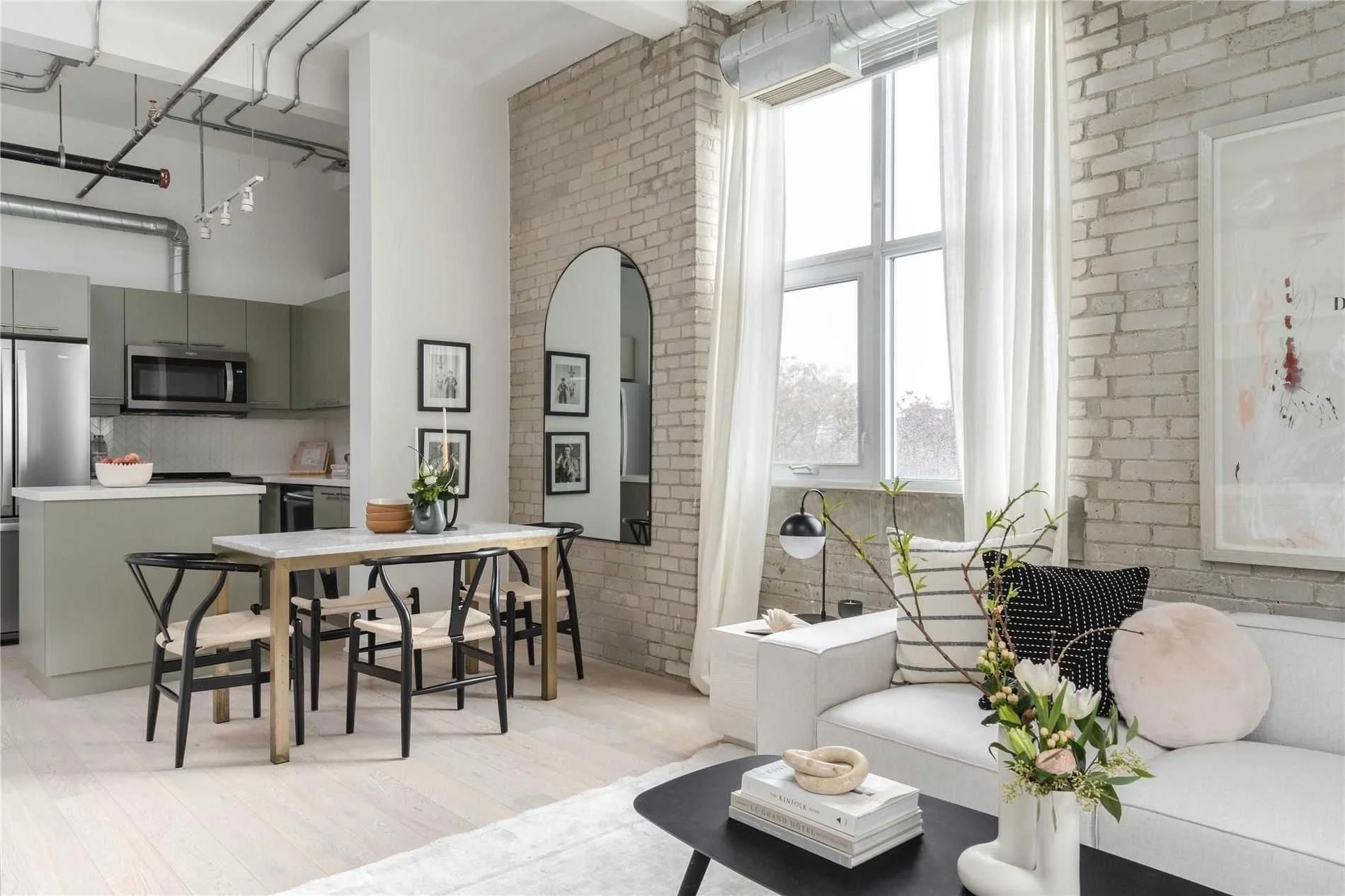
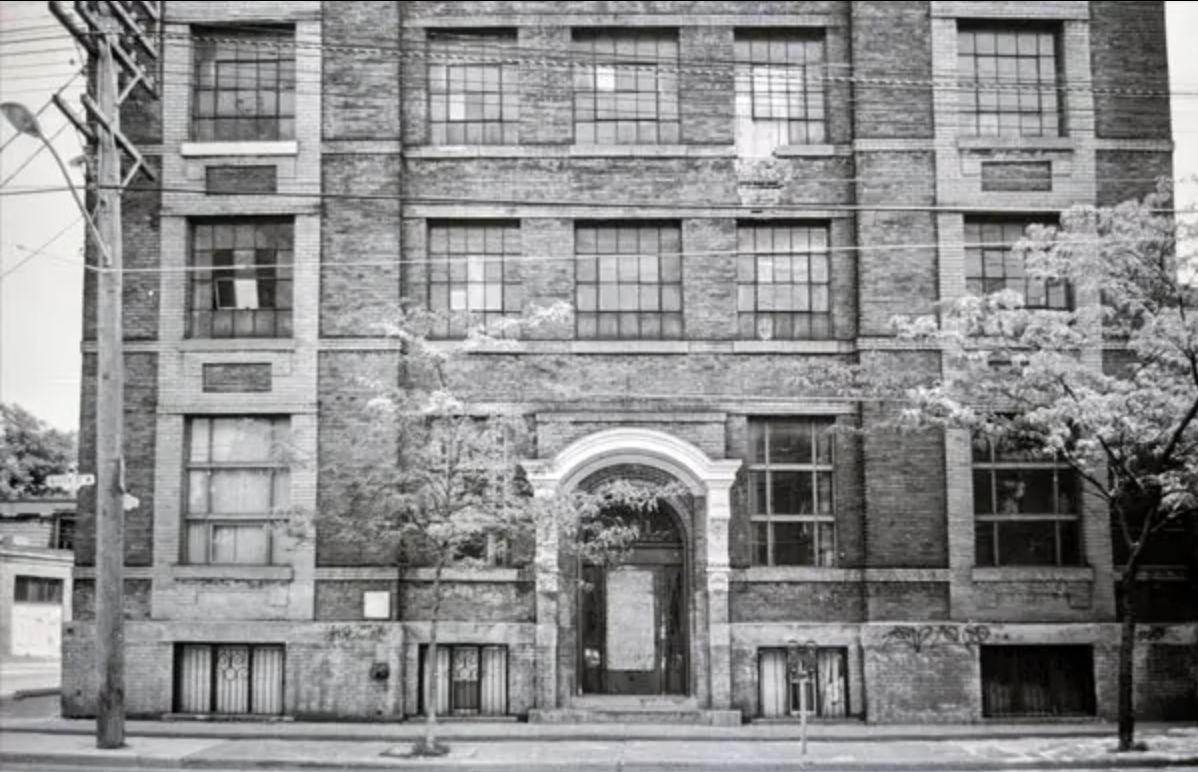
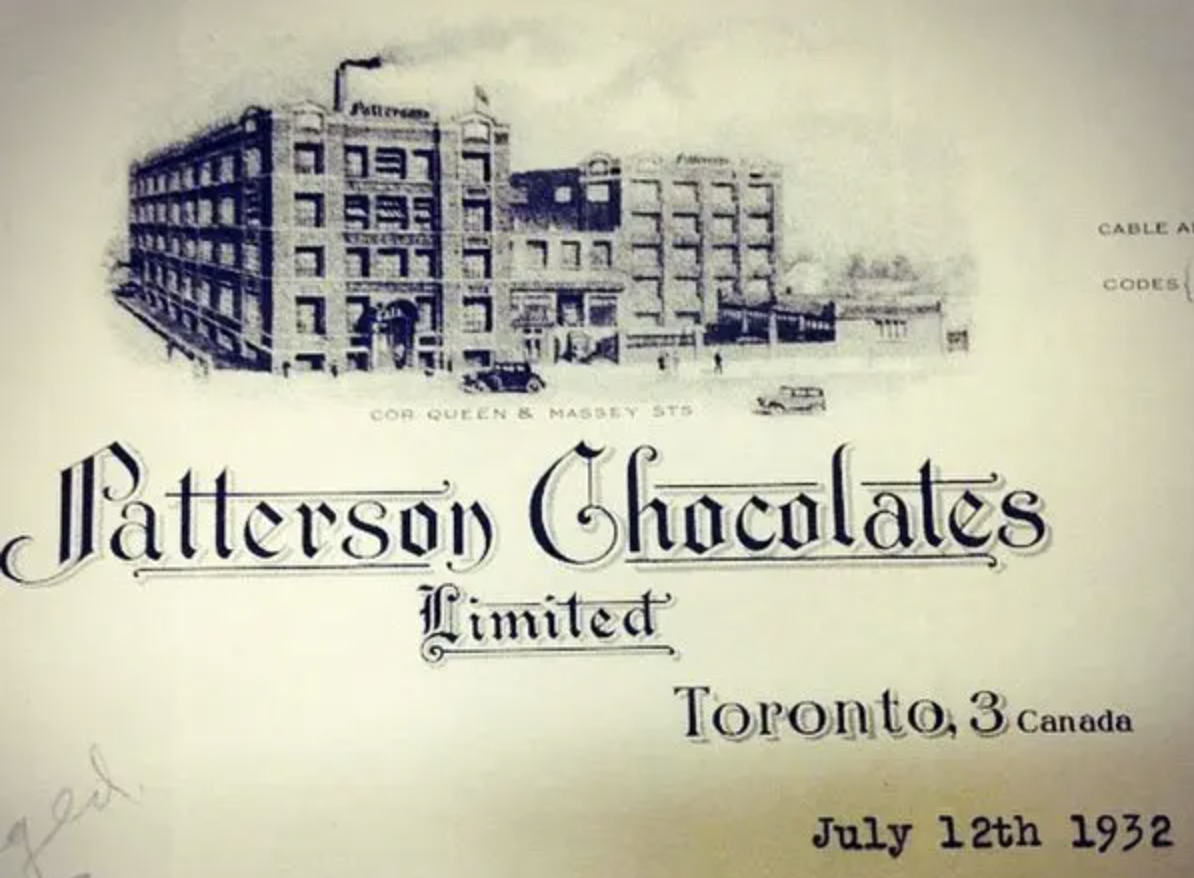
Chocolate Company Lofts traces its roots to the Paterson Chocolate Factory, an early 20th century industrial operation that once produced confectionery on this full-block Queen West site. The original factory buildings were designed for manufacturing, which explains the heavy masonry construction, structural timber framing, and generous window openings that still define the heritage portions today.
In 2005, the property was redeveloped through a hybrid conversion. Two original factory buildings were preserved and transformed into true hard lofts, then connected to a newly constructed addition. That decision created two distinct product types under one address without diluting the industrial credibility of the original structures.
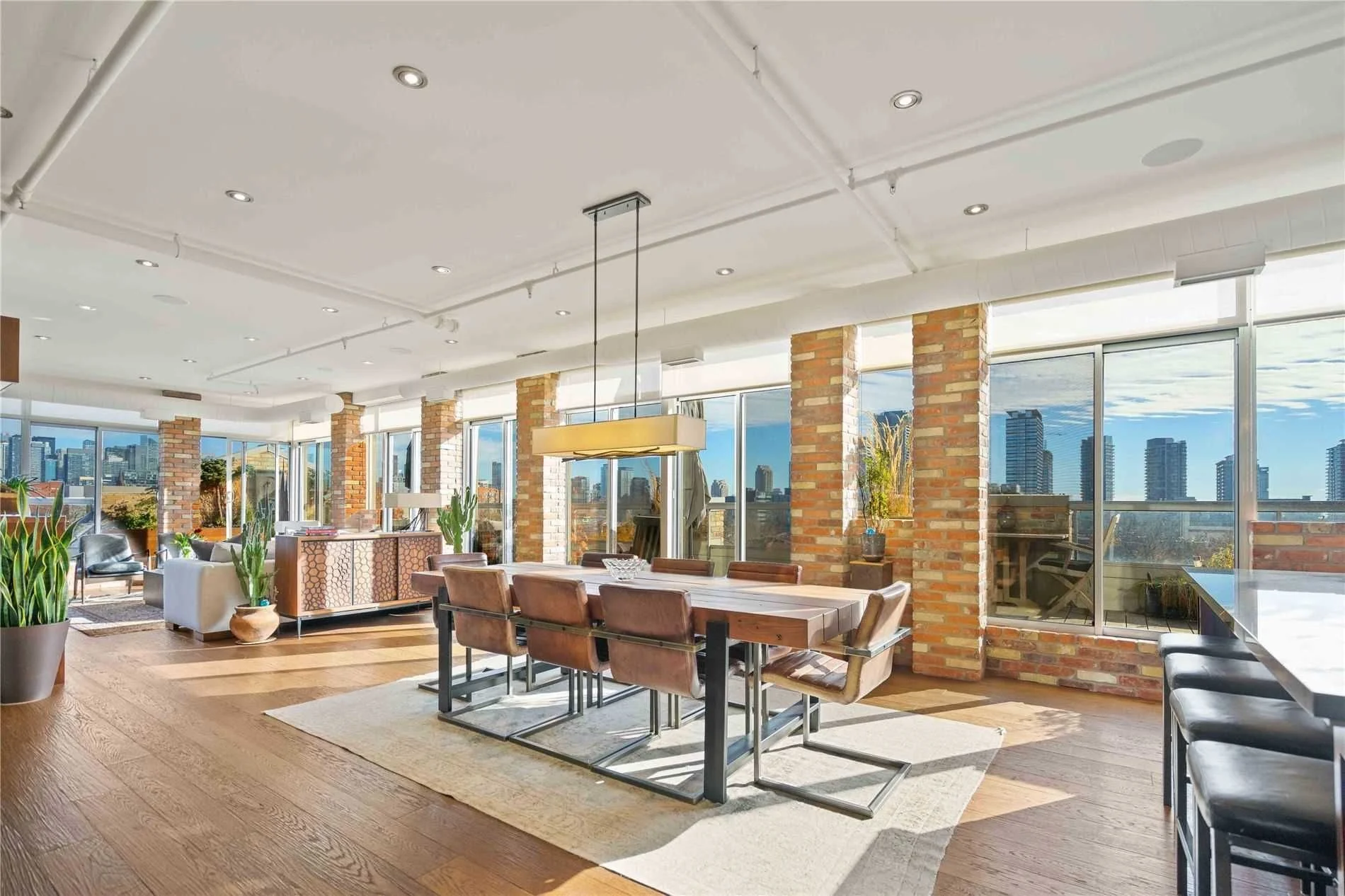
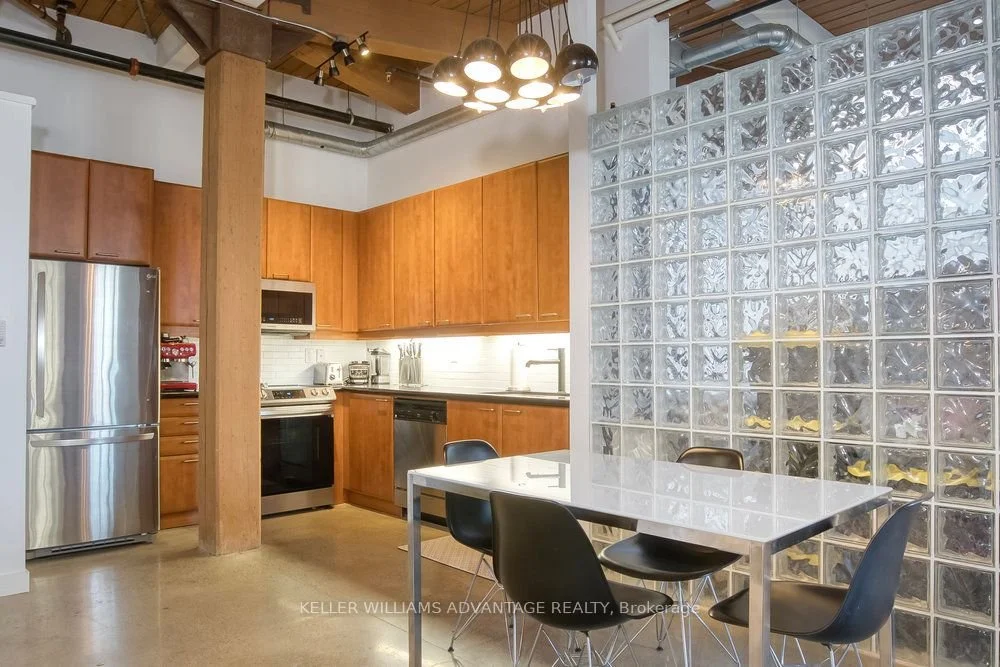
In the heritage wings, you see the real features: exposed brick, timber posts, steel beams, wood and corrugated metal detailing, and ceiling heights reaching approximately 12 feet. In the newer section, the aesthetic shifts to exposed concrete, larger expanses of glazing, and a cleaner industrial feel, with ceiling heights around 10.5 feet. It is one of the few Queen West buildings where buyers can genuinely choose their version of loft living.
Occupying a full city block, the building has scale and presence that smaller boutique conversions cannot replicate. At the same time, the larger unit count creates more consistent resale activity, adding liquidity that ultra-rare buildings sometimes lack.
Pricing typically trades below Candy Factory but remains firmly in the upper tier due to its Queen West address and direct proximity to Trinity Bellwoods Park. The value story here is balance: authentic industrial roots, multiple layout options, and long-term neighbourhood strength.
*Data on cost per square foot here is limited due to limited units/sales per year
KEY FACTS
//
KEY FACTS //
Architectural Details:
• Original brick-and-beam construction in heritage sections
• Exposed timber posts and steel beams
• Large warehouse-style windows
• Mix of authentic hard loft wings and newer soft loft addition
Amenities:
• Gym
• Party/meeting room
• 24-hour concierge
• Visitor parking
• Landscaped courtyard spaces
Original Use: Paterson Chocolate Factory
Built: Early 1900s (heritage factory buildings)
Converted: 2005
Storeys: 6
Units: 121
Ceiling Heights: 10–14 ft
Market Personality:
Large-scale Queen West heritage conversion that balances authentic hard loft character with steady resale liquidity and broad buyer appeal.
Buyer Profile:
Design-conscious professionals, move-up condo buyers, and lifestyle-driven purchasers who want Queen West energy with real industrial bones and flexible layout options.
FEATHER FACTORY LOFTS
📍 2154 Dundas St W
Neighbourhood: Roncesvalles
Avg $1,203 per square foot


BUILDING HISTORY & LOFT DETAILS
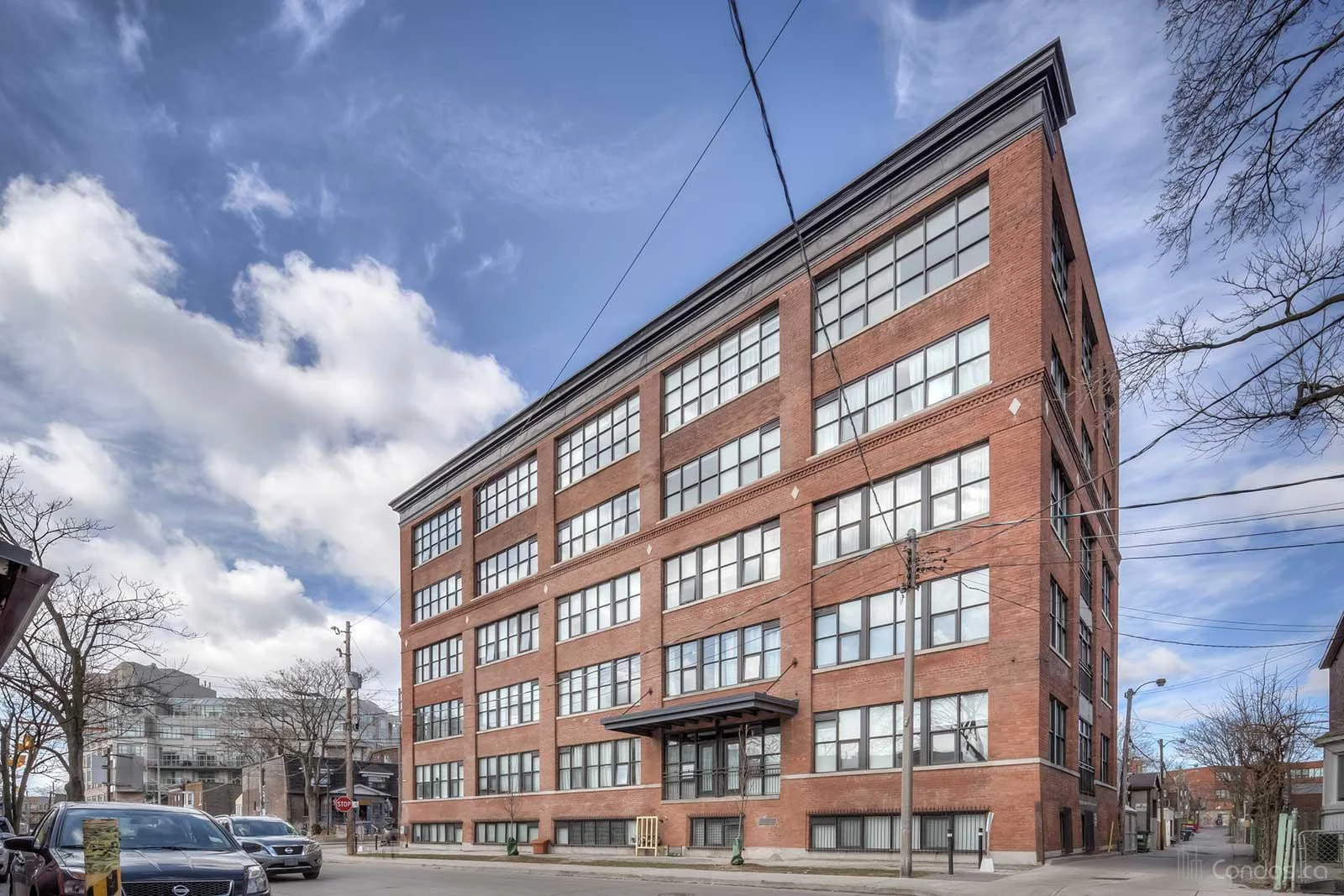
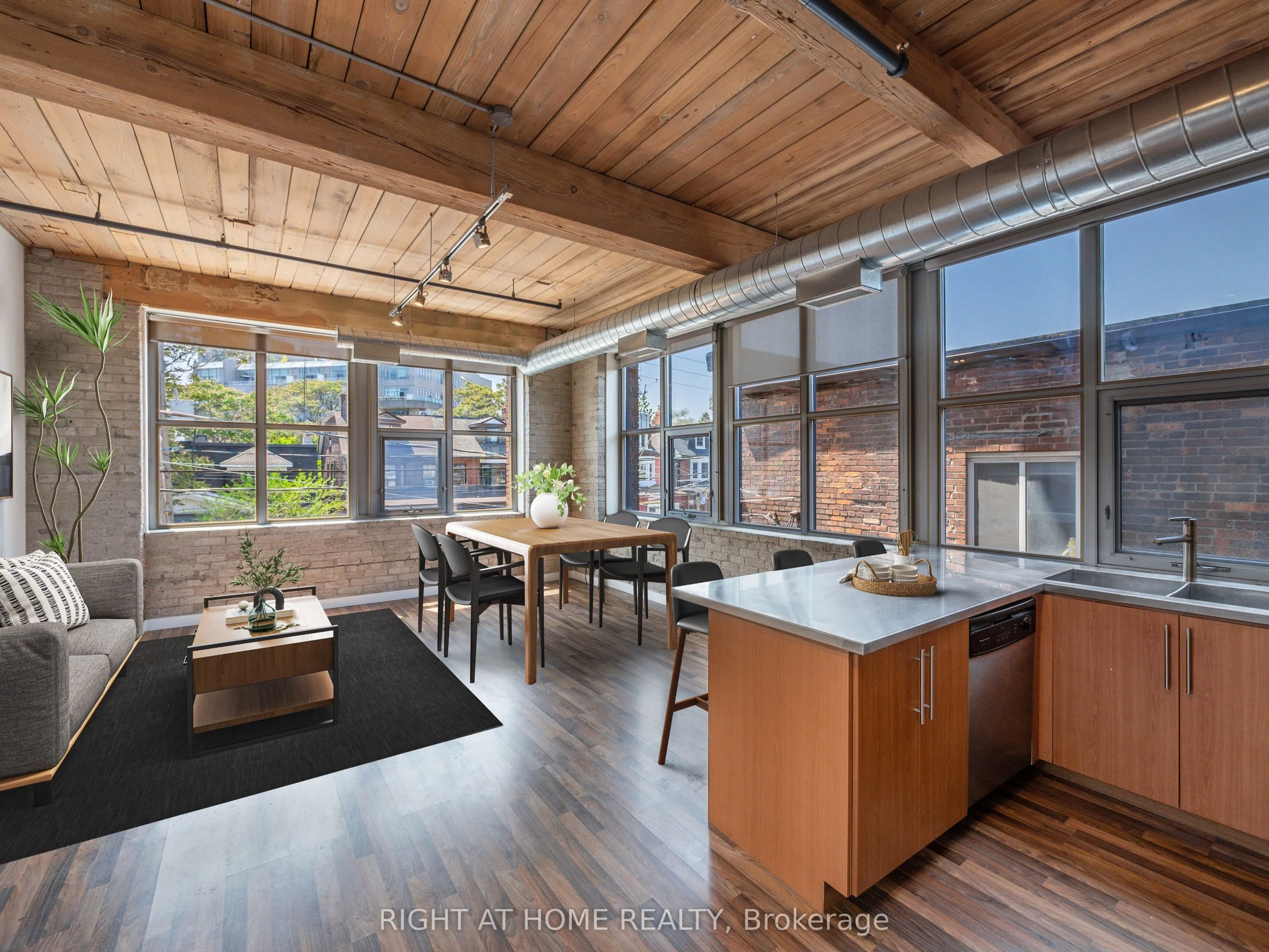
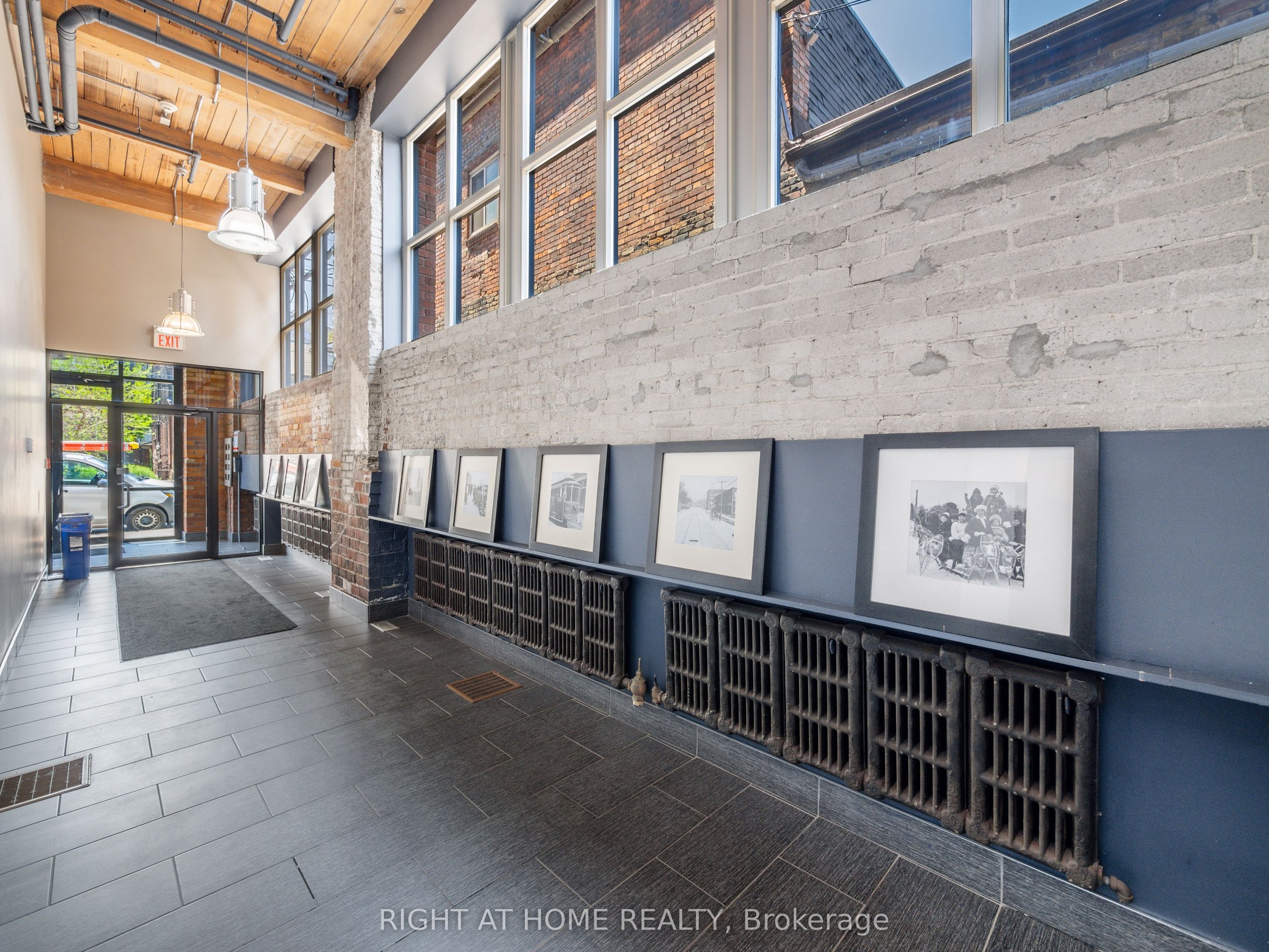
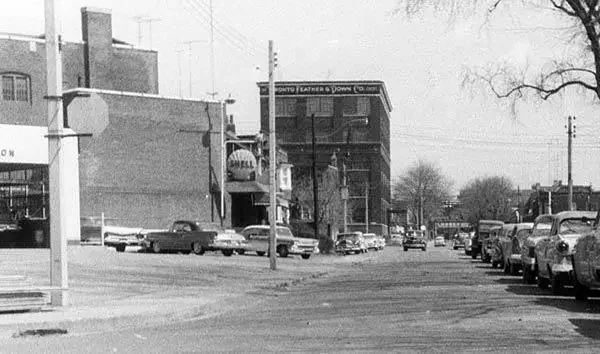
Feather Factory Lofts was originally home to the Toronto Feather & Down Company, an early 20th century manufacturing operation producing bedding and related goods. Unlike the larger industrial complexes nearby, this was a smaller-scale factory structure, which explains the building’s more intimate footprint and boutique feel today.
The building was converted in 2008, preserving the timber-and-brick construction that defines authentic hard loft architecture. Heavy wood posts and beams remain exposed, the brickwork is original, and the industrial windows are oversized, bringing in significant natural light. The warmth of the timber framing gives the interiors a softness that many steel-heavy conversions lack.
Ceiling heights typically sit around 11 feet, with penthouse units reaching approximately 14.5 feet. The layouts lean into openness, often using partial-height separations and creative zoning to maintain volume and light flow. It feels like true loft logic, not a conventional condo plan dressed up with brick.
While inventory can occasionally cluster, the overall unit count remains limited, and true boutique hard loft supply in Roncesvalles is still constrained. At approximately $1,203 per square foot, pricing reflects neighbourhood demand and the building’s architectural credibility rather than amenity packaging.
KEY FACTS
//
KEY FACTS //
Architectural Details:
• Exposed timber posts and beams
• Original brick façade and interior masonry
• Oversized industrial-style windows
• Authentic brick-and-beam construction
Amenities:
• Party/meeting room
• Bike storage
• Visitor parking
• Transit access
Original Use: Toronto Feather and Down Company Ltd
Built: 1911
Converted: 2008
Storeys: 5
Units: 44
Ceiling Heights: 11 ft typical, 14.5 ft penthouses
Unit Size Range: 428 sqft - 807 sqft
Market Personality:
Boutique Roncesvalles hard loft with steady demand, approachable entry pricing, and limited overall inventory.
Buyer Profile:
First-time loft buyers, young professionals, and boutique-minded investors who want west-end character without Liberty Village density or glass-tower turnover.
THE CHURCH LOFTS
📍 701 Dovercourt Rd
Neighbourhood: Little Italy
Avg $1,127 per square foot
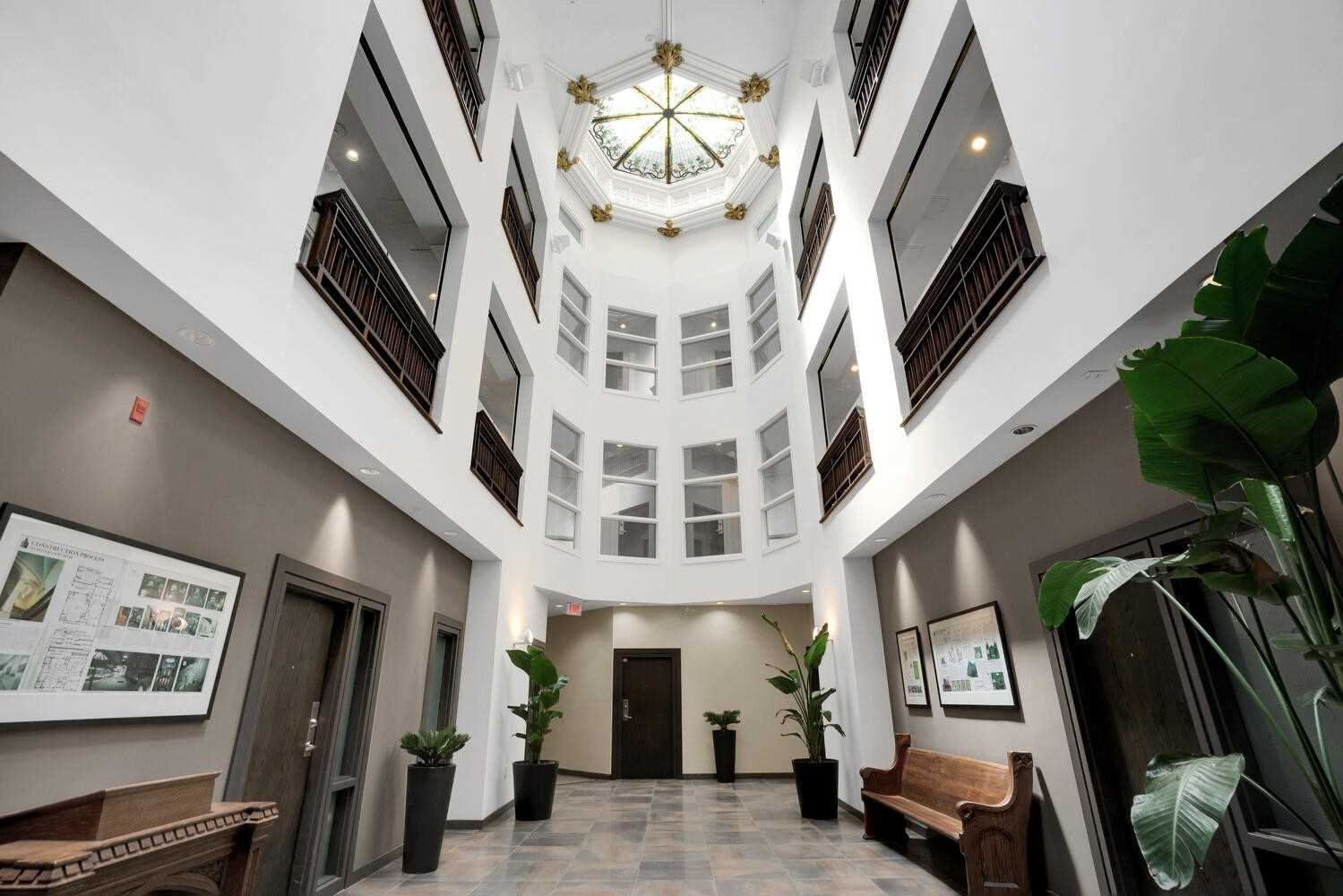
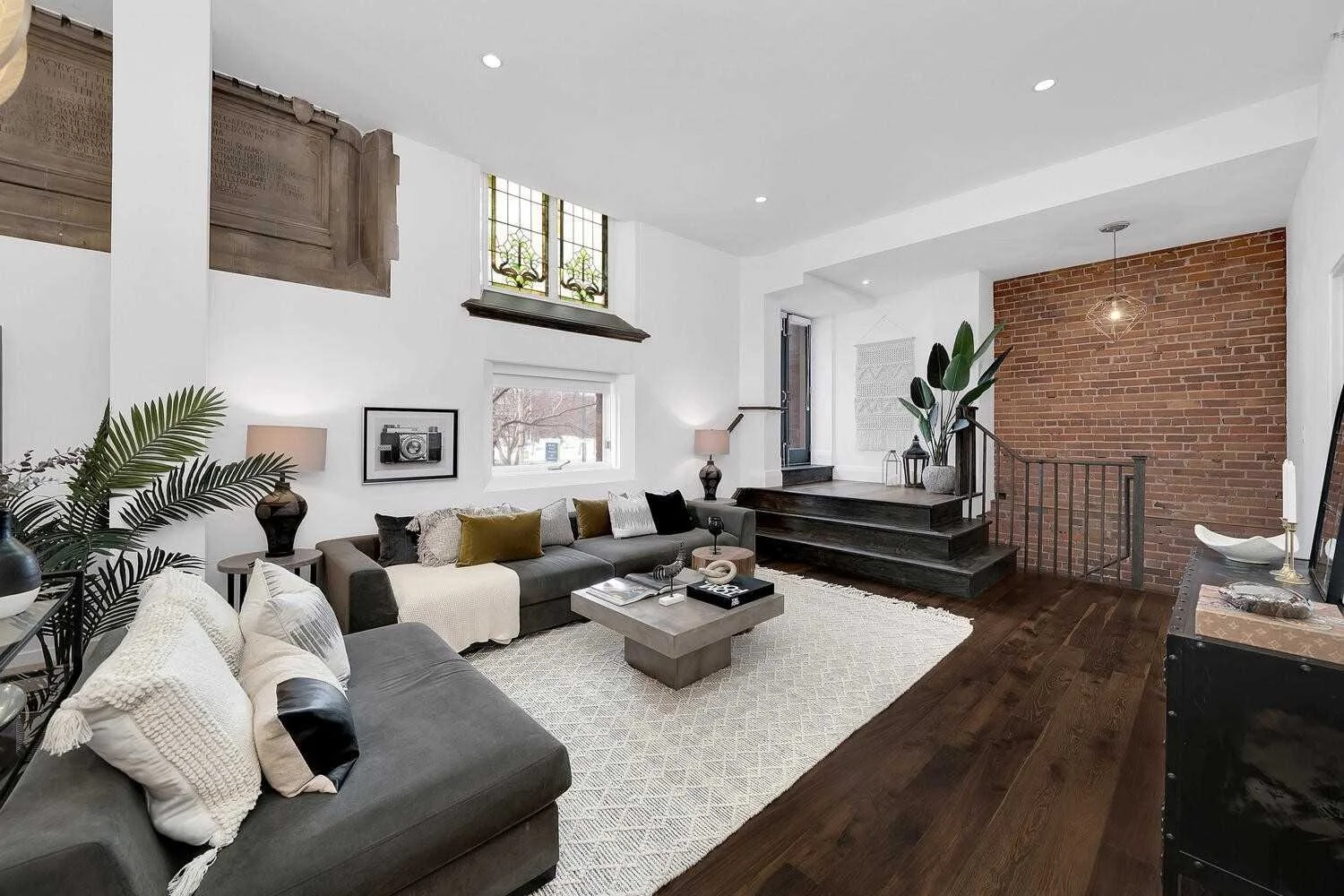
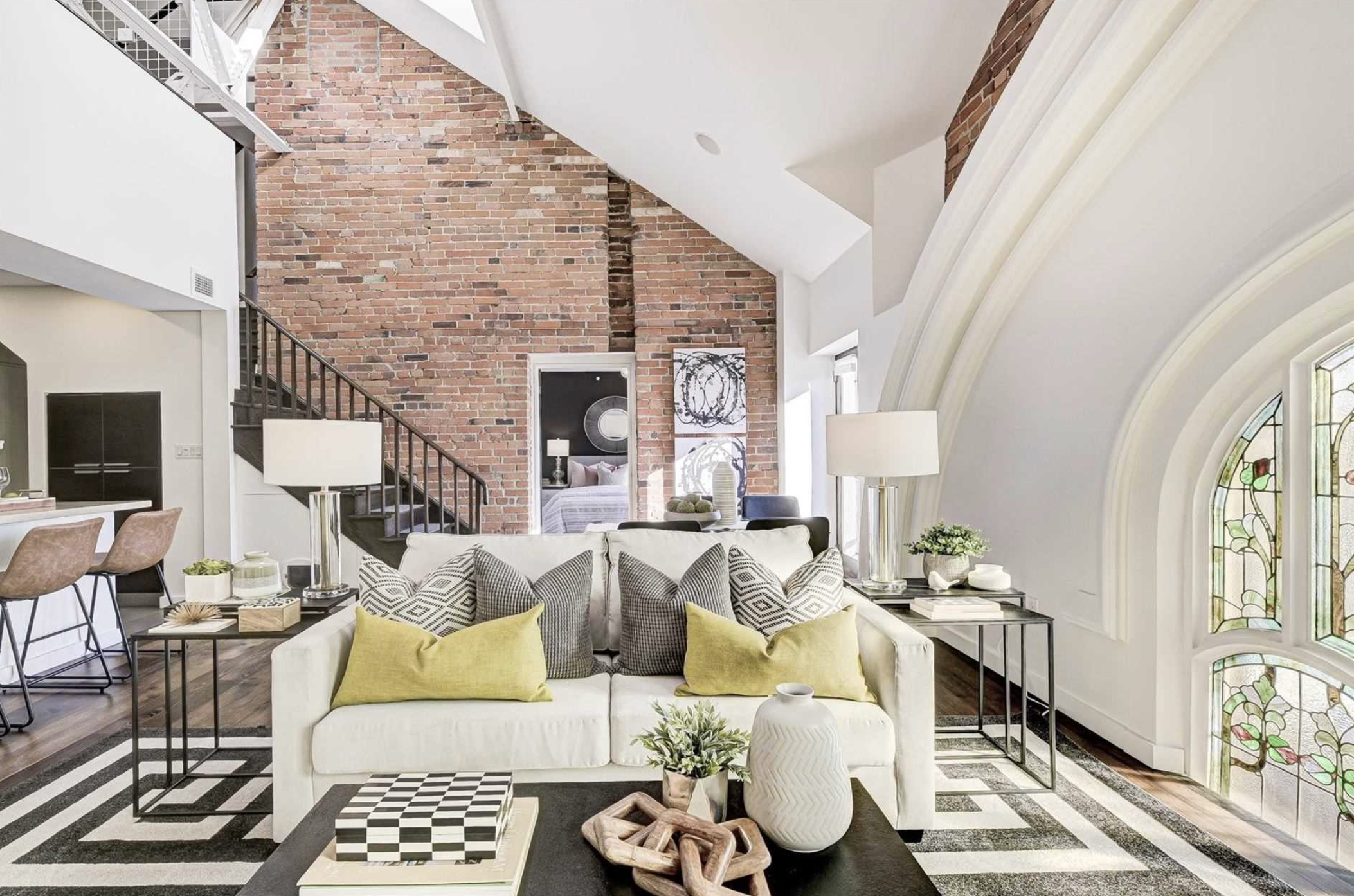
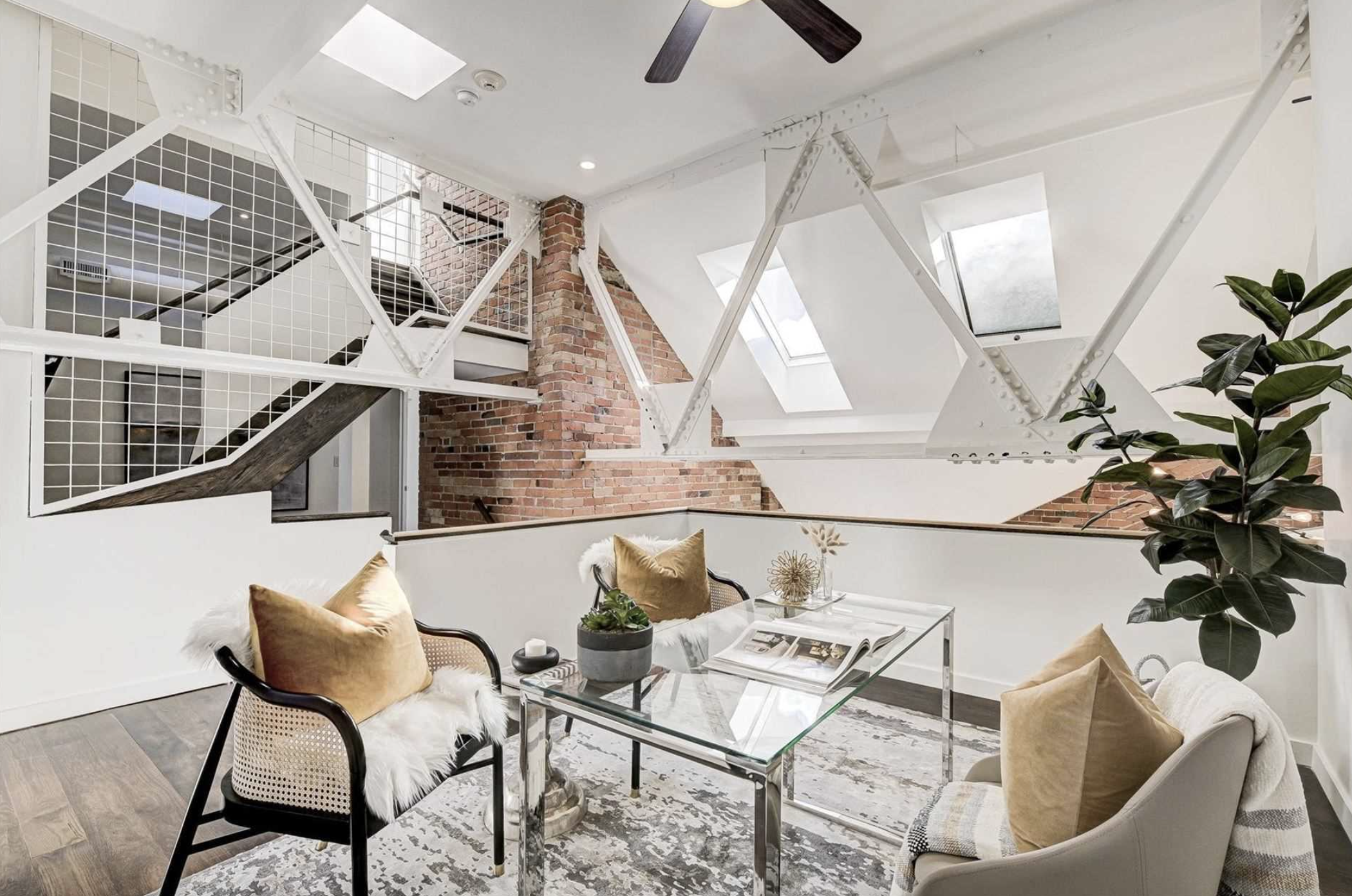
BUILDING HISTORY & LOFT DETAILS
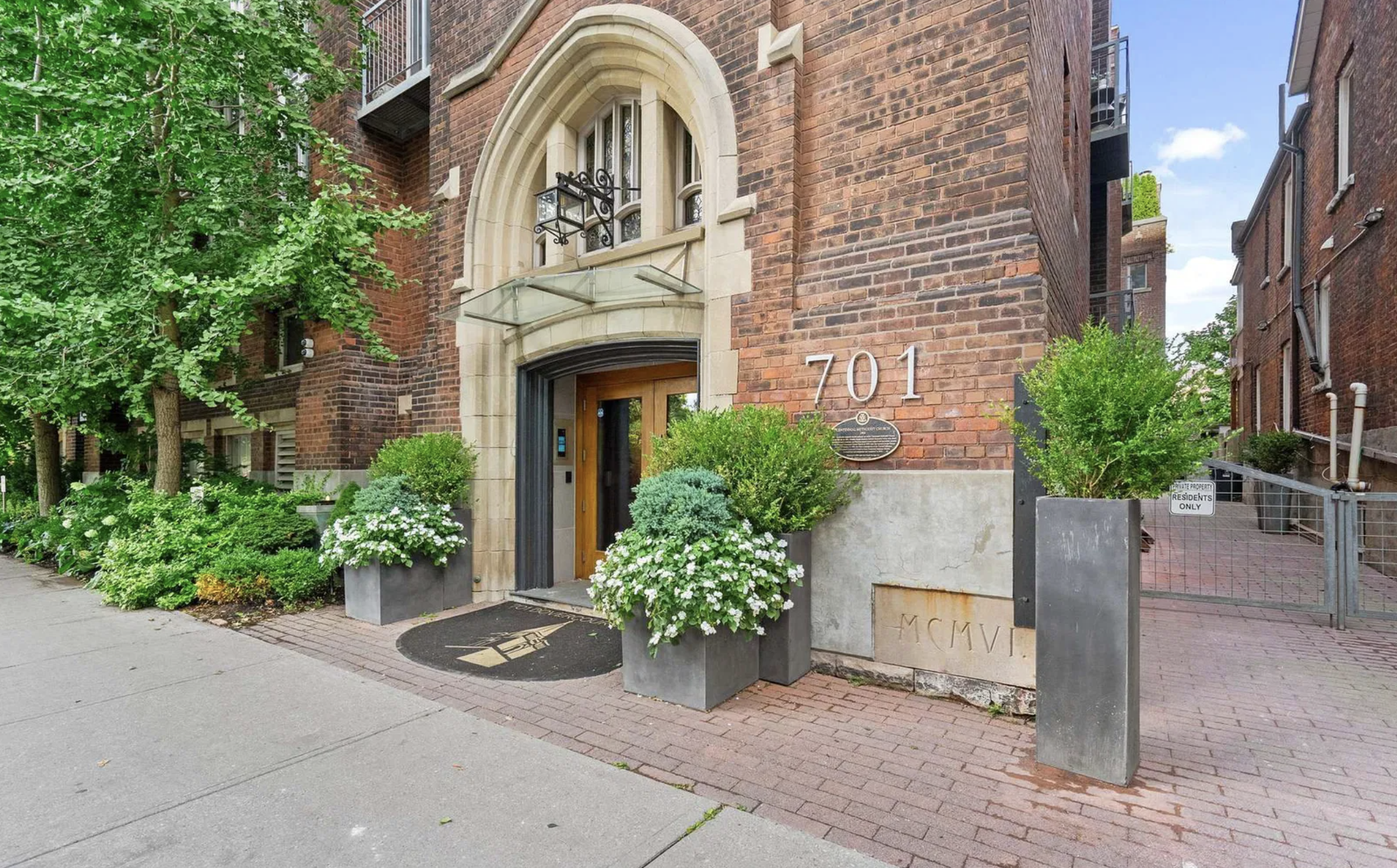
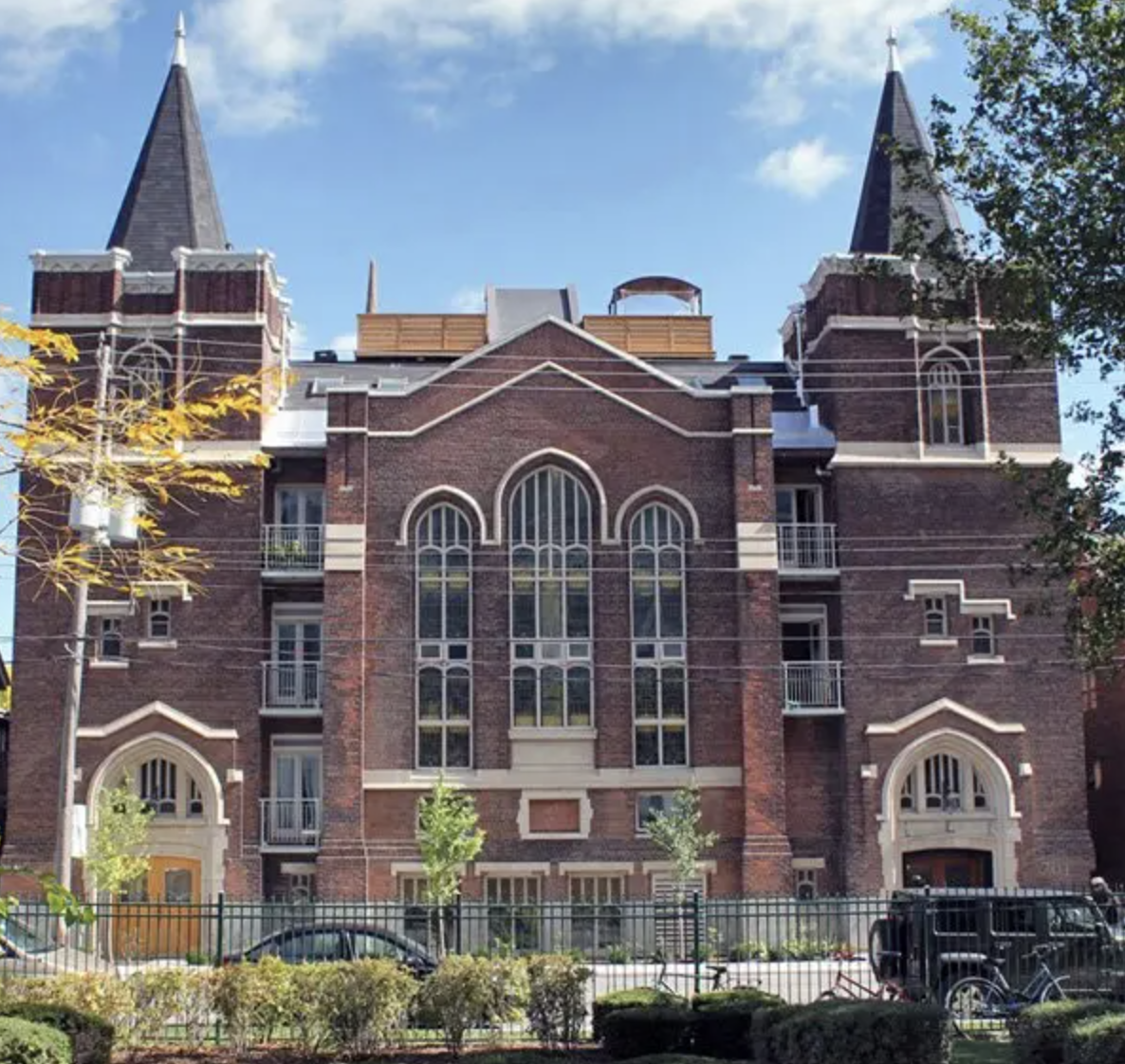
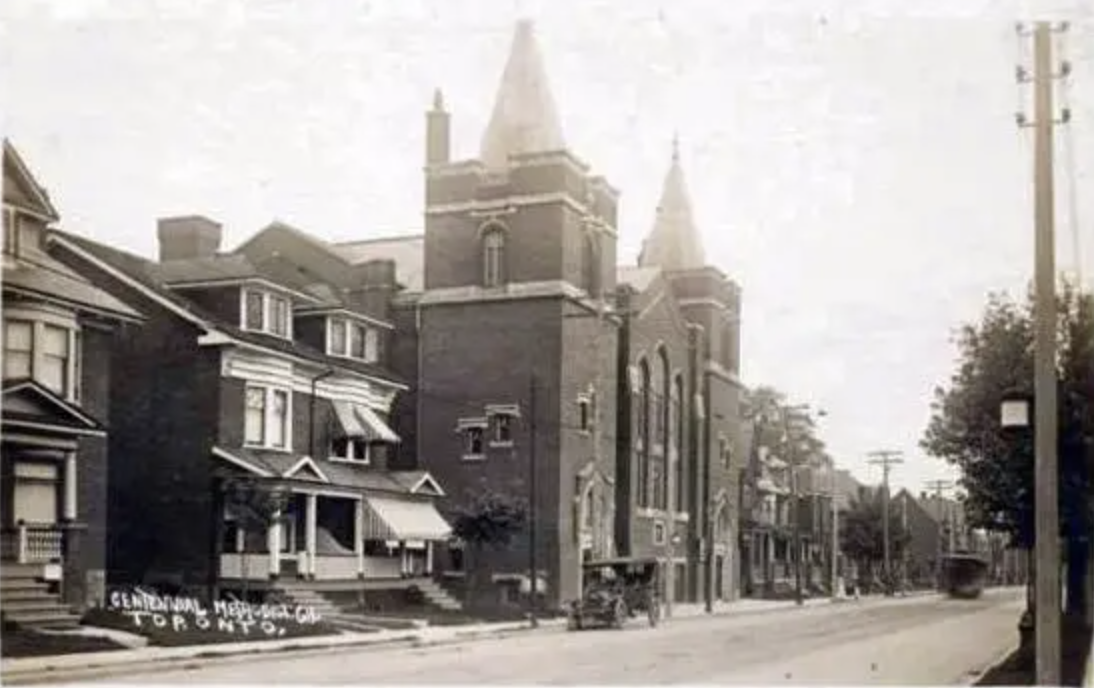
The Church Lofts was originally built in 1906 as Centennial Methodist Church, later operating as Centennial United and Centennial Japanese United Church. For decades, it served as a community anchor in what is now Little Italy before closing and eventually being converted into residences.
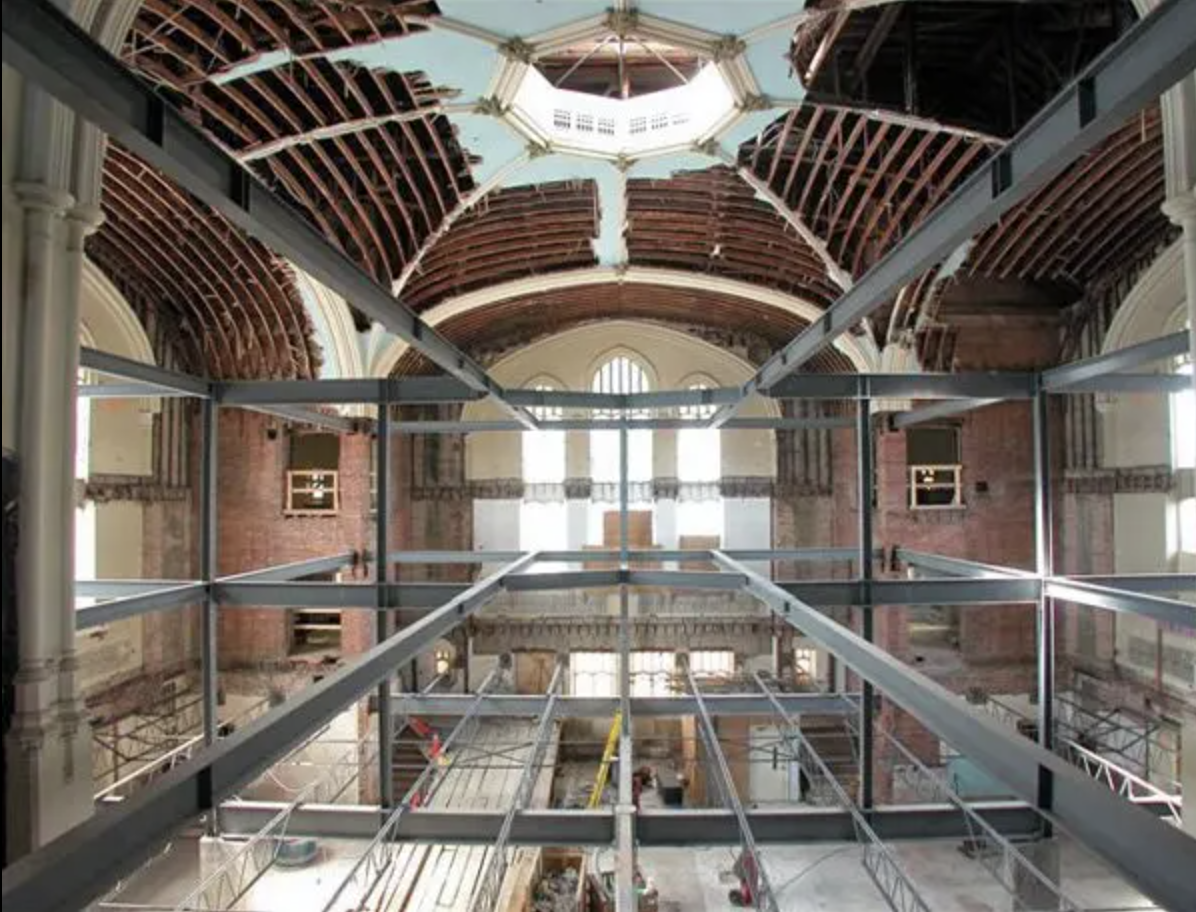
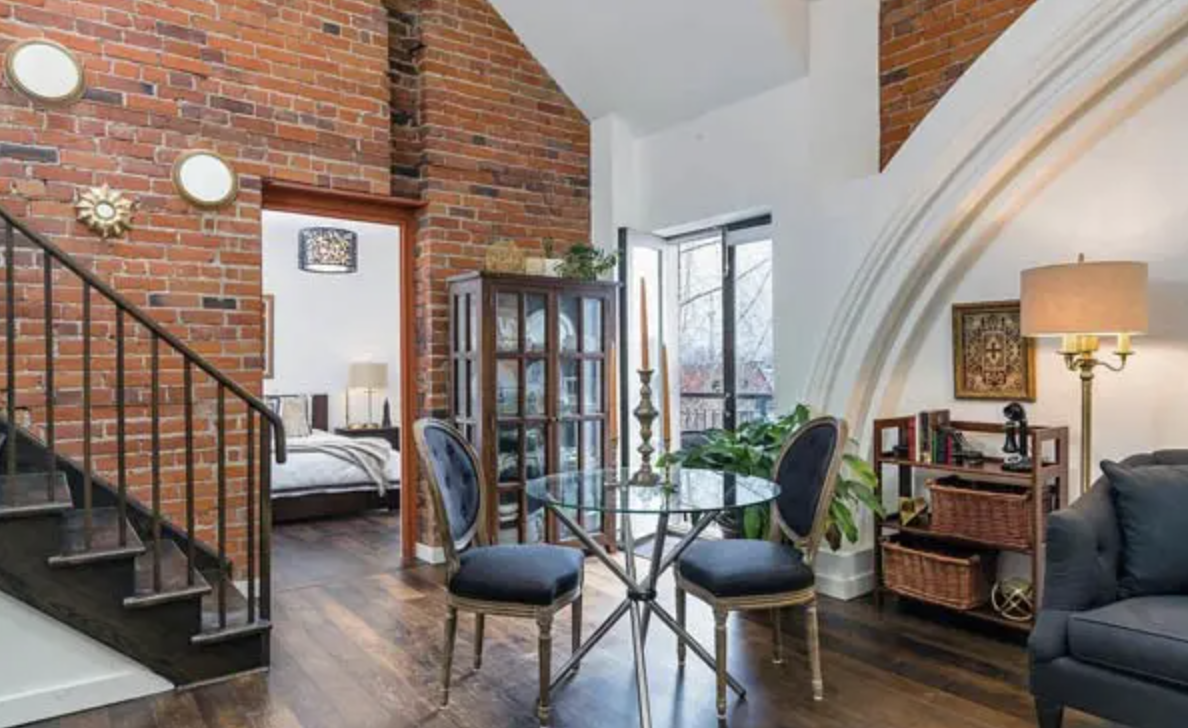
Completed in 2010, the conversion preserved the defining elements of the original neo-Gothic structure rather than softening them. The architecture dictates the experience. Vaulted ceiling volumes, arched and stained-glass window geometry, exposed structural elements, and dramatic skylights are not decorative touches. They are structural remnants of the building’s original purpose.
With just 28 units, the scale remains boutique. Floorplans range from approximately 612 to 1,482 square feet, including both single-level and multi-level layouts that respond directly to the original sanctuary geometry. Ceiling heights climb well beyond typical condo proportions in select suites, reinforcing the vertical drama church conversions are known for.
At approximately $1,127 per square foot, The Church Lofts trades in the premium hard loft tier. Pricing reflects architectural rarity and a buyer pool that values scale and character over amenity packages. This is not a building chosen for convenience. It is chosen for presence.
KEY FACTS
//
KEY FACTS //
Architectural Details:
• Vaulted nave volumes and clerestory light
• Stained-glass windows restored and integrated
• Exposed brick, steel trusses, and wood beams
• Unique single and bi-level layouts reflecting ecclesiastical bones
Amenities:
• Multi-purpose party/meeting room
• Parking garage
• Security system
Original Use: Centennial Methodist / United Church
Built: 1906
Converted: 2010
Storeys: 3
Units: 28
Unit Size Range: 612 sqft - 1368 sqft
Market Personality:
Boutique, architectural, and emotionally driven. Less churn, more character.
Buyer Profile:
Design-forward end-users who prioritize space, drama, and heritage integrity over typical condo convenience.
ARGYLE LOFTS
📍 183 Dovercourt Rd
Neighbourhood: Beaconsfield Village
Avg $1,075 per square foot
BUILDING HISTORY & LOFT DETAILS
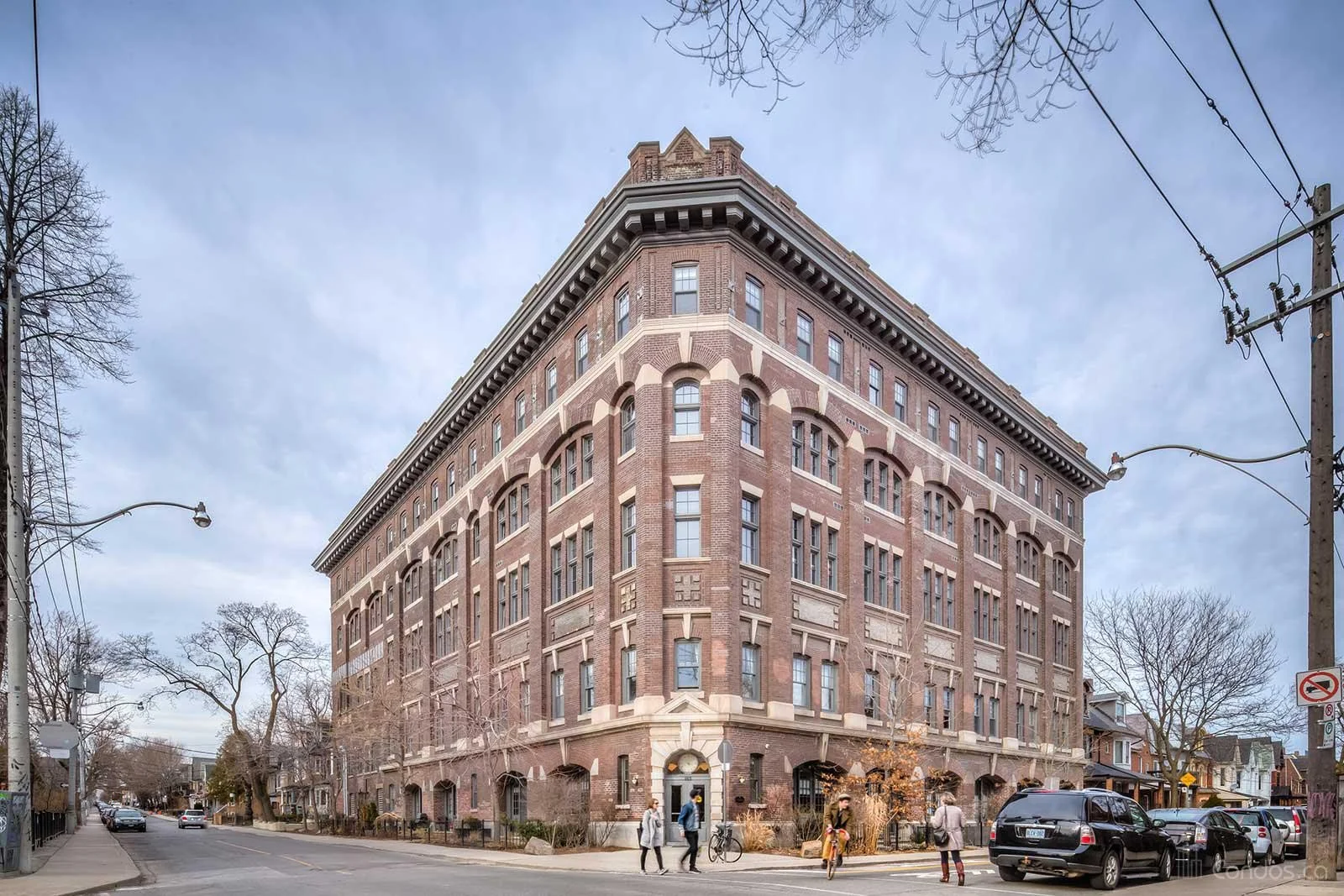
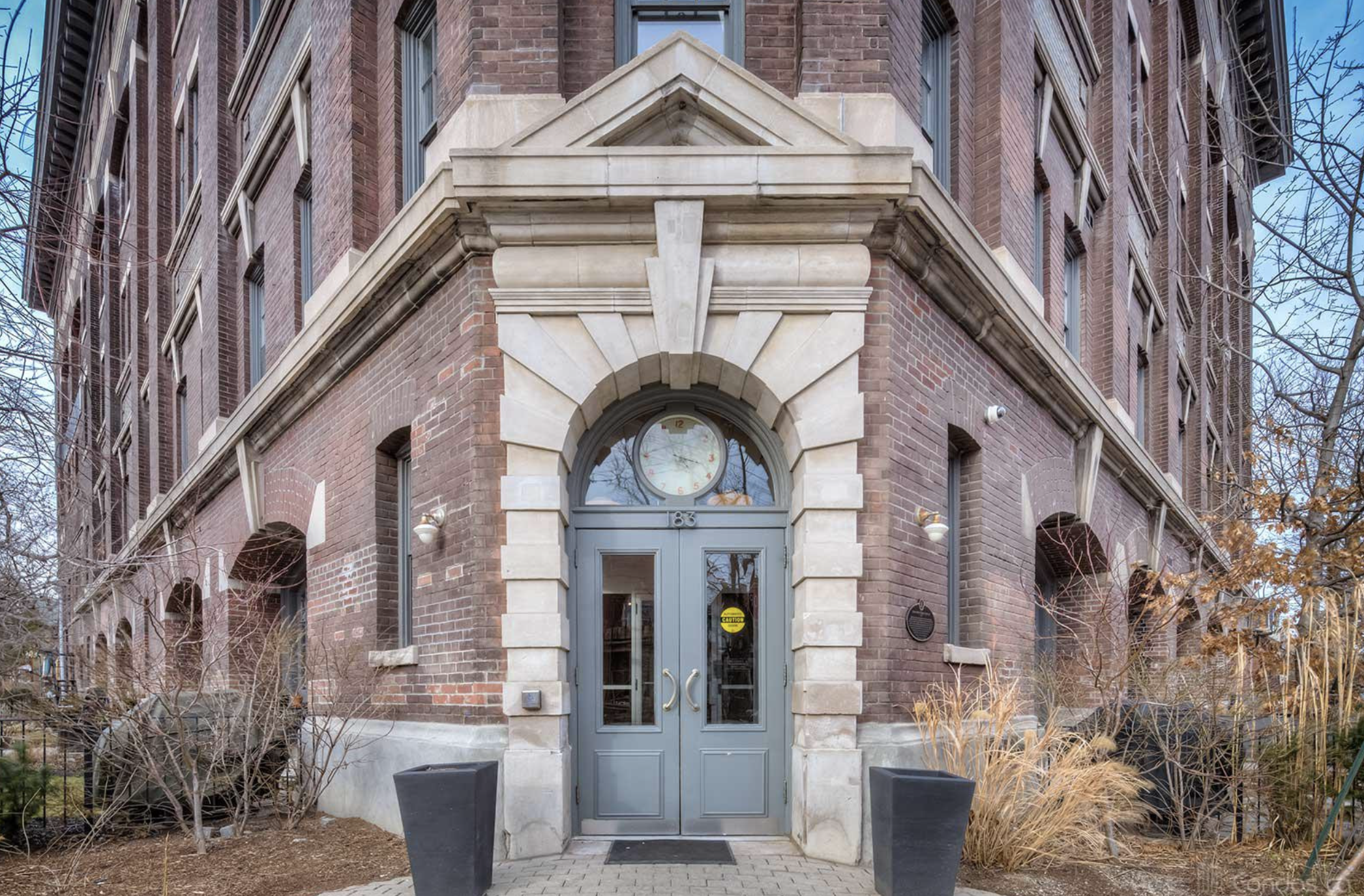
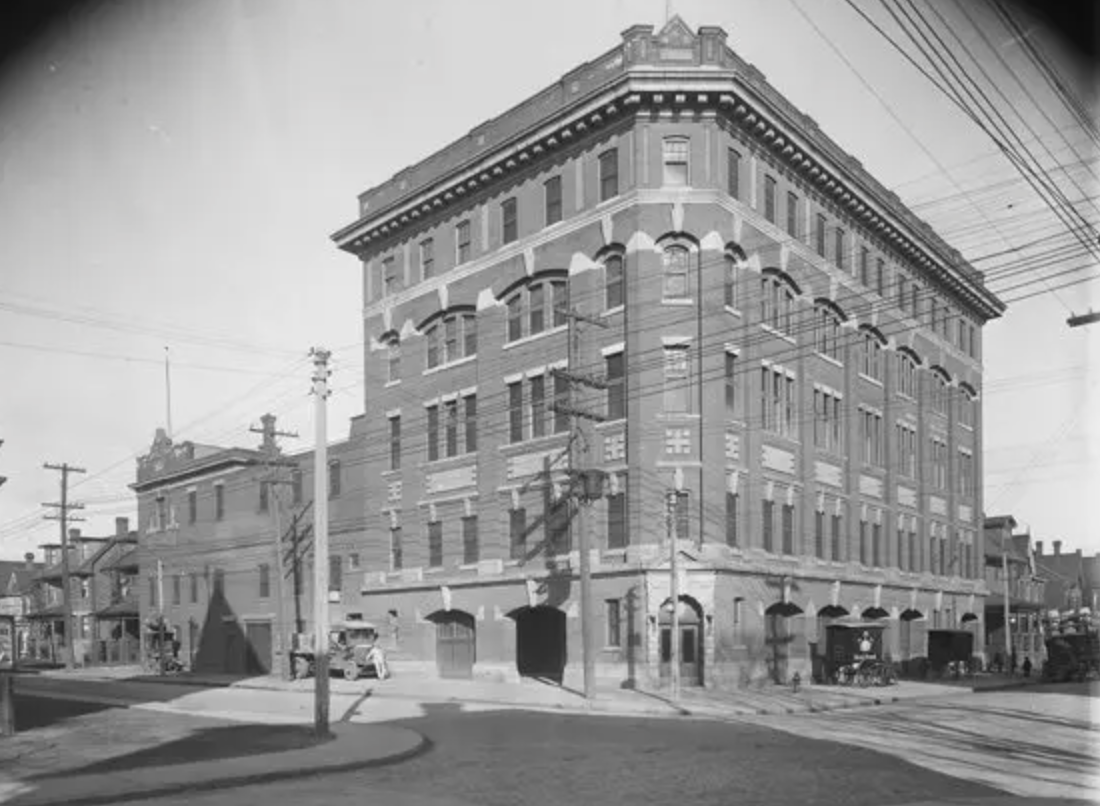
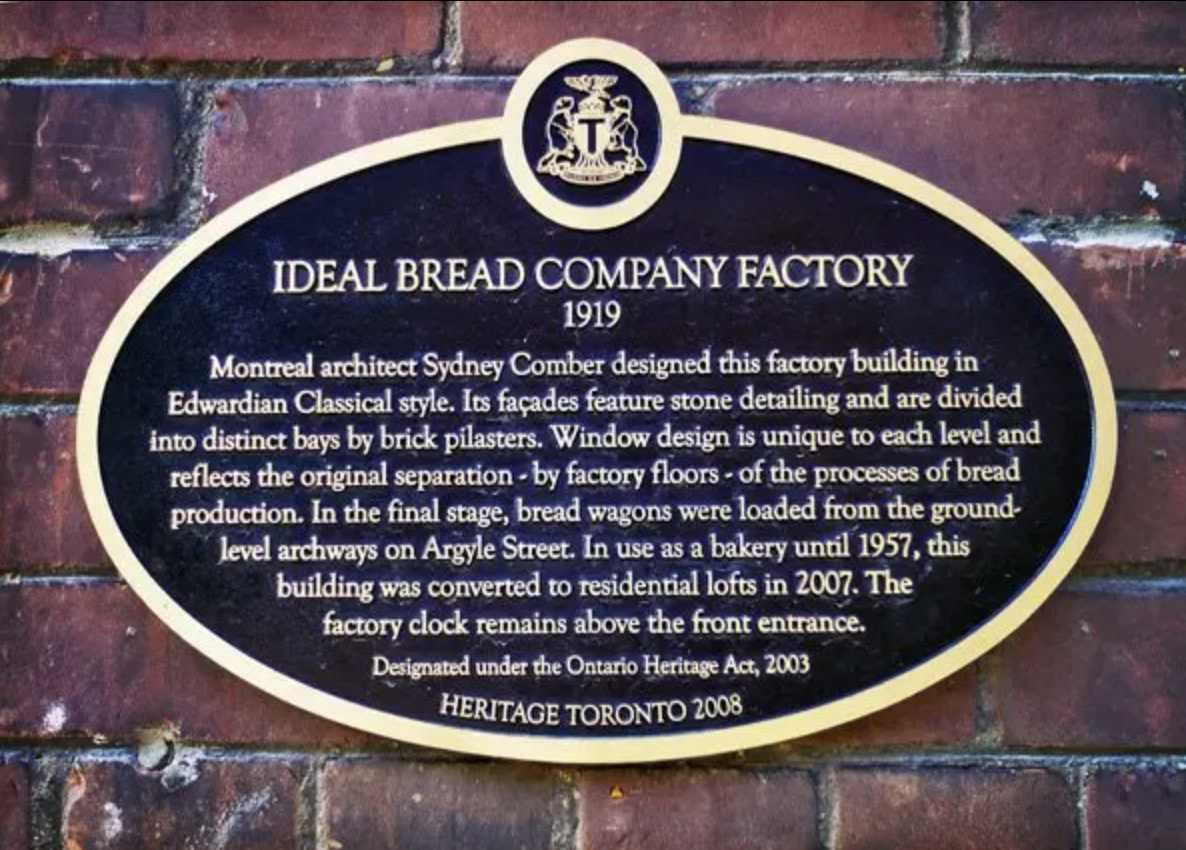
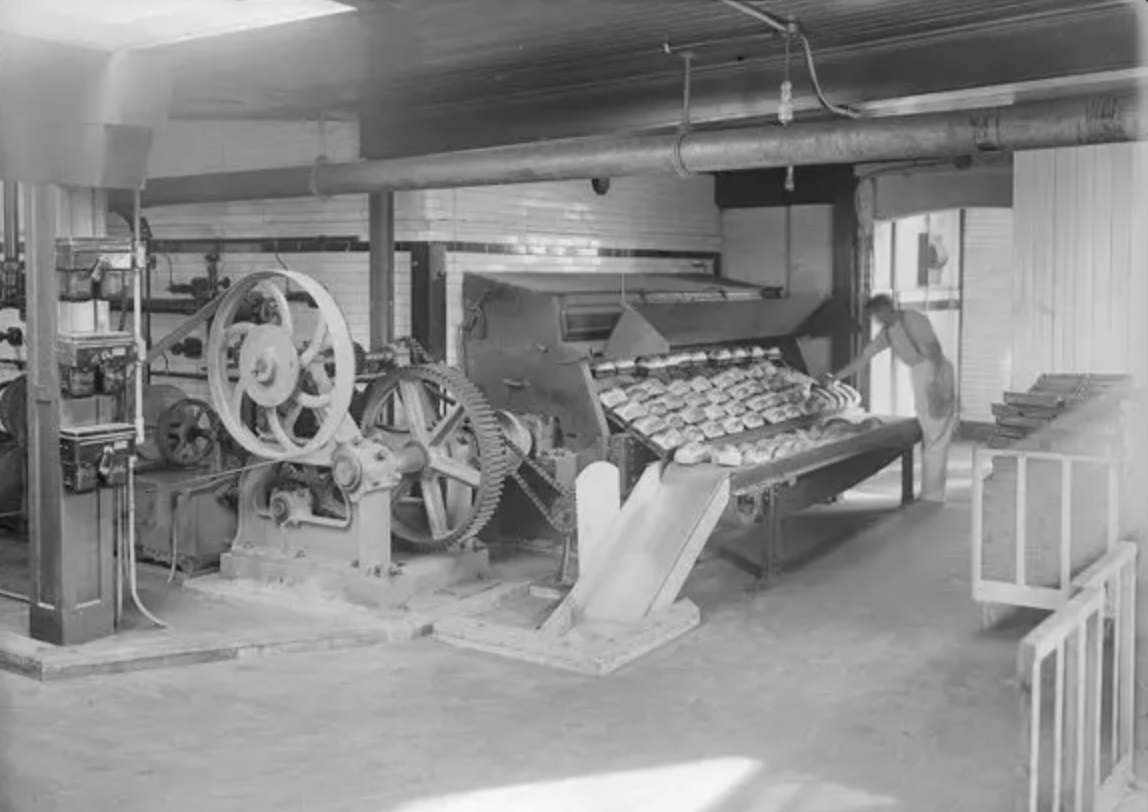
Argyle Lofts traces its origins back to 1873, making it one of the oldest industrial structures on this list. Originally developed in the late 19th century and later expanded, the building became home to the Ideal Bread Company, a major commercial bakery operation that defined its scale and presence along Dovercourt. The bakery era is what gave Argyle its massing, window rhythm, and distinctive industrial entrance that still reads as heritage from the street.
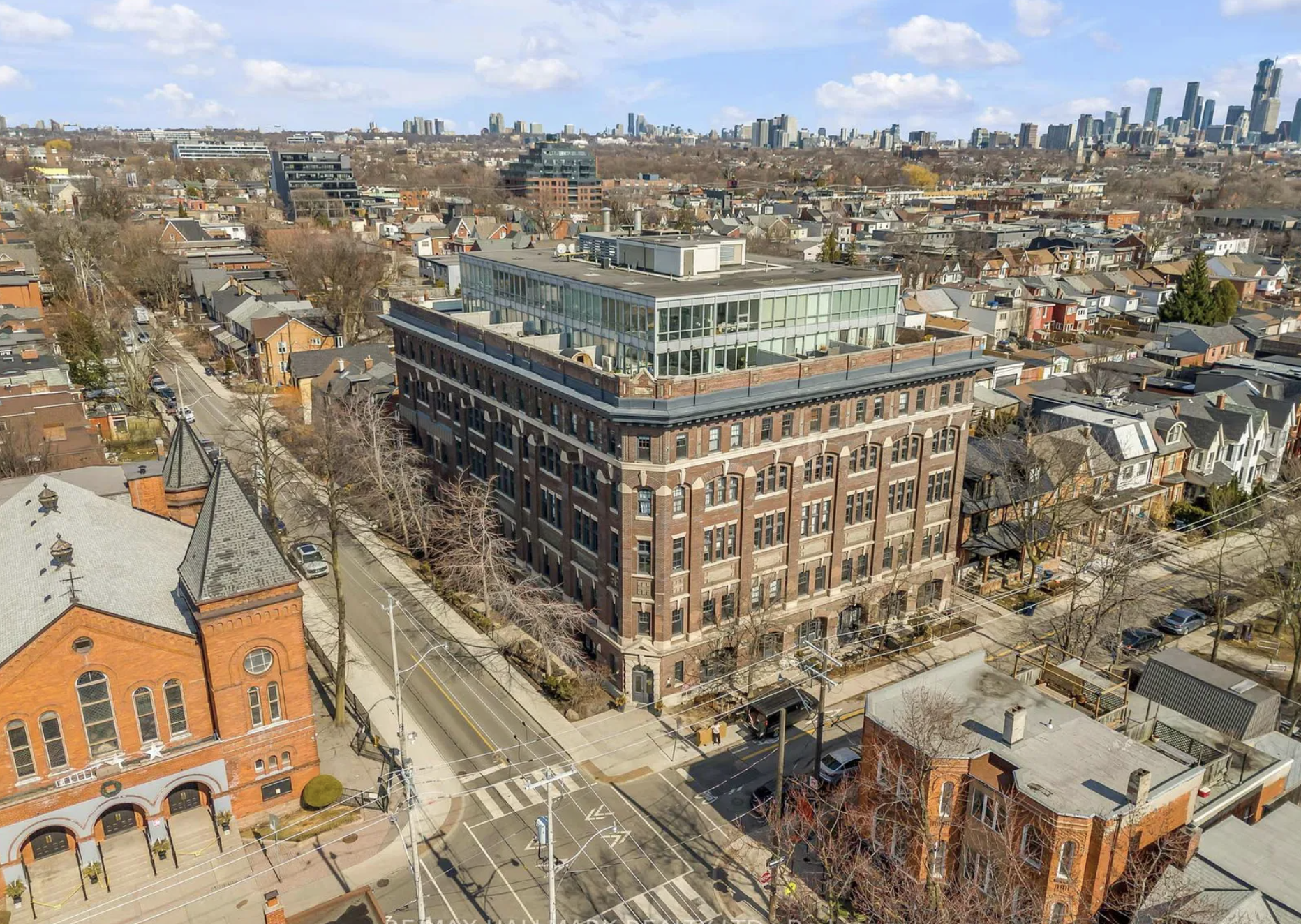
The building was converted in 2007 into 86 loft residences, with strong heritage oversight to ensure meaningful retention rather than cosmetic reference. The preserved masonry, structural depth, and exterior façade rhythm make it immediately clear this was not built for residential use.
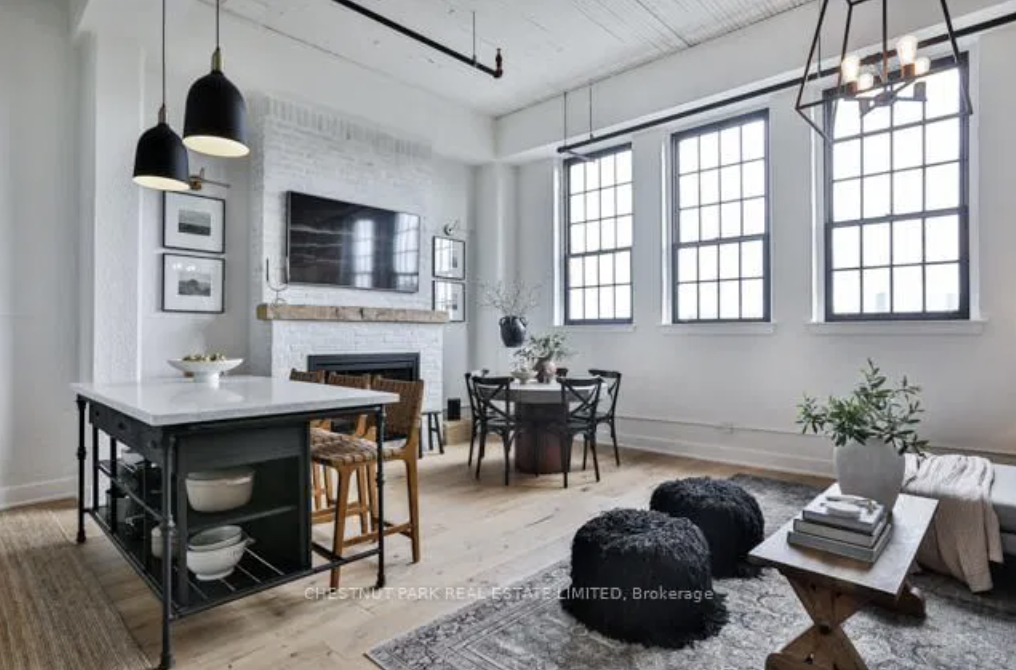
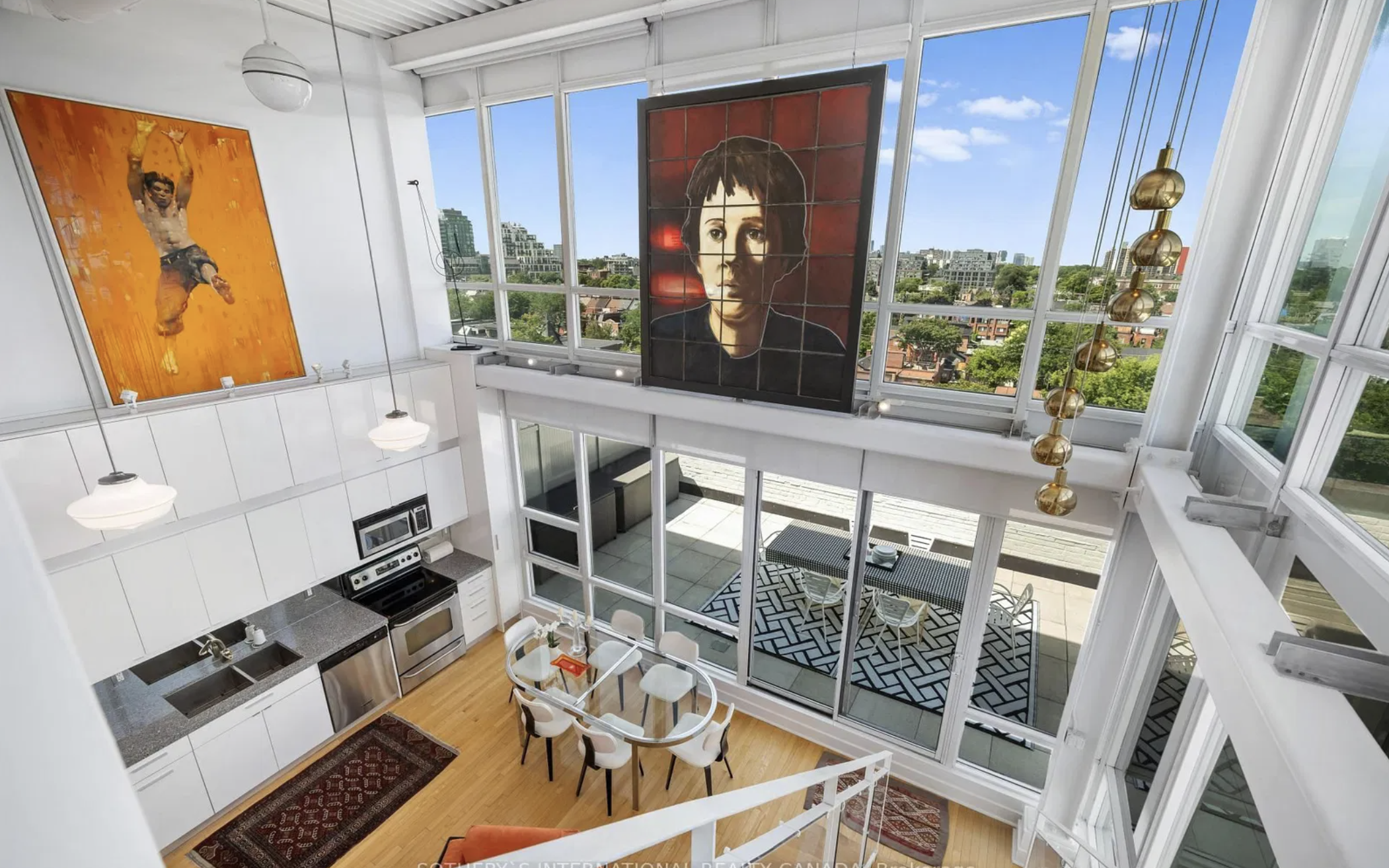
Inside, Argyle offers a mix of single-level and two-level lofts that create real vertical volume. Ceiling heights generally range from 9 to 17 feet, and while not the tallest on this list, the proportions feel grounded and substantial. The building carries a bit of grit, which is exactly what many hard loft buyers are actually looking for.
At approximately $1,075 per square foot, Argyle trades as a strategic positioning play. It sits at the intersection of Queen West and Ossington energy while benefiting from a quieter residential street setting. For buyers who want authenticity and location strength without paying direct strip premiums, Argyle consistently makes sense.
KEY FACTS
//
KEY FACTS //
Architectural Details:
• Heritage masonry
• Distinct façade detailing
• Deep window wells
• Mezzanine/two-level layouts in select units
Amenities:
• Visitor parking
• Bike Storage
• Neighbourhood Vibes
• Pizzeria Badiali (cross the street)
Original Use: Ideal Bread Company
Built: 1873
Converted: 2007
Storeys: 6
Units: 86
Unit Size Range: 484 sqft - 1838 sqft
Market Personality:
Historic Queen West hard loft with consistent demand, strong resale fundamentals, and enduring architectural credibility.
Buyer Profile:
End-users and design-aware professionals who want authentic brick-and-beam character with immediate access to Ossington and Queen West.
VICTORIA LOFTS
📍 152 Annette St
Neighbourhood: The Junction
Avg $1,048 per square foot
BUILDING HISTORY & LOFT DETAILS
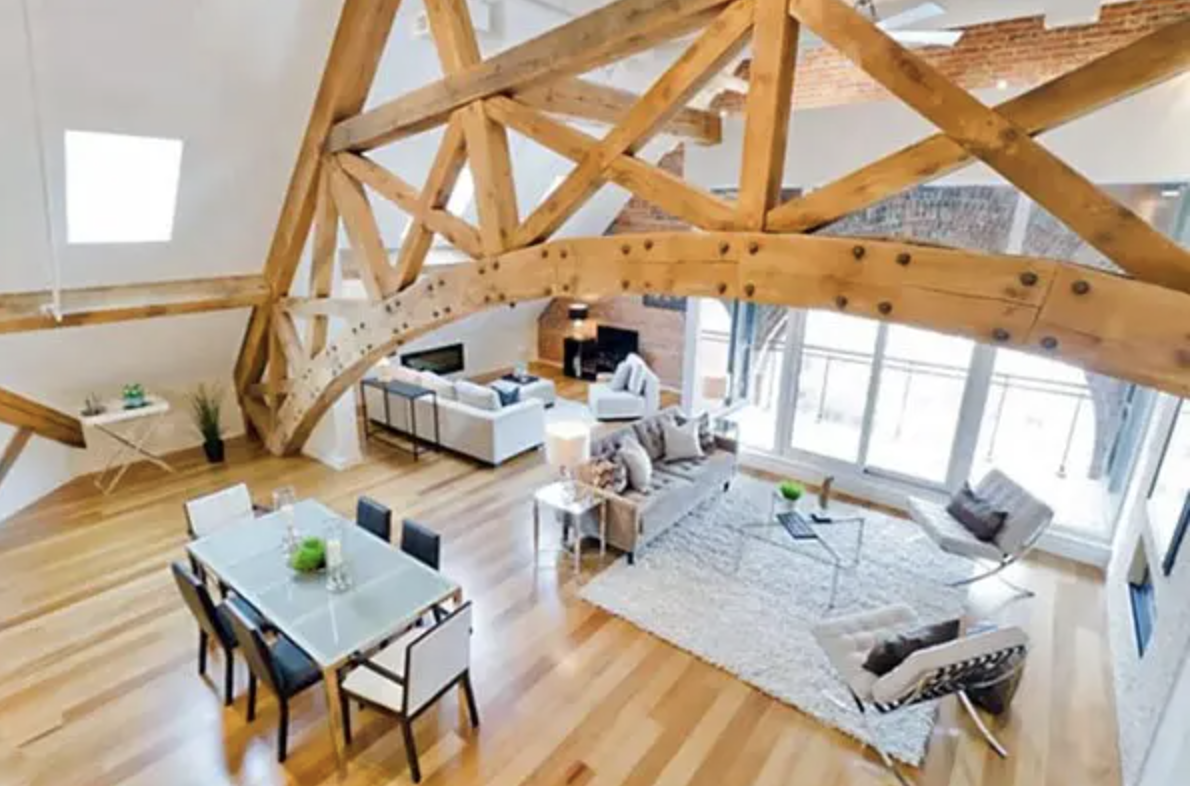
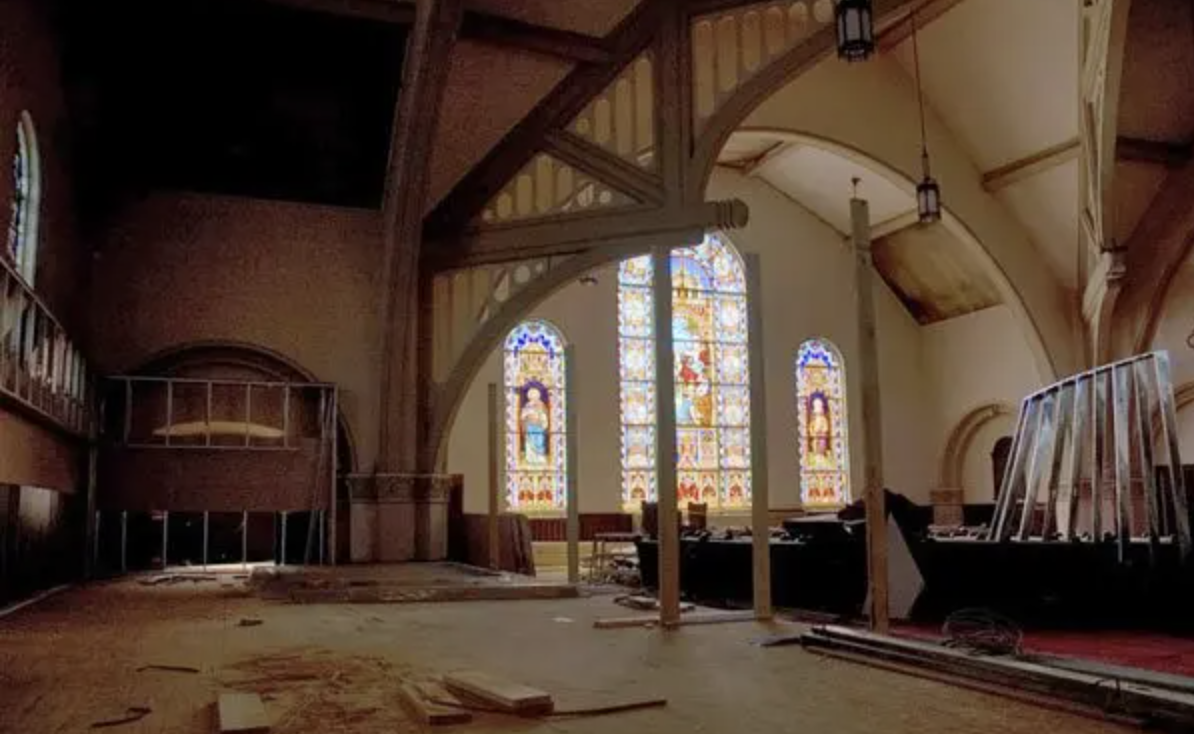
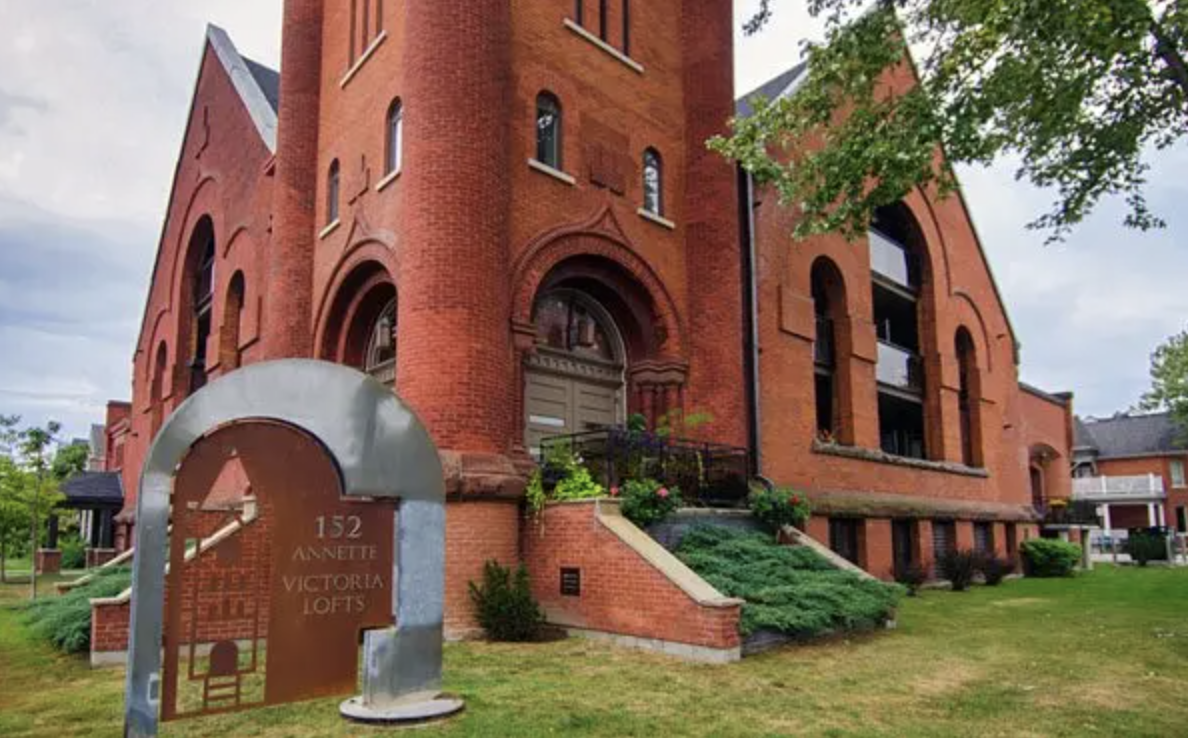
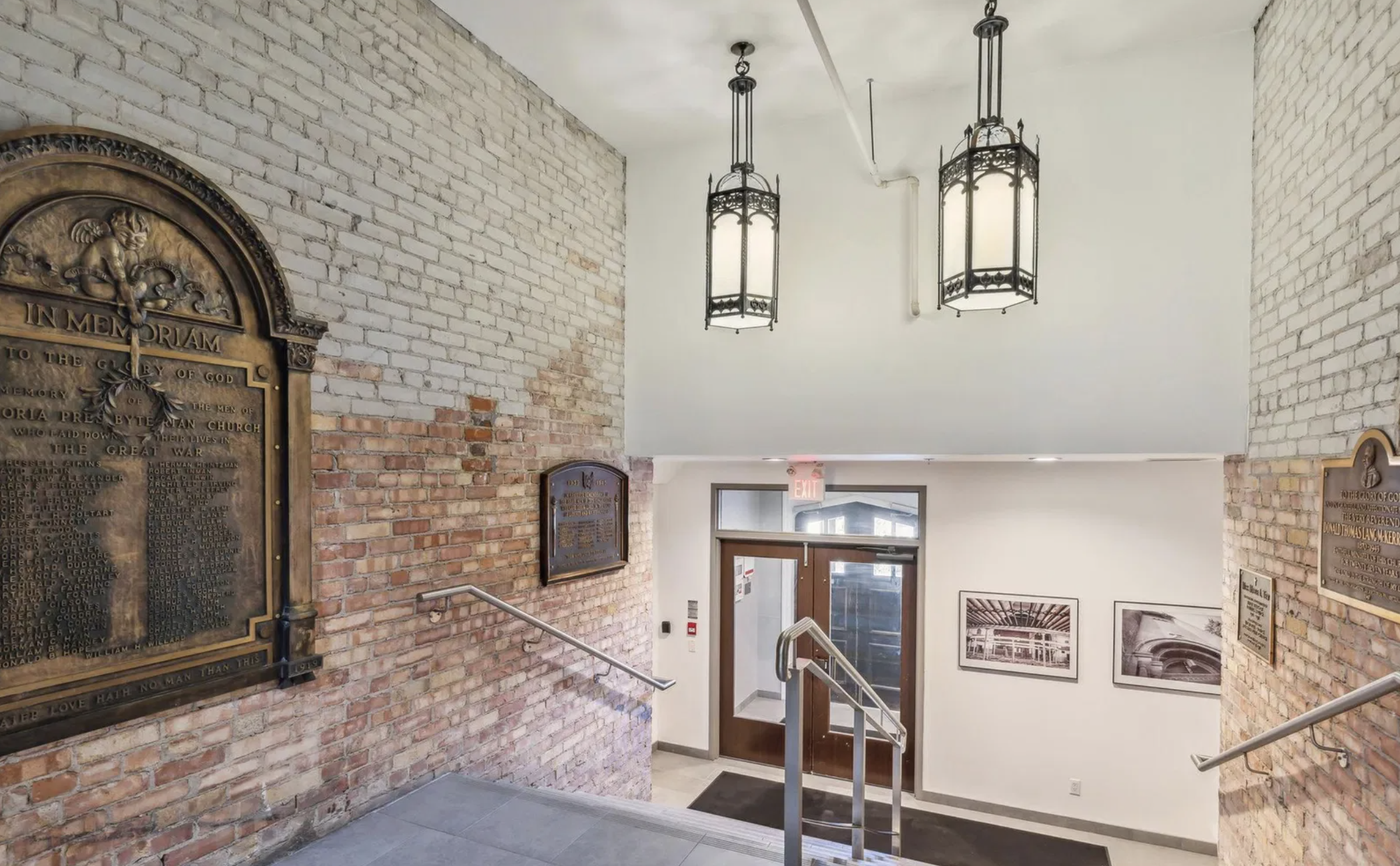
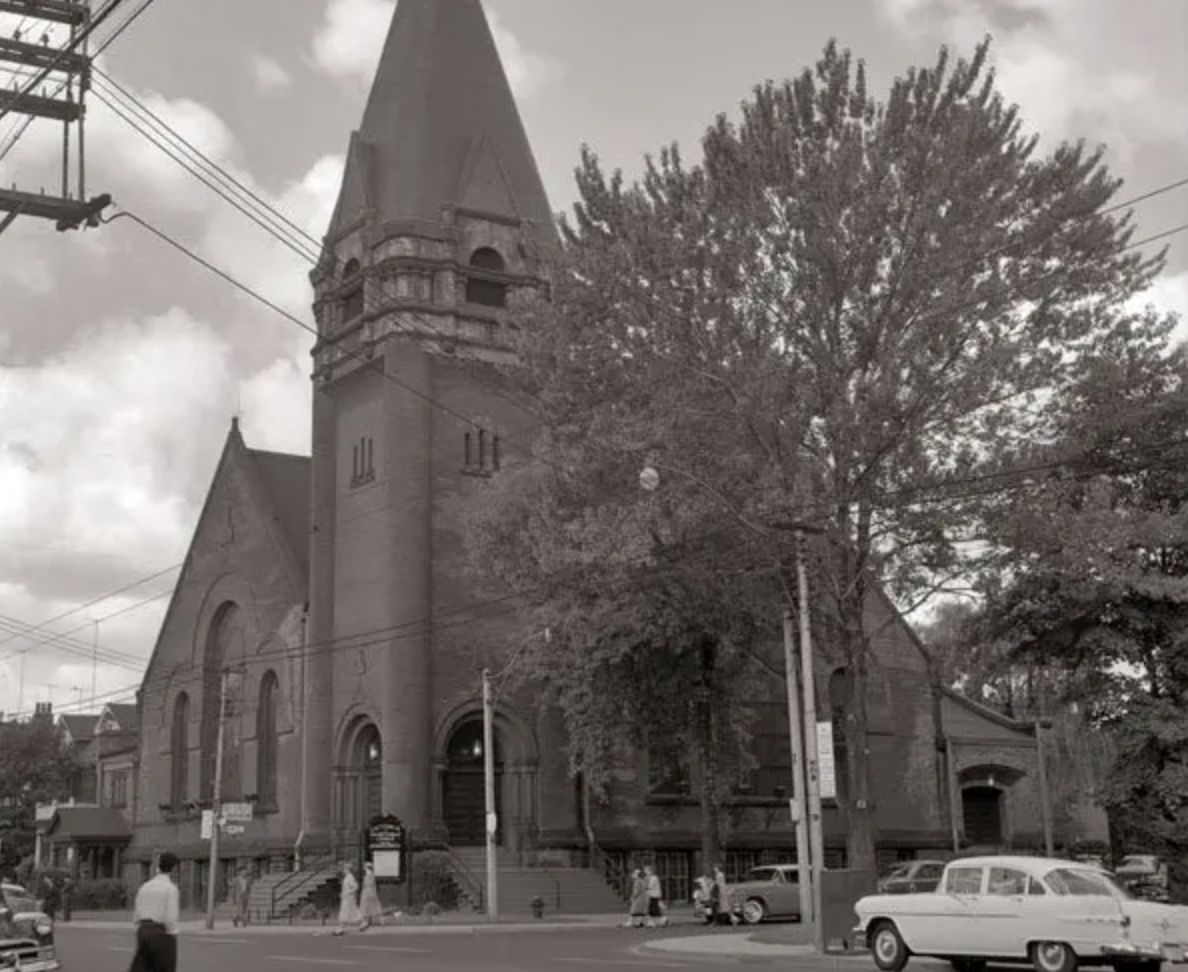
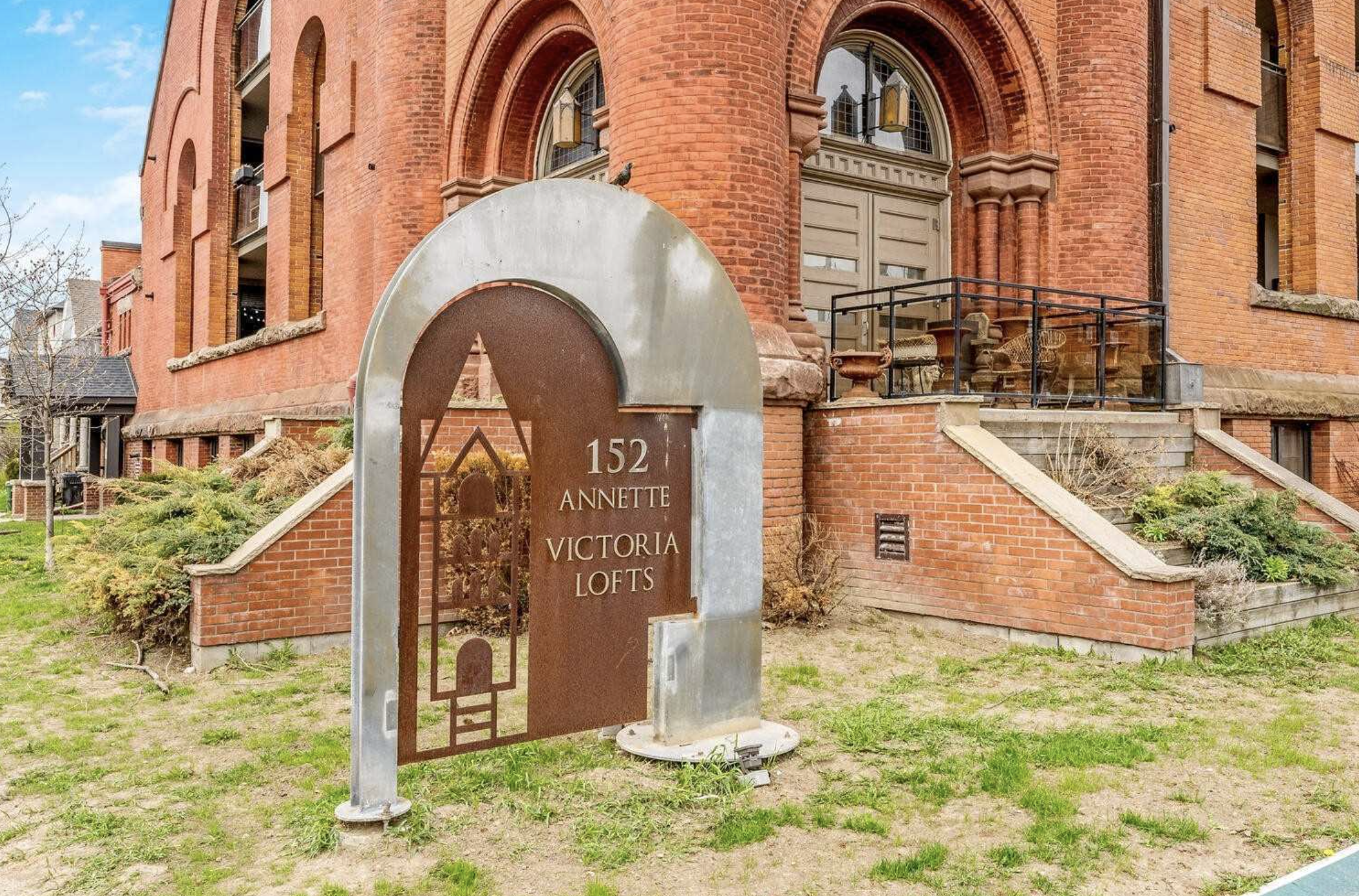
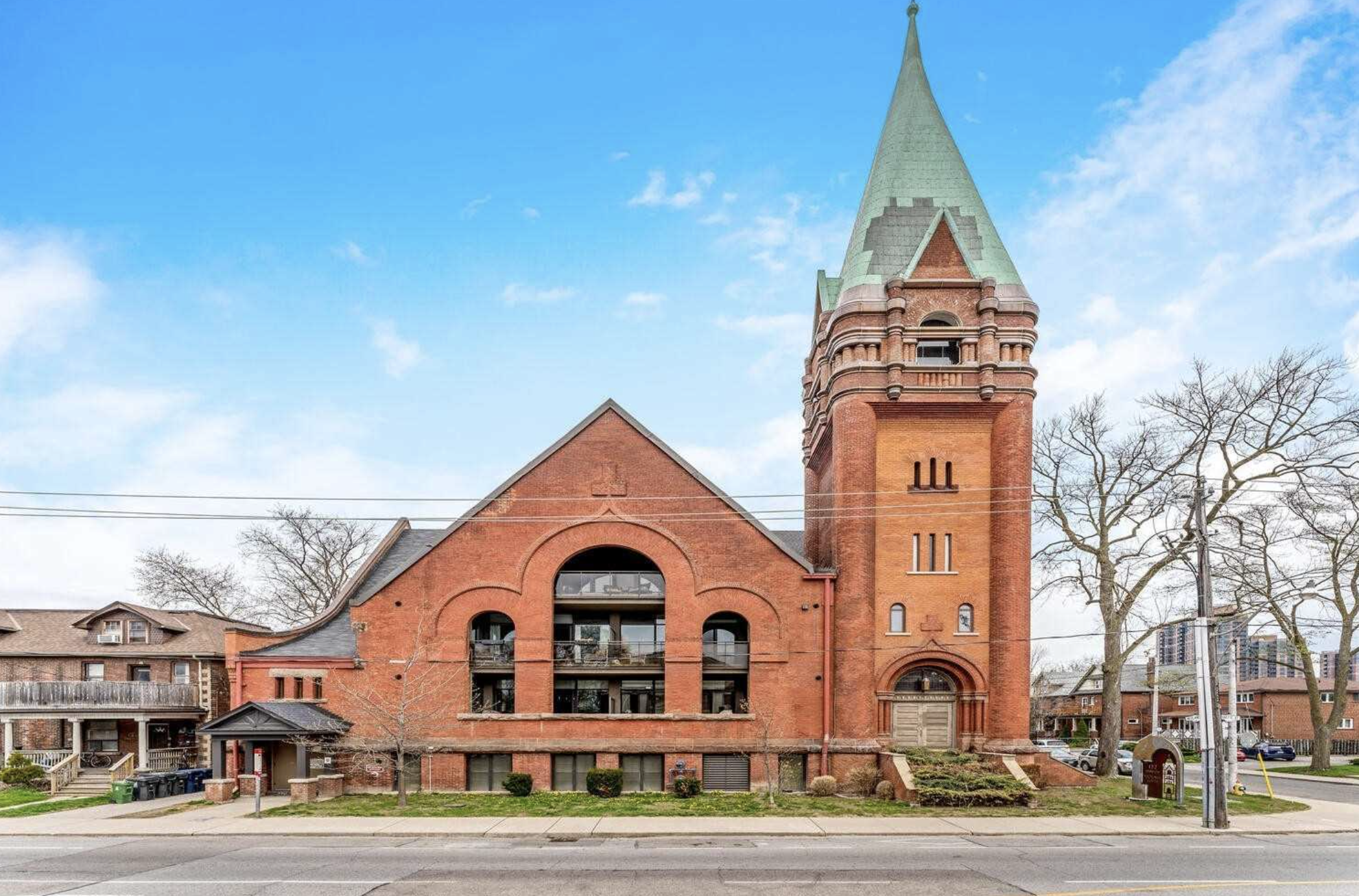
Victoria Lofts was originally built in 1909 as Victoria Presbyterian Church, serving the Junction community for decades before eventually closing and later being converted into residential lofts in the late 2000s. The building’s ecclesiastical origin defines its presence. From the street, it still reads clearly as a church, which is exactly why the conversion feels authentic rather than disguised.
Church buildings were constructed to feel permanent and monumental. Thick brick walls, tall arched windows, and vertical proportions were structural decisions, not stylistic ones. That permanence is what gives Victoria its architectural weight today.
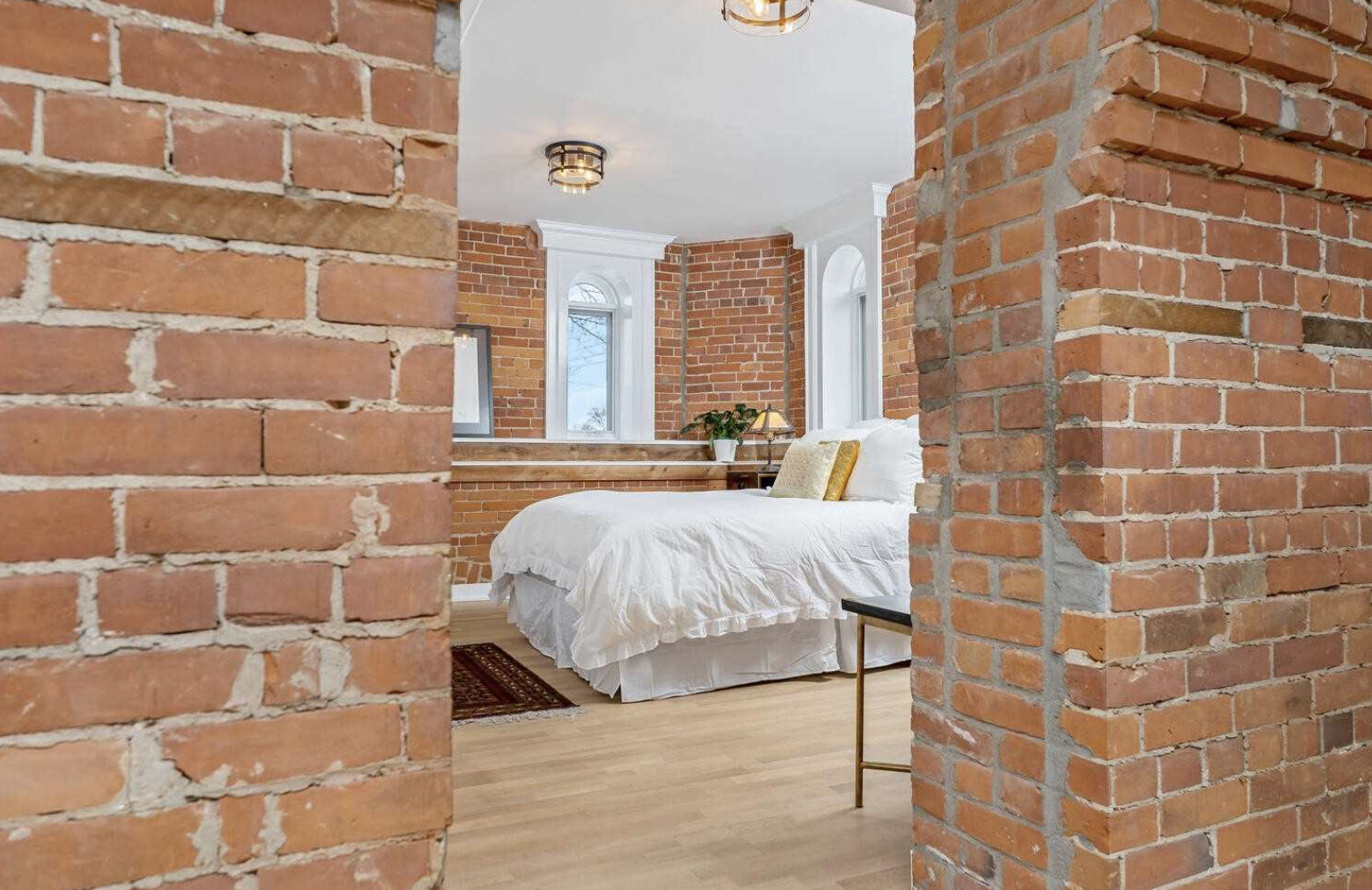
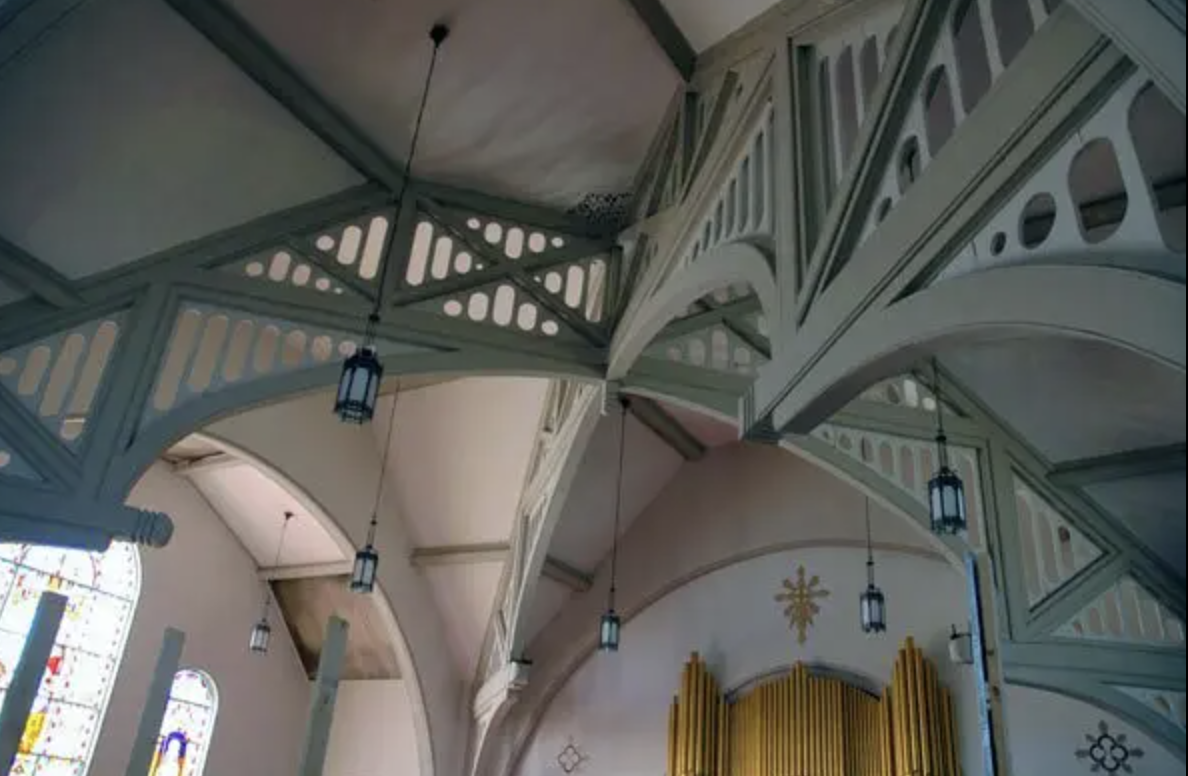
Inside, the defining feature is volume. Ceiling heights in select suites reach approximately 17 to 18 feet, with vaulted sections that reflect the original sanctuary geometry. Layouts are less standardized because they respond directly to the church’s footprint. The result is space that feels distinctive rather than optimized.
At approximately $1,048 per square foot, Victoria trades as a rare architectural product. The Junction location supports long-term stability, but the primary value driver is the conversion itself. There are very few church lofts of this scale in the area, and that scarcity continues to shape buyer demand.
KEY FACTS
//
KEY FACTS //
Architectural Details:
• Cathedral-style arched windows
• Exposed brick masonry
• Vaulted ceilings with dramatic volume
• Unique multi-level and irregular layouts
Amenities:
• Minimal shared amenities
• Limited parking
• Boutique, low-density feel
Original Use: Victoria Presbyterian Church / Sunday school building
Built: 1909
Converted: Late 2000s
Storeys: 4
Units: 38
Unit Size Range: 588 sqft - 2539 sqft
Ceiling Heights: 12–18 ft
Market Personality:
Architecturally dramatic and boutique. Low turnover, emotionally driven demand.
Buyer Profile:
Design-first buyers, often established professionals or downsizers, seeking truly unique architecture over amenity-heavy condo living.
ABBEY LOFTS
📍 384 Sunnyside Ave
Neighbourhood: Roncesvalles / High Park
Avg $1,036 per square foot
BUILDING HISTORY & LOFT DETAILS
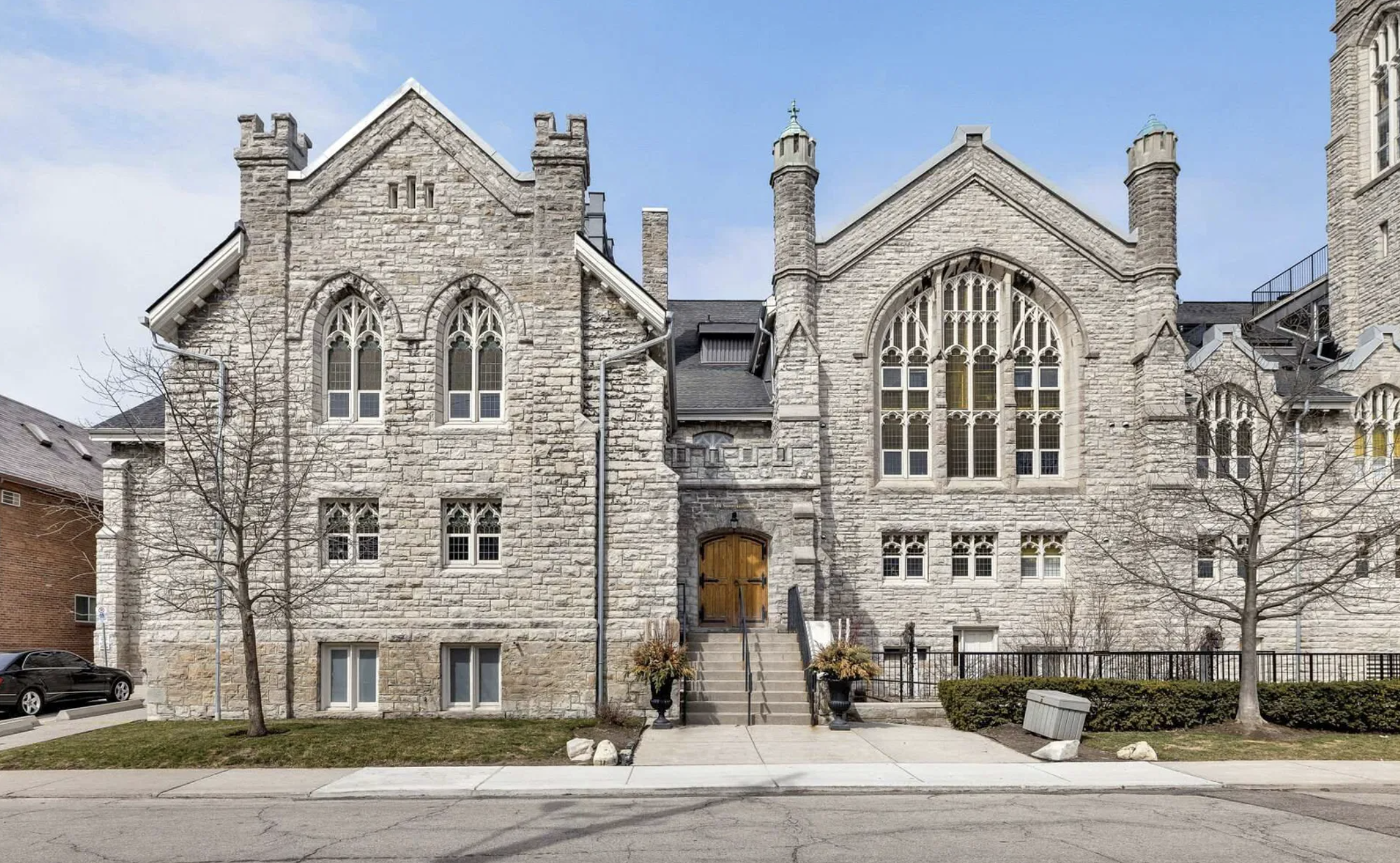
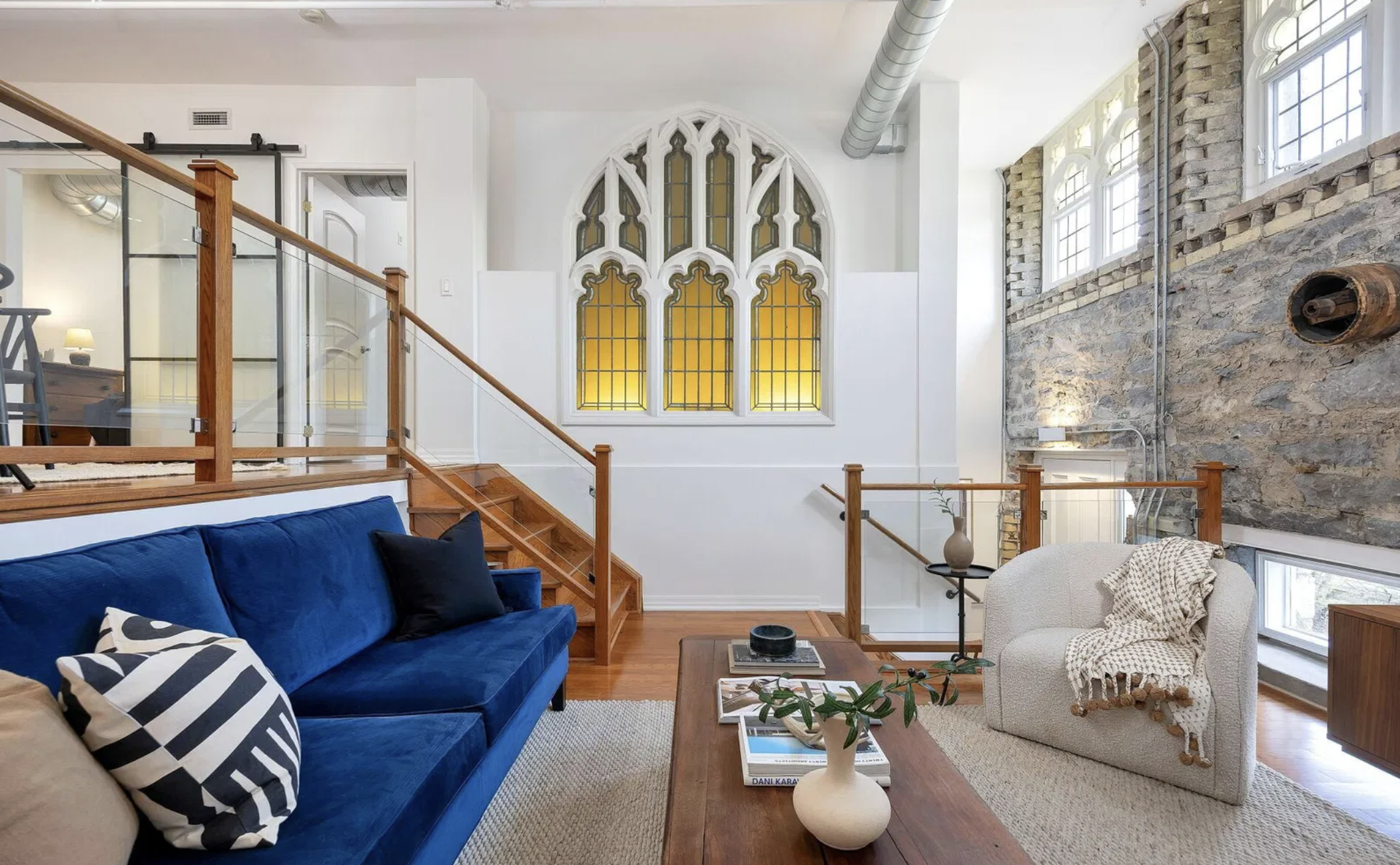
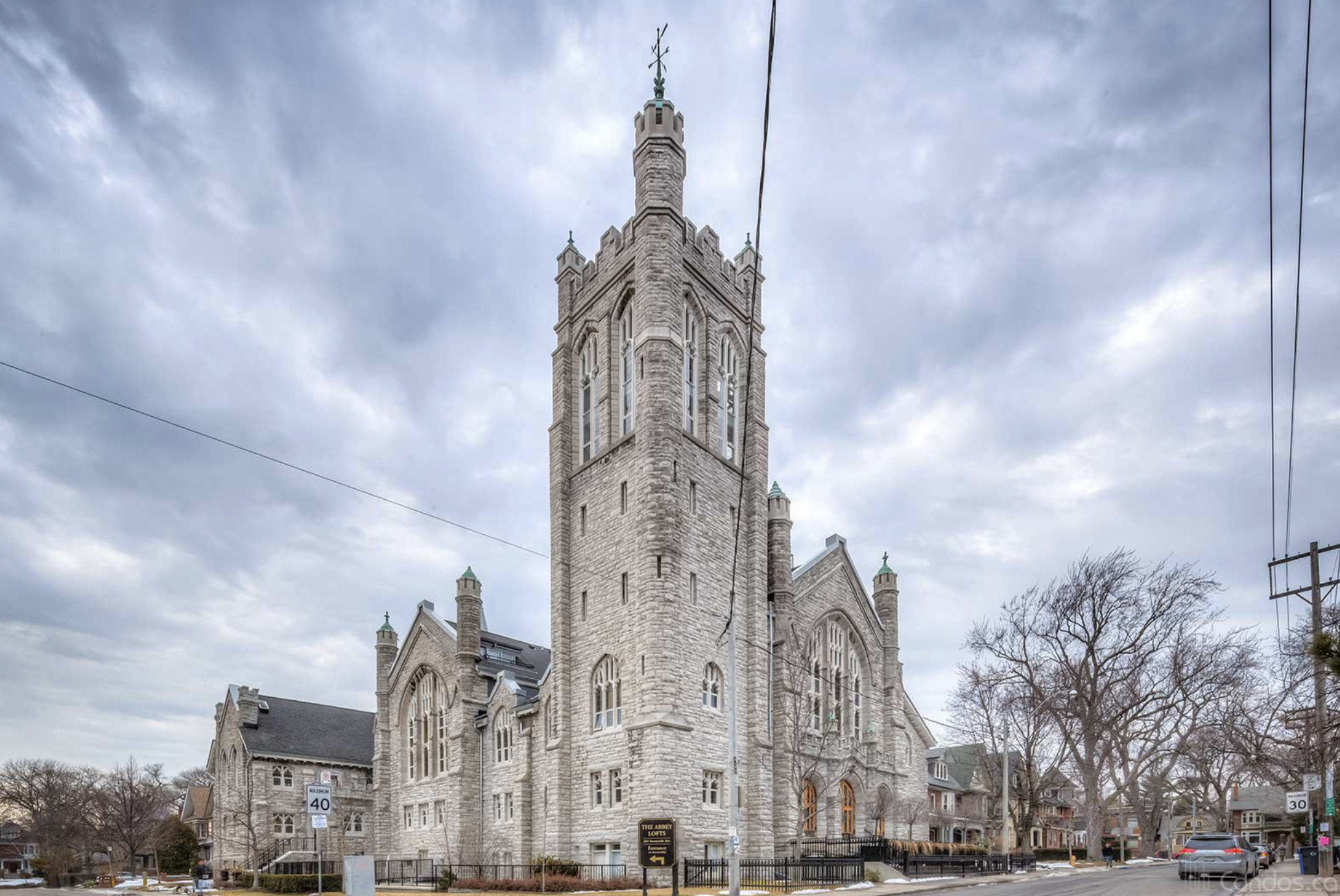
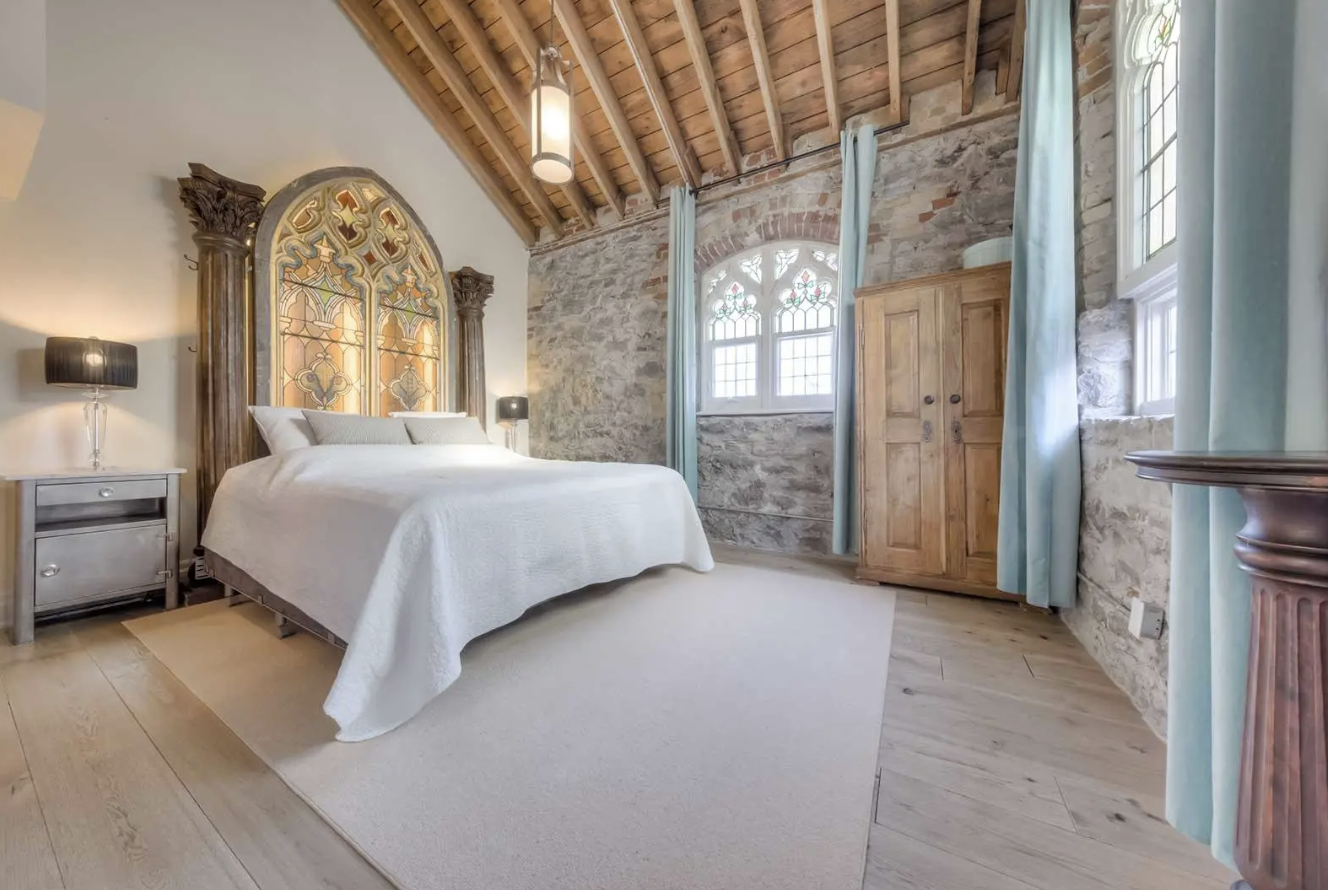
Abbey Lofts was originally constructed in 1911 in a Medieval Revival style, defined by its limestone façade, tower element, and ecclesiastical detailing that remains intact today. The structure served various congregations over the decades before eventually closing and being acquired for residential redevelopment.
The building was converted in 2008, with a clear focus on preserving its defining architectural elements. This is not a softened interpretation of a church. The exterior stonework, vertical proportions, and tower presence remain dominant from the street, giving the building a character that is extremely uncommon within Toronto’s residential stock.
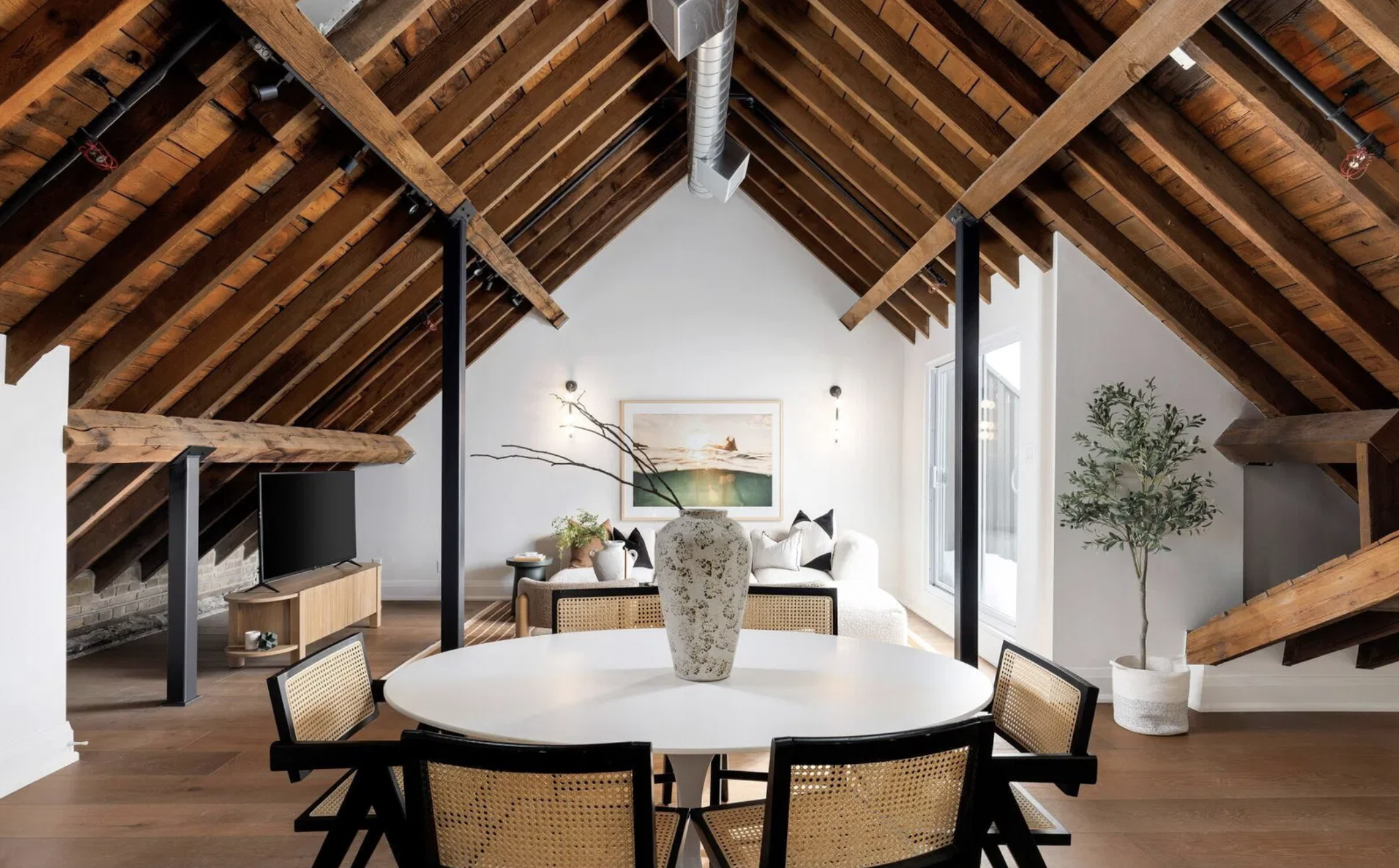
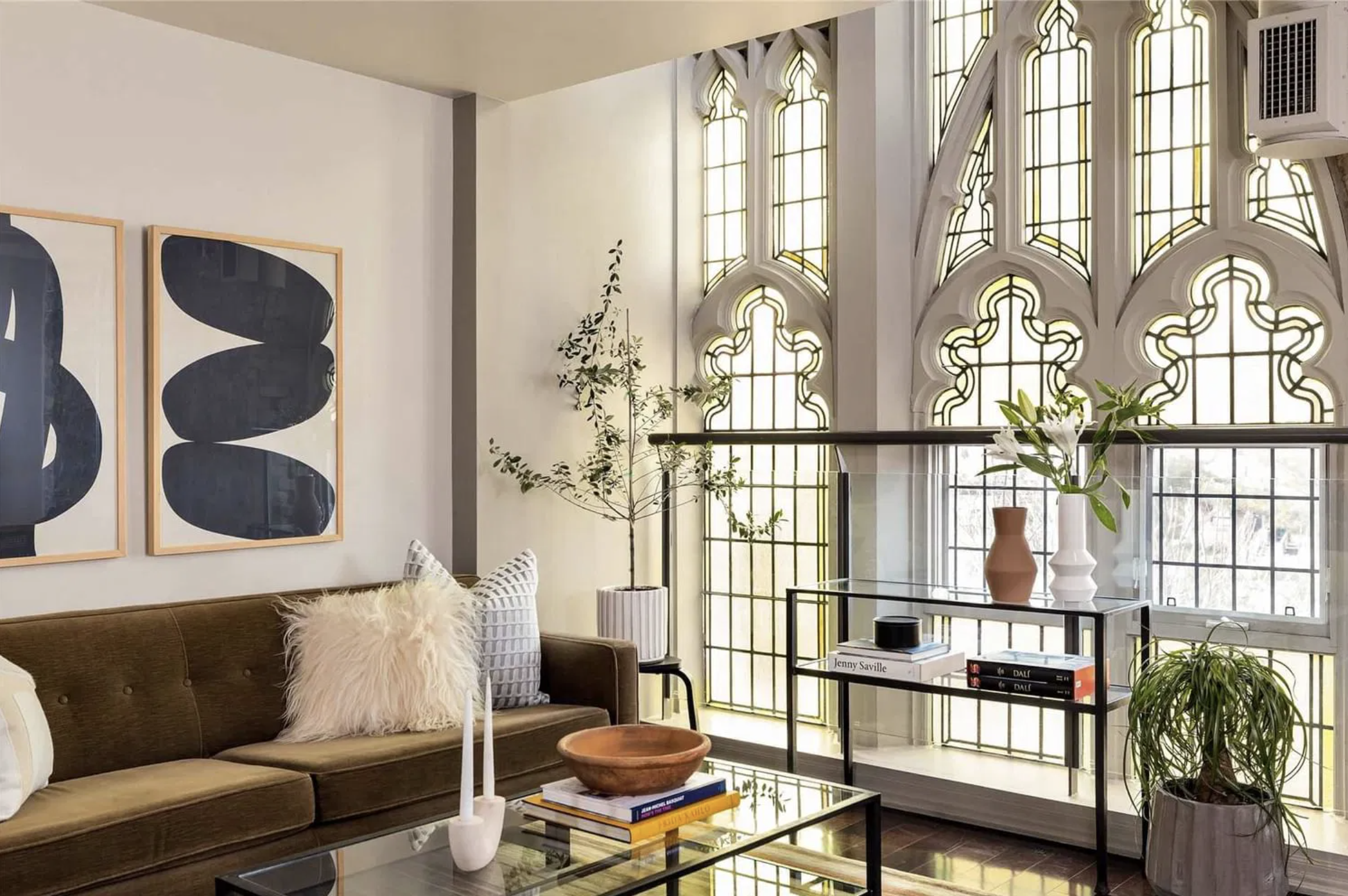
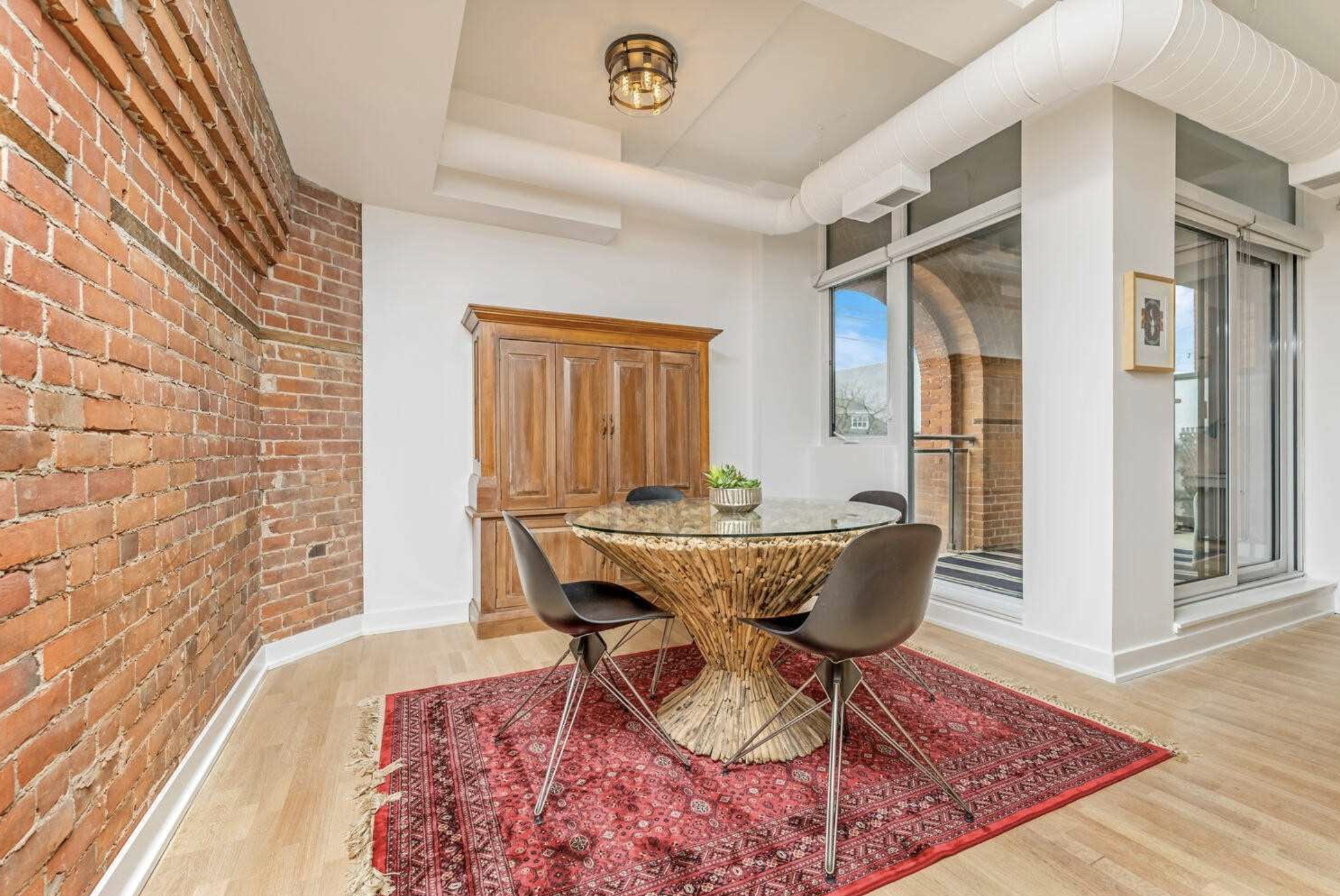
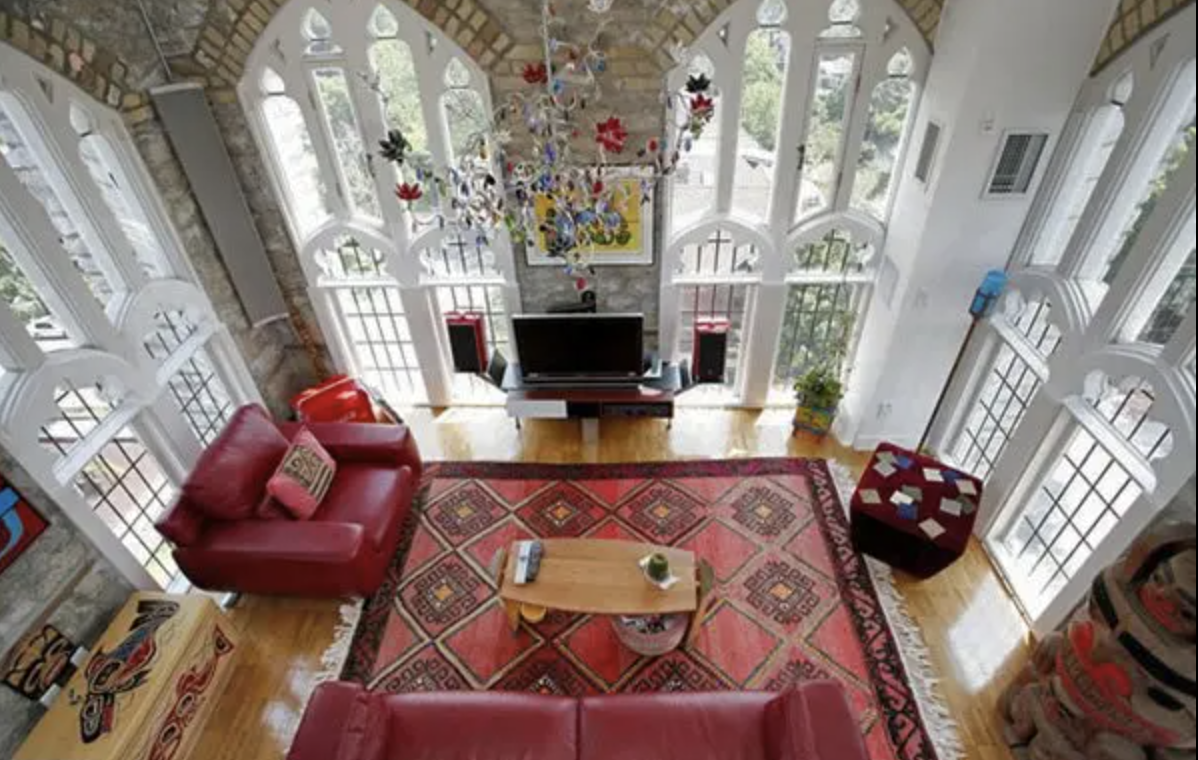
Inside, the original sanctuary geometry drives the experience. Vaulted wood ceilings, stained glass windows, and dramatic ceiling heights reaching approximately 17 feet are not stylistic additions. They are structural remnants of the building’s original purpose. Layouts can be unconventional because the structure was never designed for bedrooms and kitchens, and that irregularity is part of the appeal.
At approximately $1,036 per square foot, Abbey trades on rarity and emotional buyer behaviour. It is a limited-inventory building where demand tends to be specific and informed. When a suite becomes available, the buyer pool is usually intentional rather than casual.
KEY FACTS
//
KEY FACTS //
Architectural Details:
• Stained glass windows
• Limestone exterior
• Vaulted wood ceilings
• Arched church windows
• Medieval Revival style
• Irregular multi-level layouts
Amenities:
• Limited shared amenities
• Some private terraces
Original Use: Church
Built: 1910–1911
Converted: 2008
Storeys: 3
Units: 24
Ceiling Heights: Up to 17 ft vaulted
Unit Size Range: 961 sqft - 2889 sqft
Market Personality:
Rare High Park church conversion with extremely limited supply, strong neighbourhood loyalty, and emotionally driven demand tied to proximity to Roncesvalles and High Park itself.
Buyer Profile:
Architecture-driven end-users, often established professionals or downsizers, seeking one-of-a-kind space over amenity-heavy condo living.
TIP TOP LOFTS
📍 637 Lake Shore Blvd W
Neighbourhood: Fort York
Avg $1,031 per square foot


BUILDING HISTORY & LOFT DETAILS
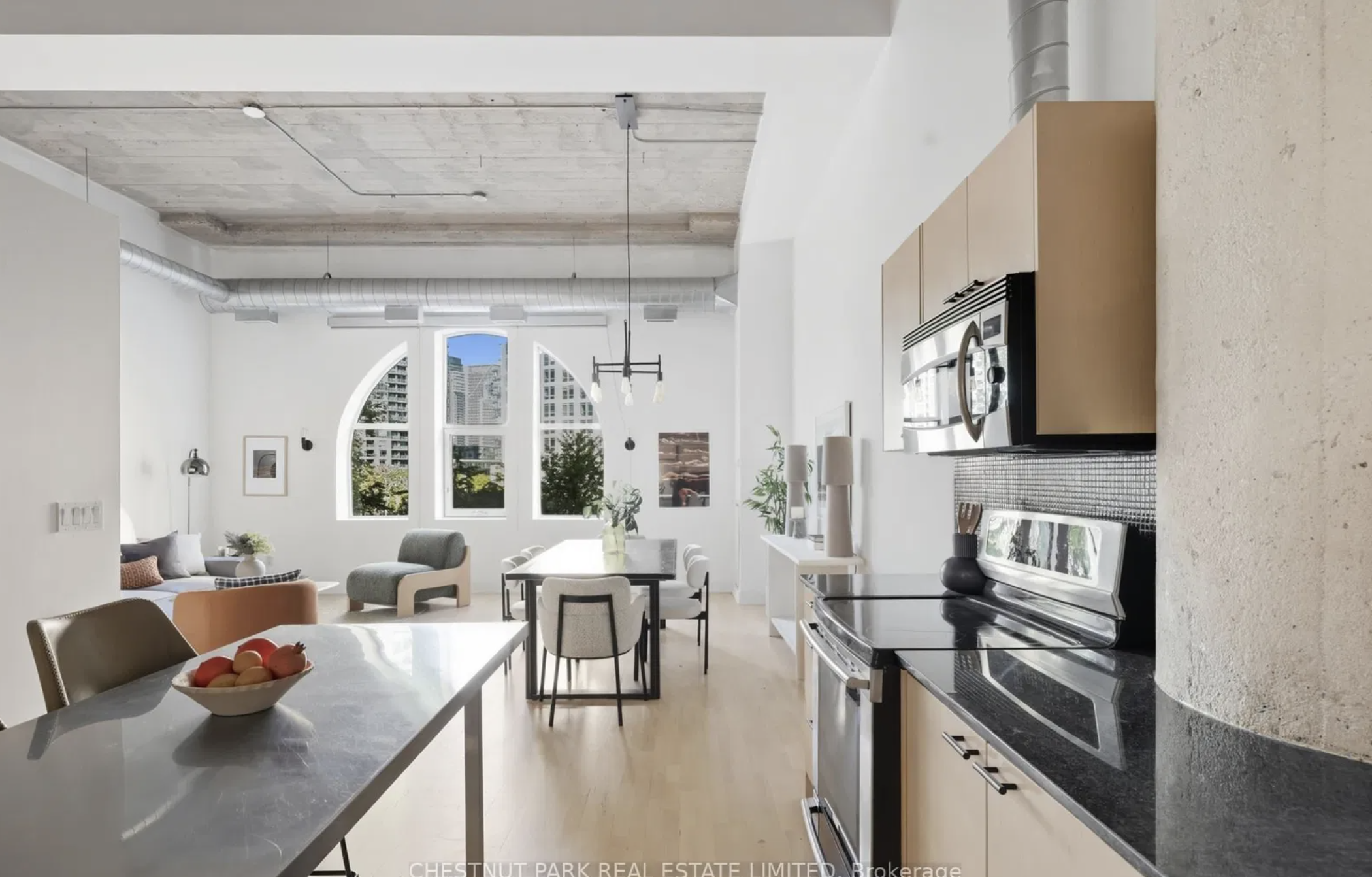
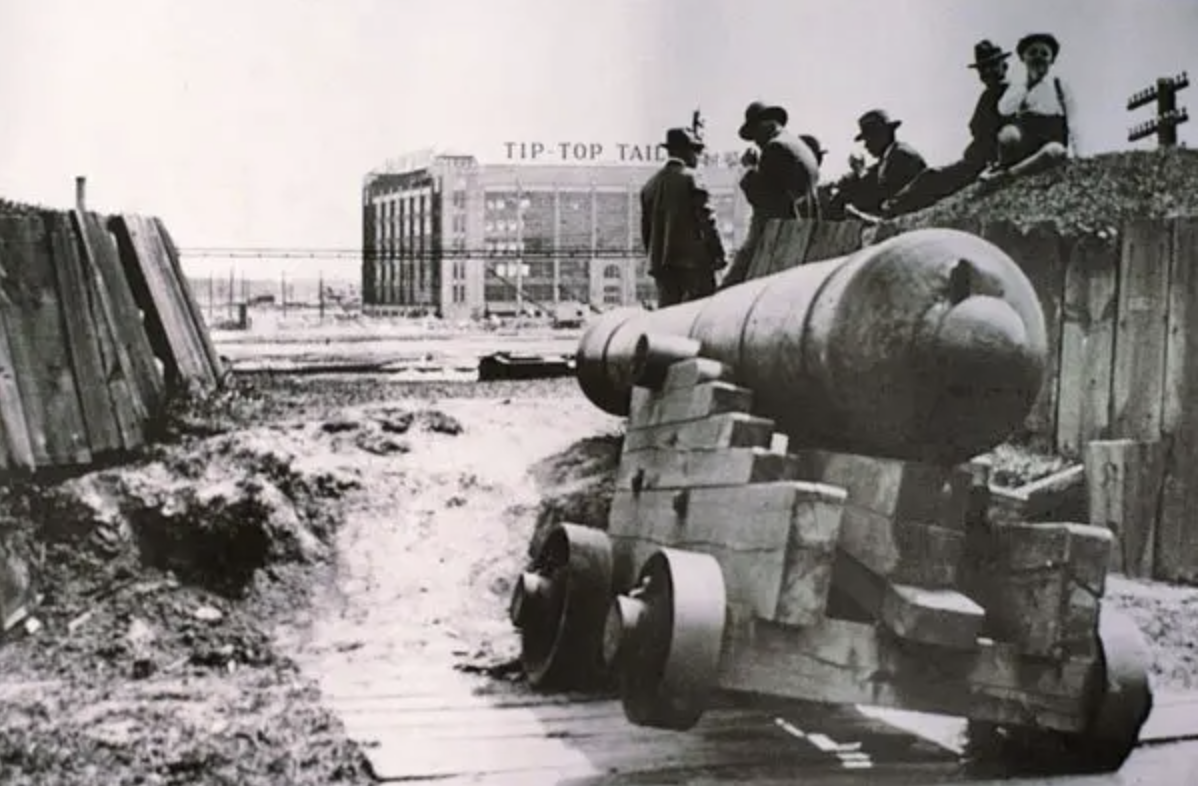
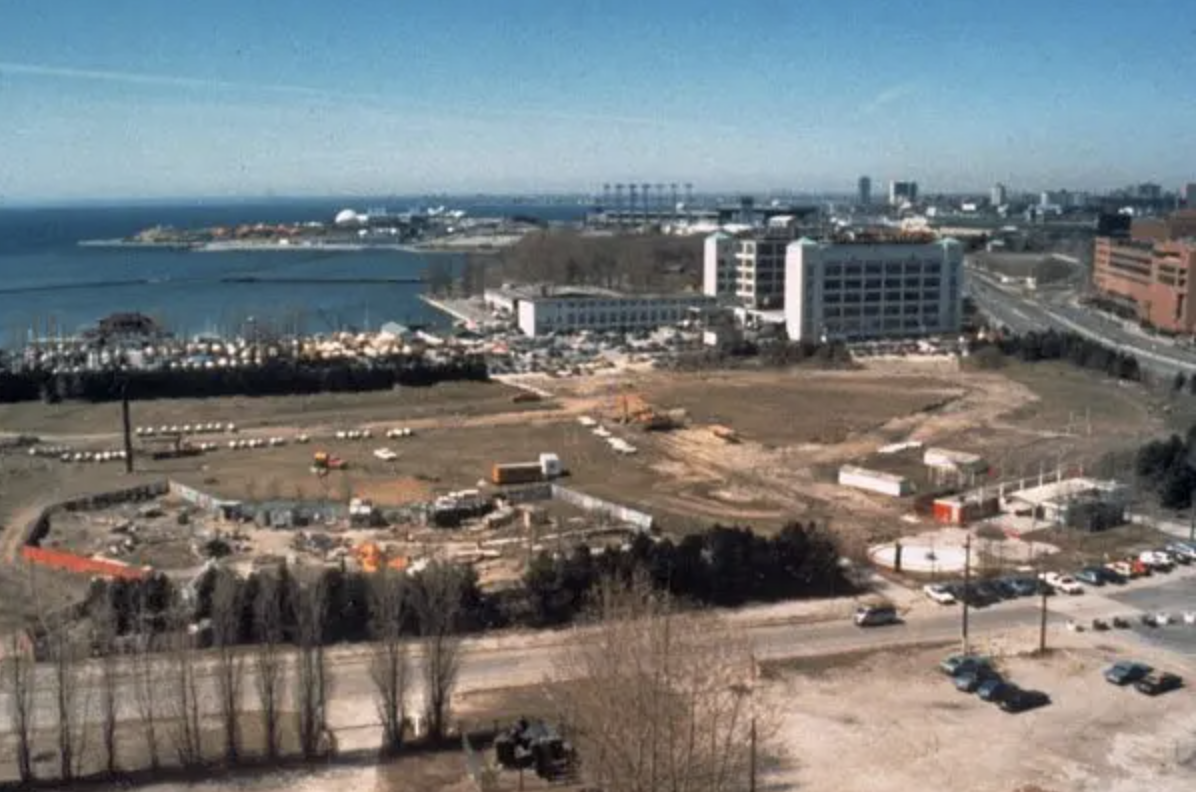
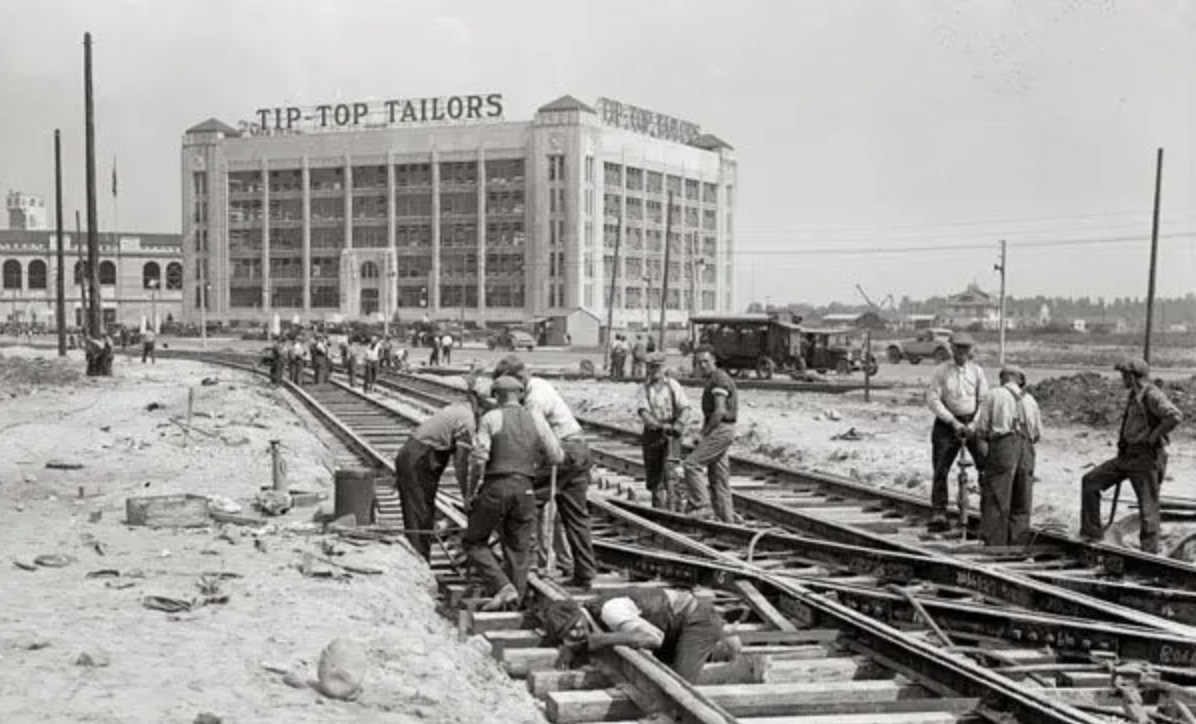
Tip Top Lofts was originally constructed in 1929 as the warehouse and headquarters for Tip Top Tailors, designed in a bold Art Deco style that still defines the building today. The rooftop “Tip Top Tailors” sign is not decorative branding. It is a preserved piece of Toronto industrial history and one of the city’s most recognizable waterfront landmarks.
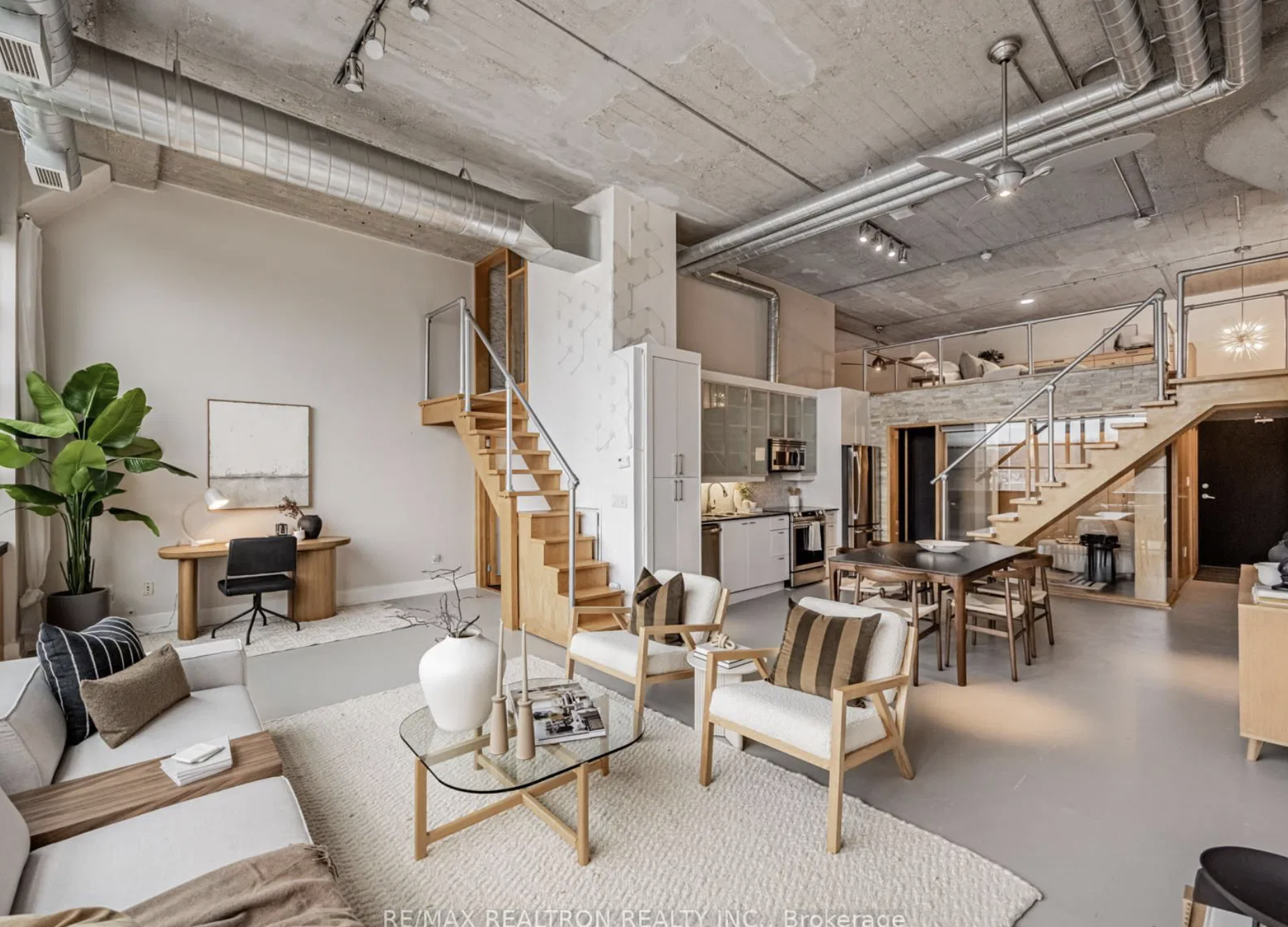
The building was converted in 2006 into 256 loft residences, with the exterior façade and architectural identity carefully retained. Unlike brick-and-beam warehouse conversions, Tip Top’s character comes from its streamlined Art Deco lines, curved corner windows, and strong horizontal banding. The conversion introduced a hybrid interior mix, with some suites leaning more industrial and others offering cleaner, modern loft finishes.
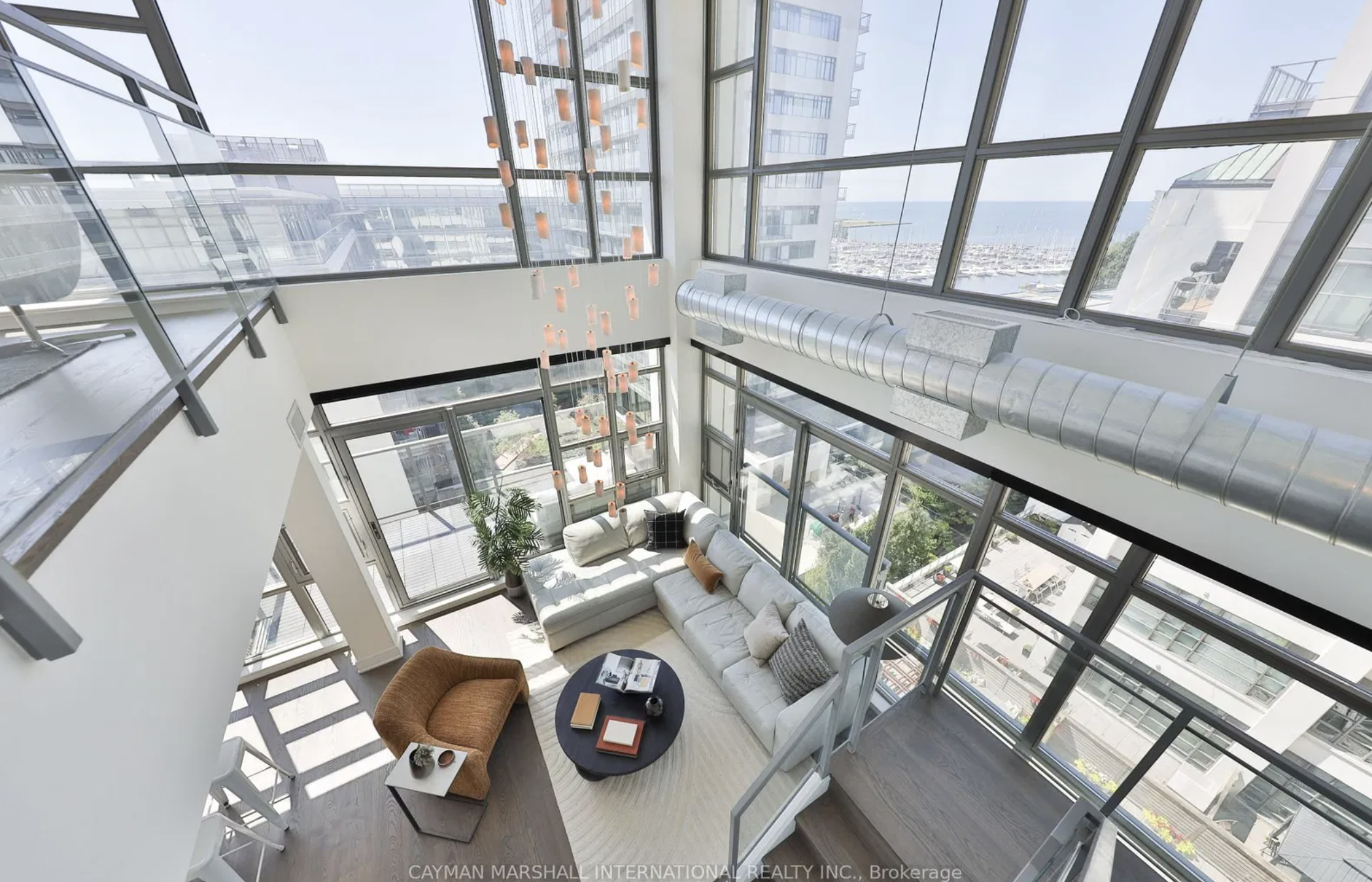
Ceiling heights generally range from 10 to 20 feet, and the curved window lines create light patterns that feel distinctly different from traditional rectangular warehouse glazing. The building also offers a full amenity package, including concierge, fitness facilities, and shared spaces, which shifts both buyer profile and resale behaviour compared to smaller boutique conversions.
At approximately $1,031 per square foot, Tip Top trades below many Queen West brick-and-beam classics. Its value story is different. Waterfront proximity, architectural identity, and full lifestyle infrastructure drive demand here. This is heritage delivered with convenience rather than grit.
KEY FACTS
//
KEY FACTS //
Architectural Details:
• Art Deco façade with strong horizontal banding
• Iconic rooftop “Tip Top Tailors” sign
• Curved corner windows with distinctive glazing lines
• Mix of hard loft and soft loft interior styles
• Ceiling heights approximately 10–13 ft
Amenities:
• Pool
• Sauna
• Gym
• Concierge
• Rooftop terrace and shared outdoor space
• Direct access to waterfront trails
• Quick access to Billy Bishop Airport and Lakeshore
Original Use: Tip Top Tailors factory
Built: 1929
Converted: 2006
Storeys: 11
Units: 256
Unit Size Range: 400 sqft - 3209 sqft
Market Personality:
Waterfront heritage landmark with full-service condo infrastructure. Trades with more liquidity than boutique hard lofts due to size, amenities, and proximity to the lake and downtown core.
Buyer Profile:
Urban professionals, frequent travellers, and lifestyle-driven buyers who value waterfront living, airport access, and architectural identity over raw brick-and-beam grit.
BROCK LOFTS
📍 27 Brock Ave
Neighbourhood: Parkdale
Avg $1,035 per square foot
BUILDING HISTORY & LOFT DETAILS
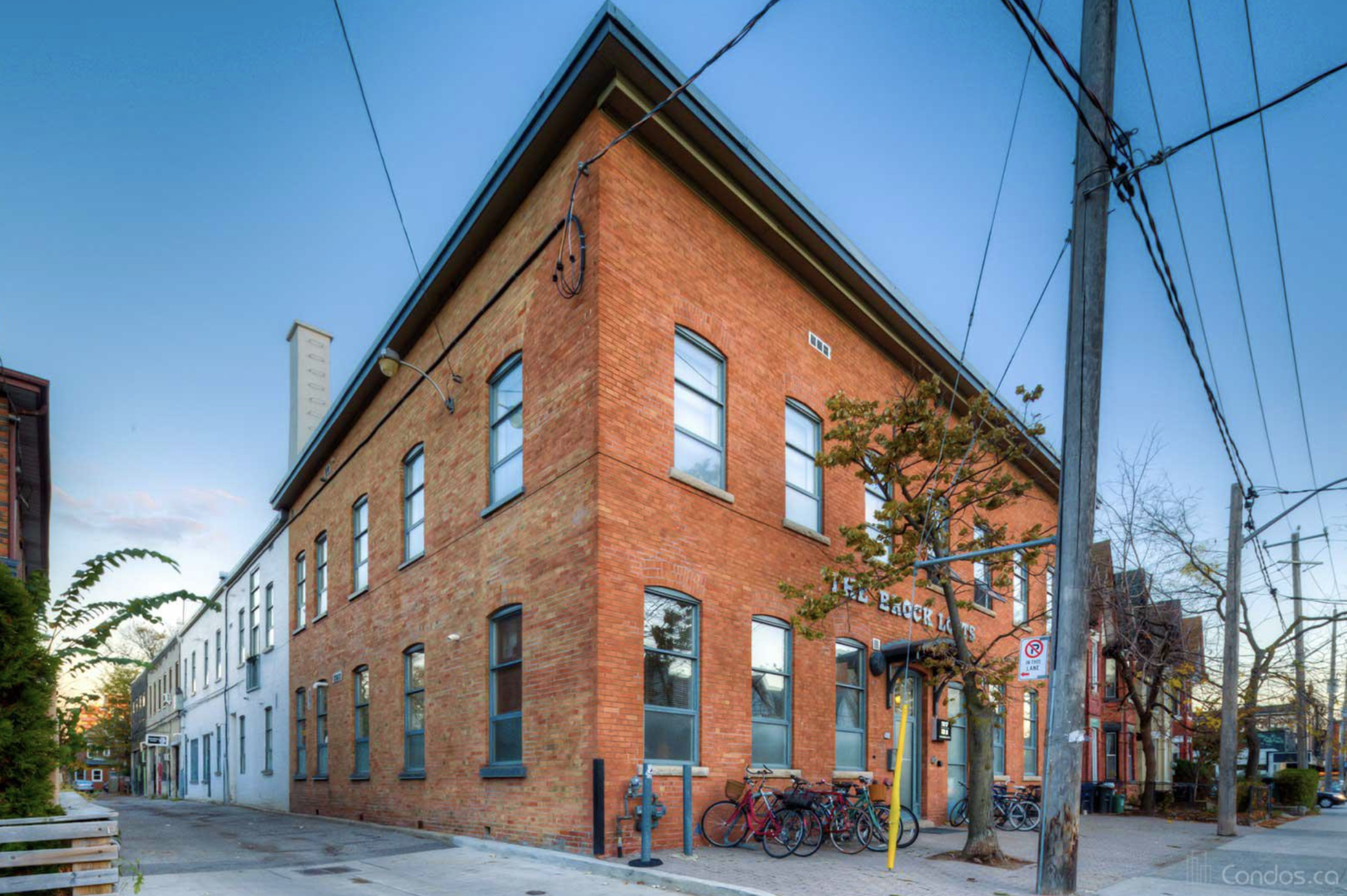
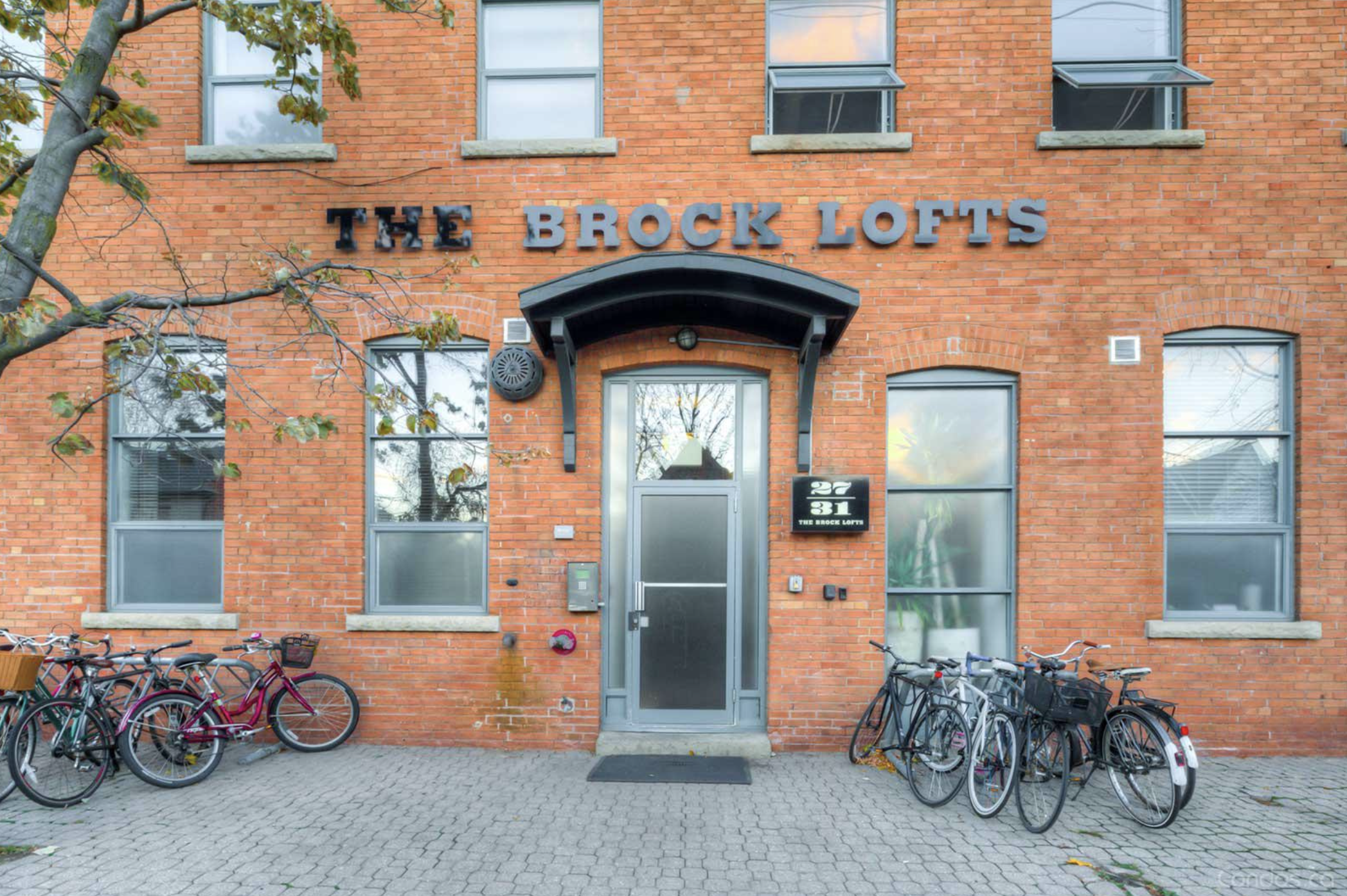
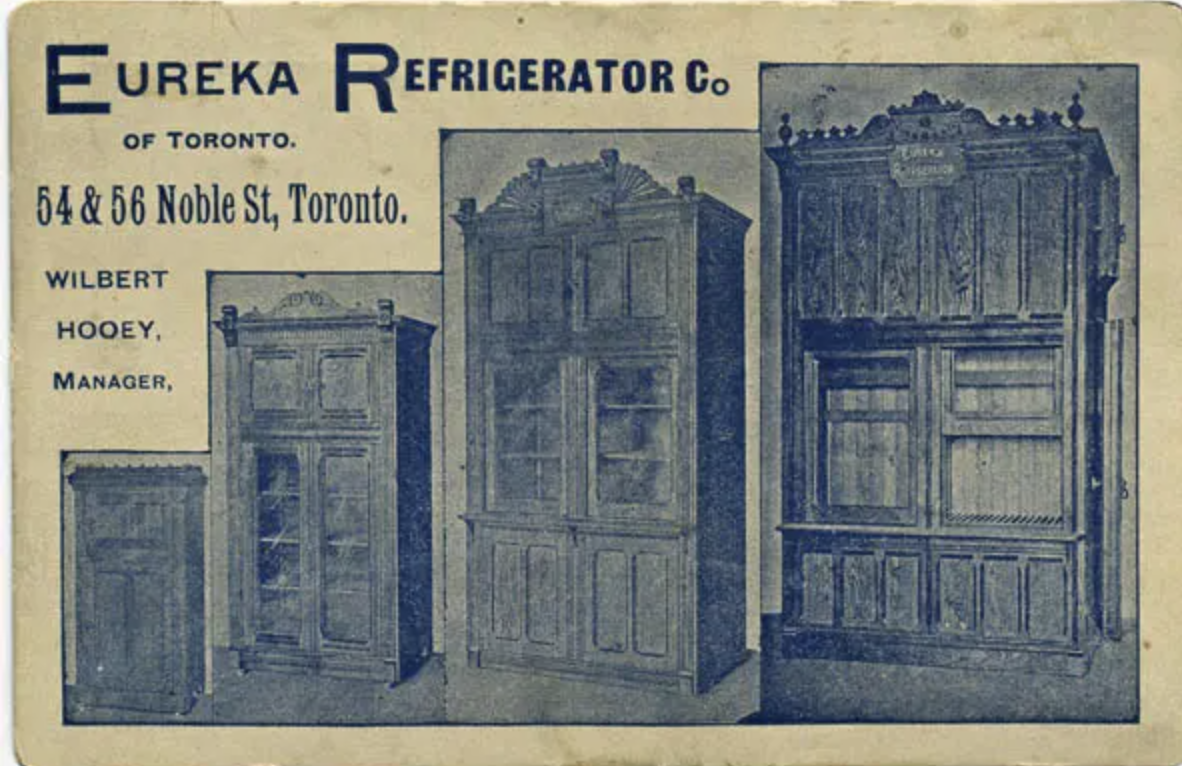
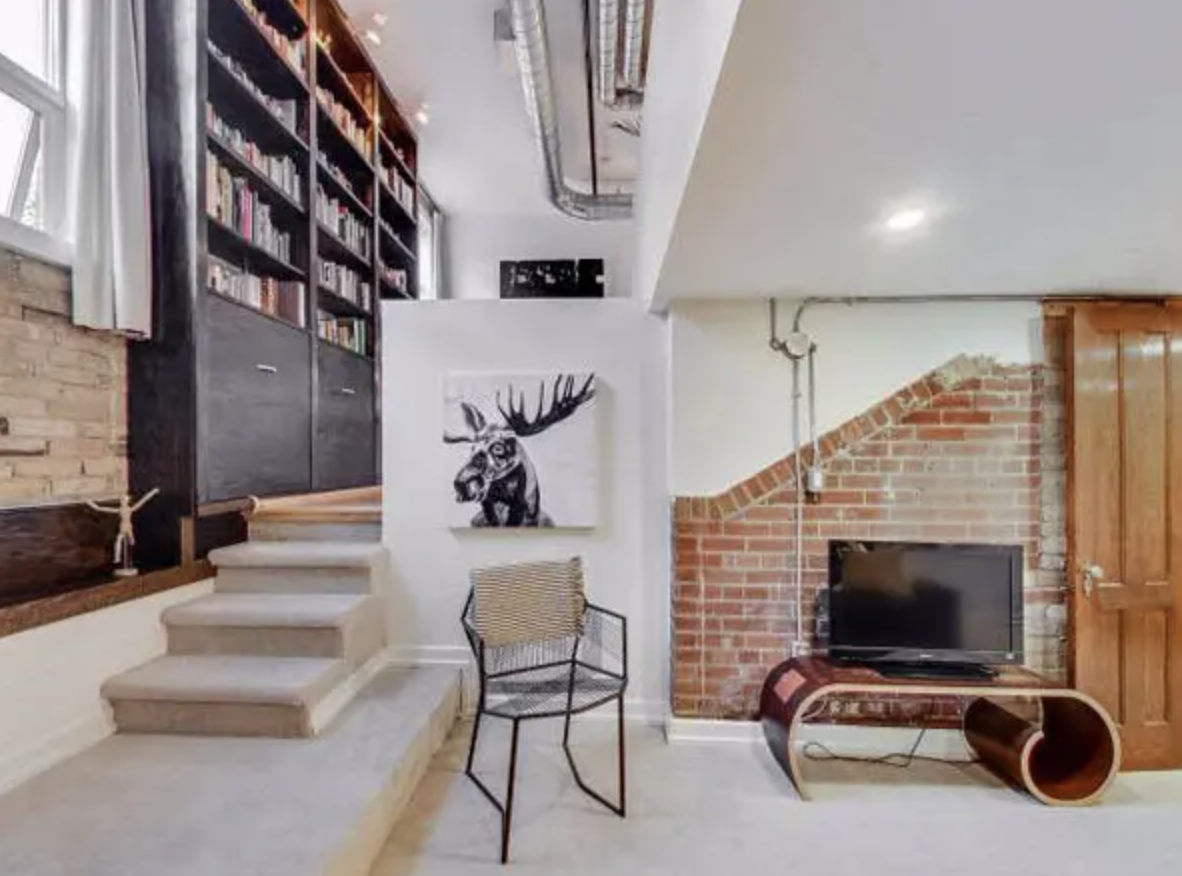
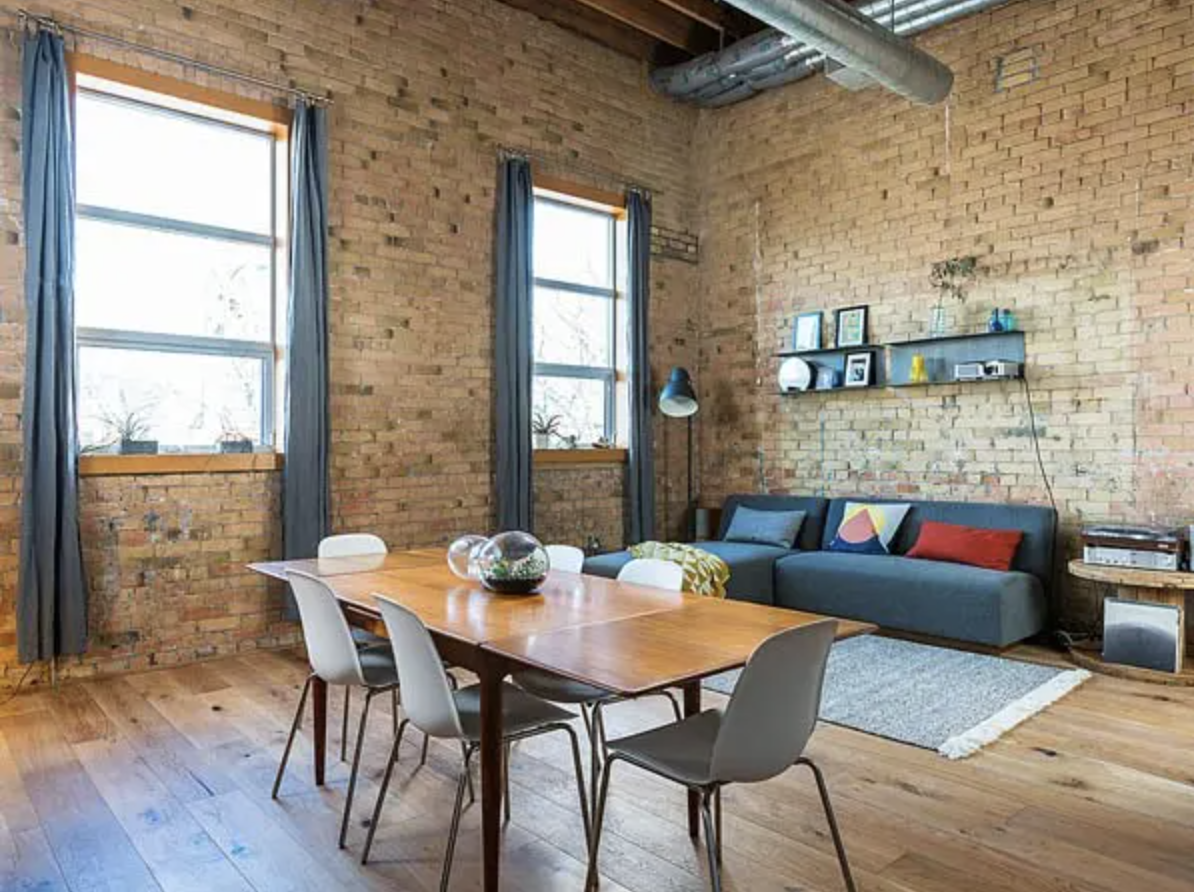
Brock Lofts is a smaller, more intimate industrial conversion, and that’s exactly why it has such loyal demand. The building began as an early 1900s industrial factory, tied to the kind of light manufacturing that once filled Parkdale’s west-end pockets.
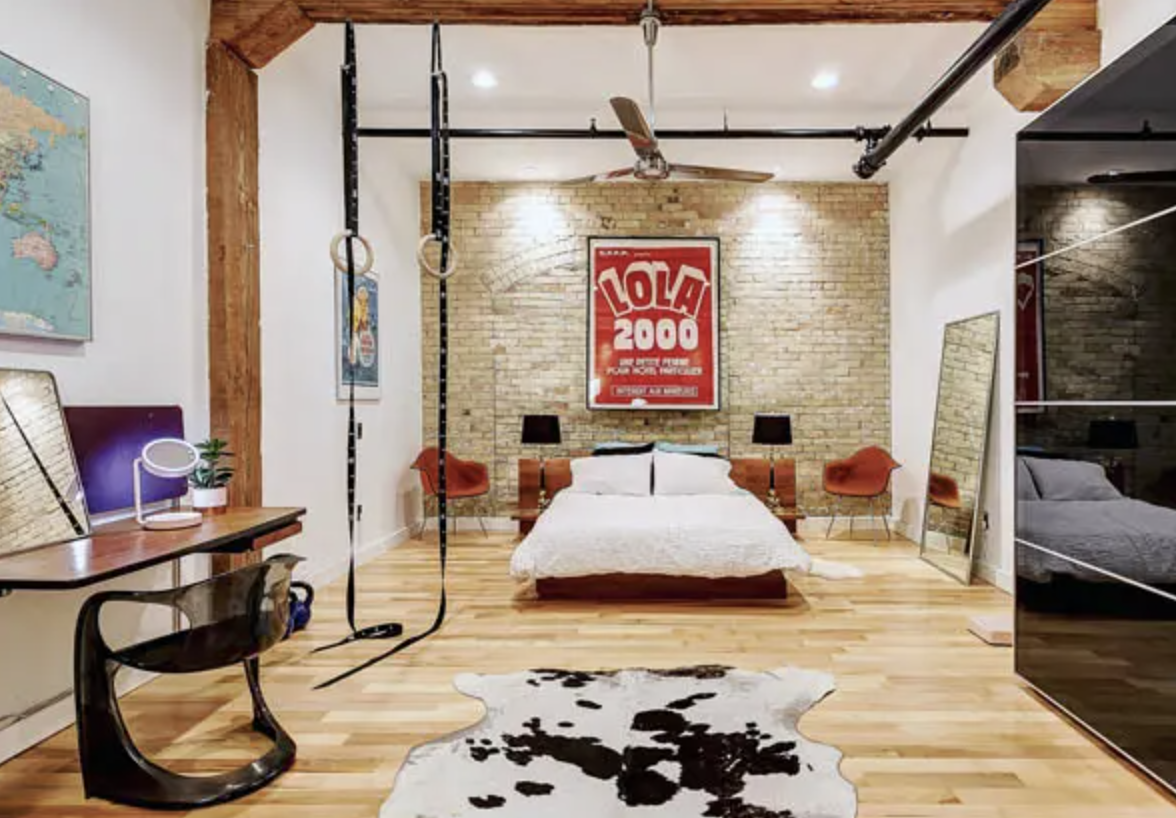
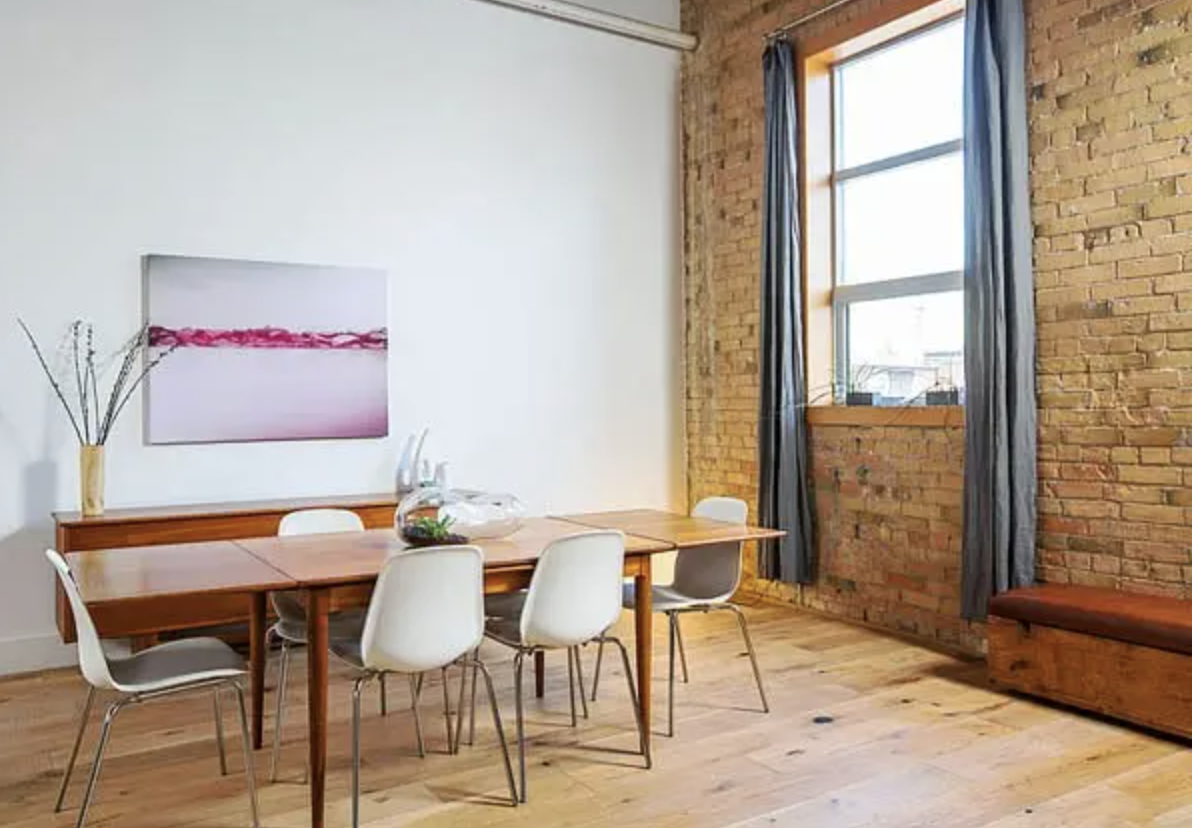
Converted in 2003, it leans into true loft living: open-concept layouts, visible structure, and volume. This is not a building pretending to be refined. It has an artistic edge, and it wears it well.
Architecturally, Brock is known for exposed brick, large industrial windows, and loft proportions that can reach into the 12 to 18 foot range in select suites. Some units include skylights, which change the light quality and make the space feel more studio-like. The building’s scale also creates a community feel rather than anonymous condo turnover.
At $1,035 per square foot, the price reflects that you’re buying a niche product in a neighbourhood that attracts creative buyers. This one trades on vibe as much as structure.
KEY FACTS
//
KEY FACTS //
Architectural Details:
• Brick exterior
• Exposed beams
• Large windows and skylights in select suites
Amenities:
• Rooftop deck with BBQ
• Secure entry
• Parkdale living
• Above ground parking
Original Use: Industrial warehouse/factory (Eureka Refrigeration Company noted in your history)
Converted: 2003
Storeys: 2
Units: 24
Ceiling Heights: 12 - 18 ft
Market Personality:
Boutique Brockton Village hard loft with steady demand and limited turnover. Trades on authenticity and neighbourhood growth rather than hype.
Buyer Profile:
Design-aware professionals, west-end loyalists, and buyers upgrading from smaller condos who want real brick-and-beam character without Queen West pricing pressure.
TOY FACTORY LOFTS
📍 43 Hanna Ave
Neighbourhood: Liberty Village
Avg $1,017 per square foot
BUILDING HISTORY & LOFT DETAILS
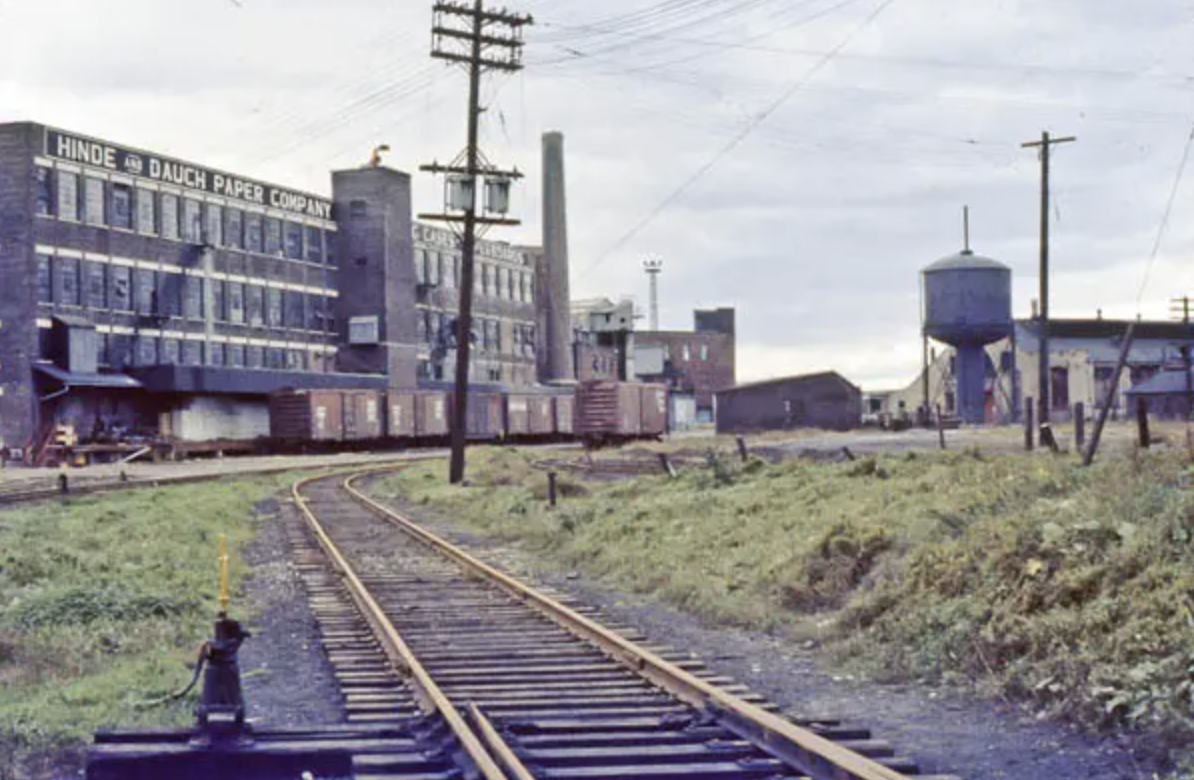
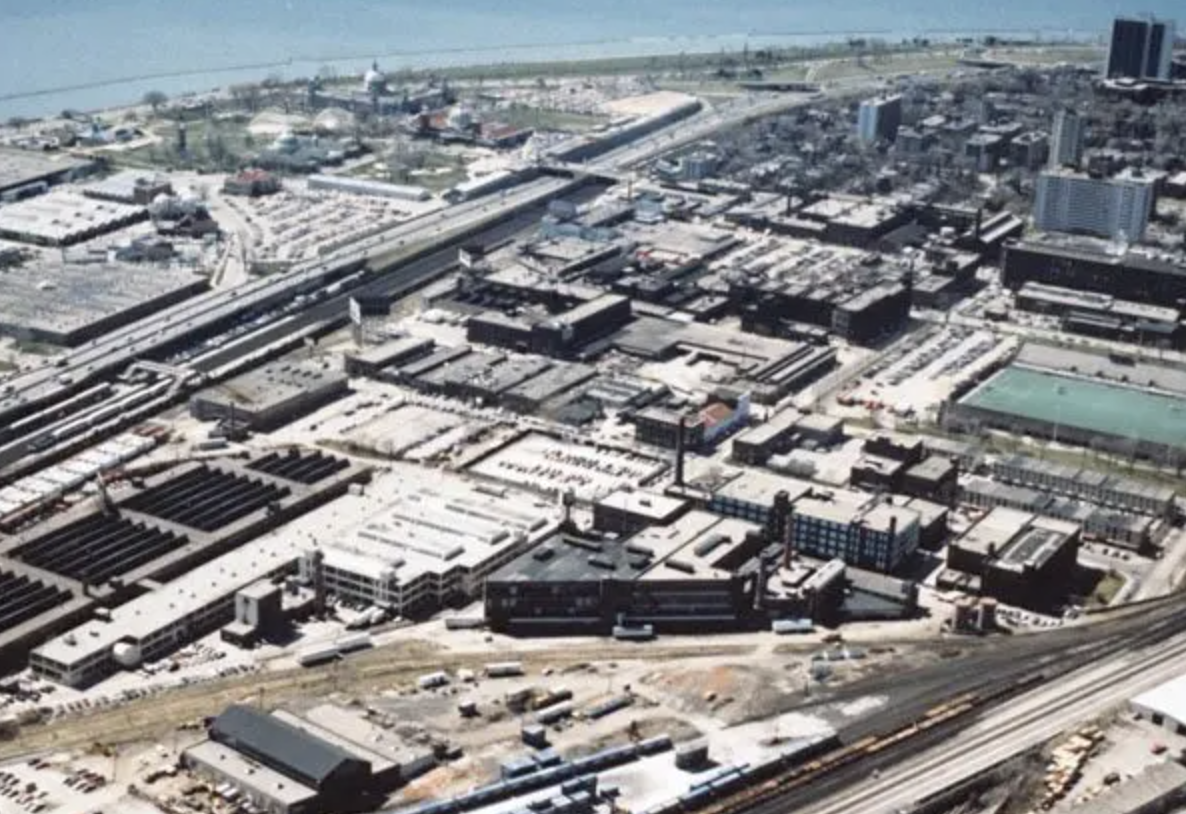
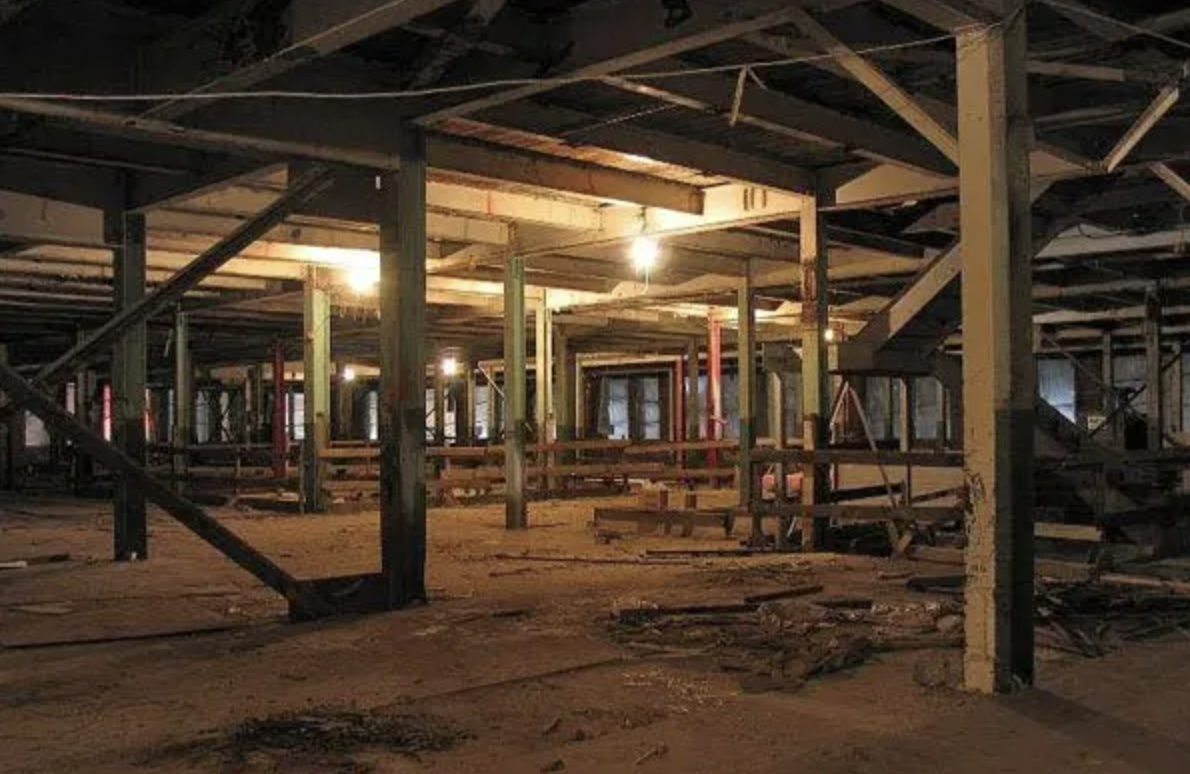
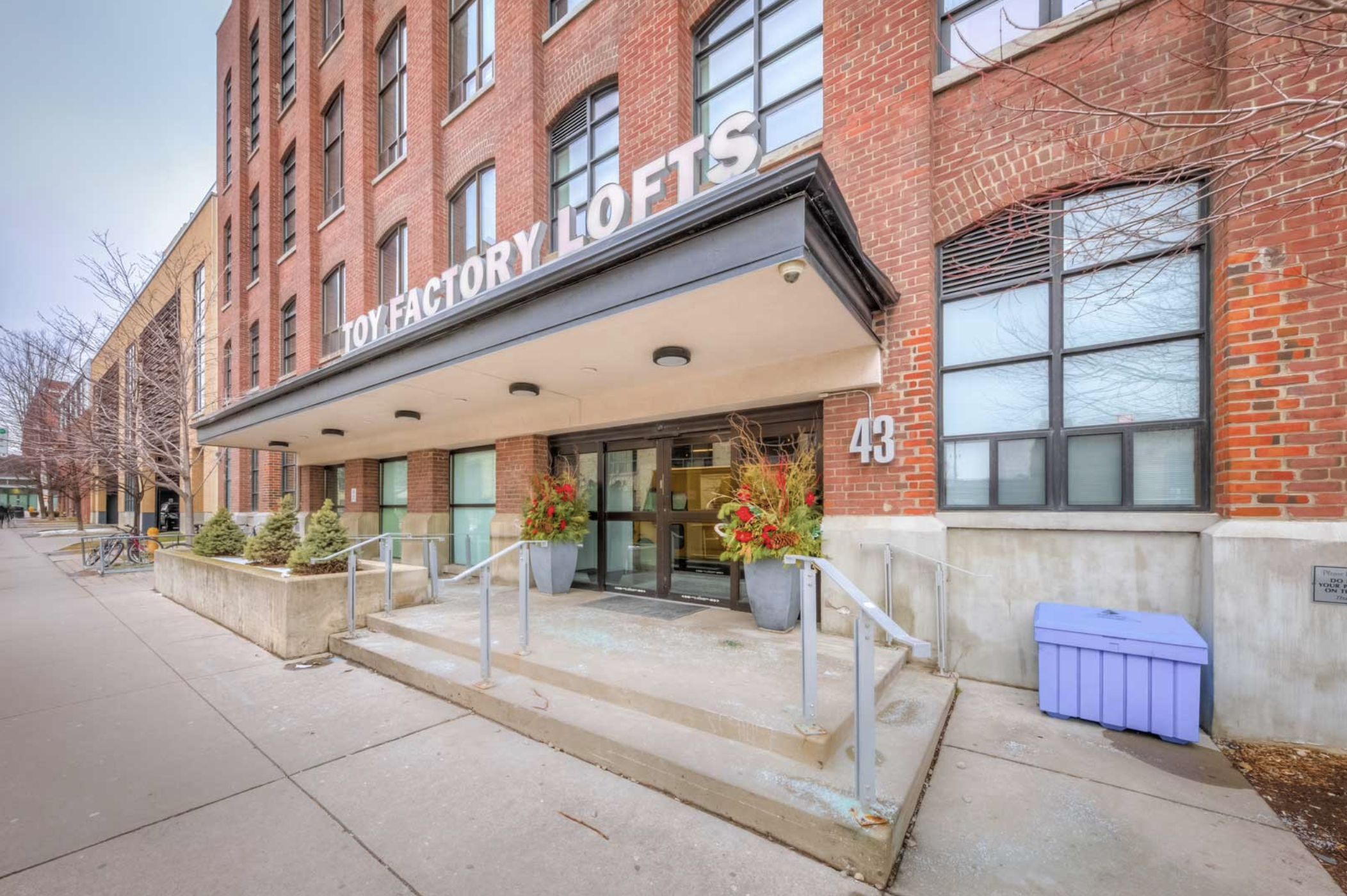
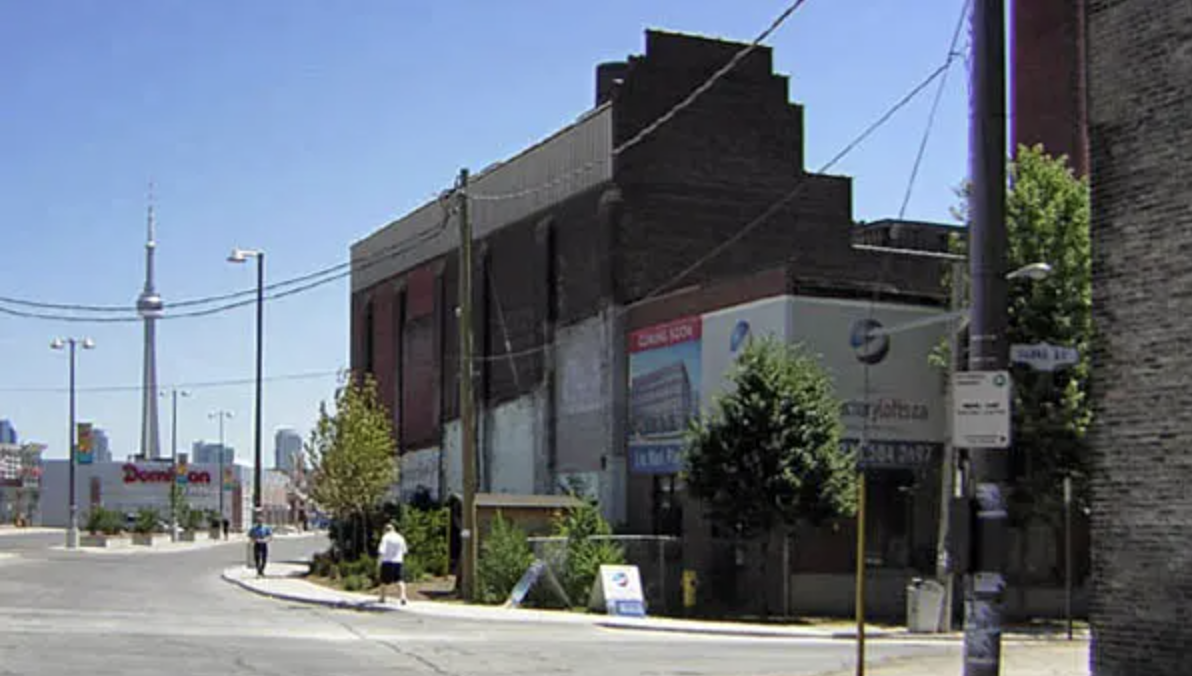
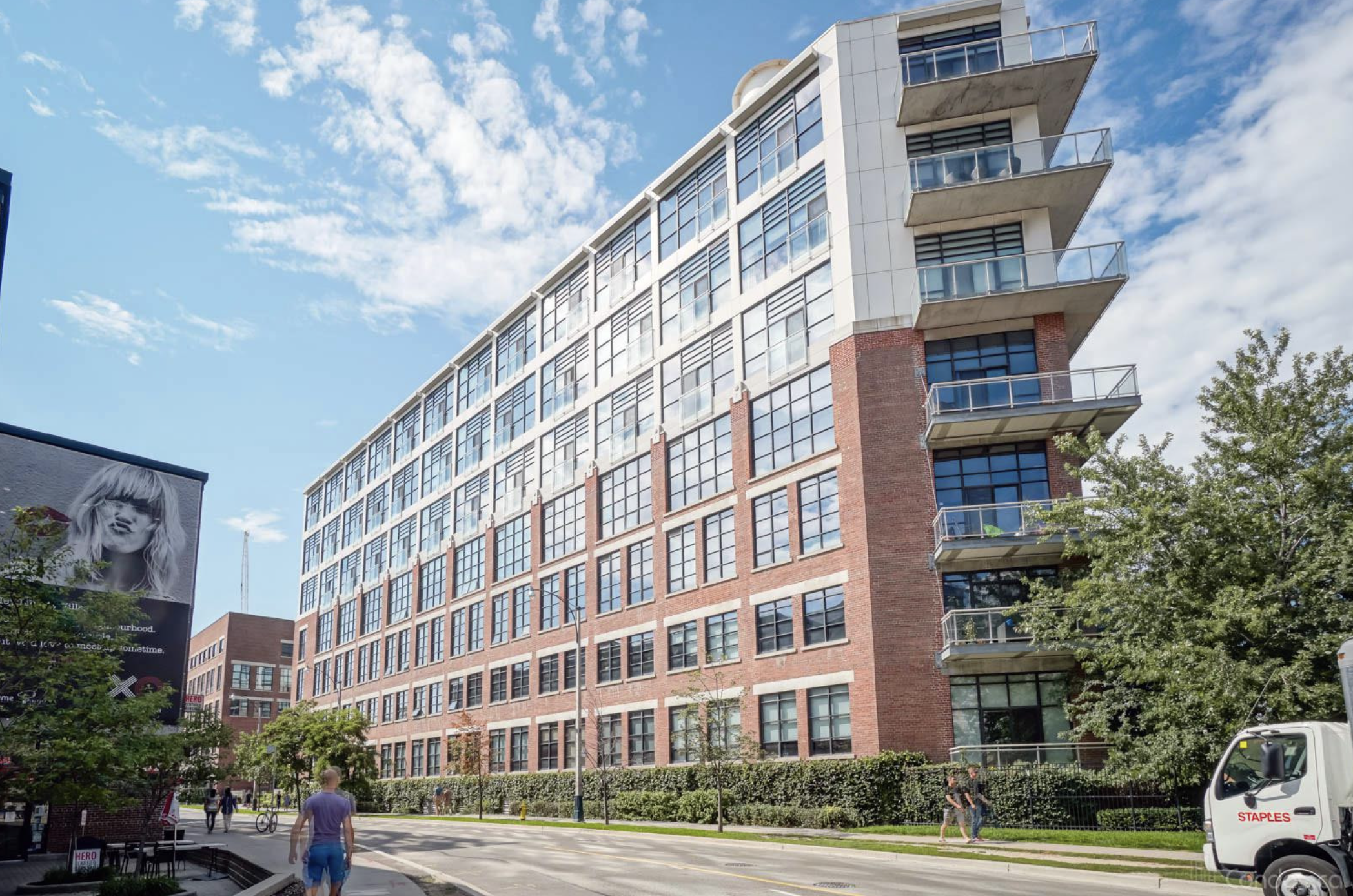
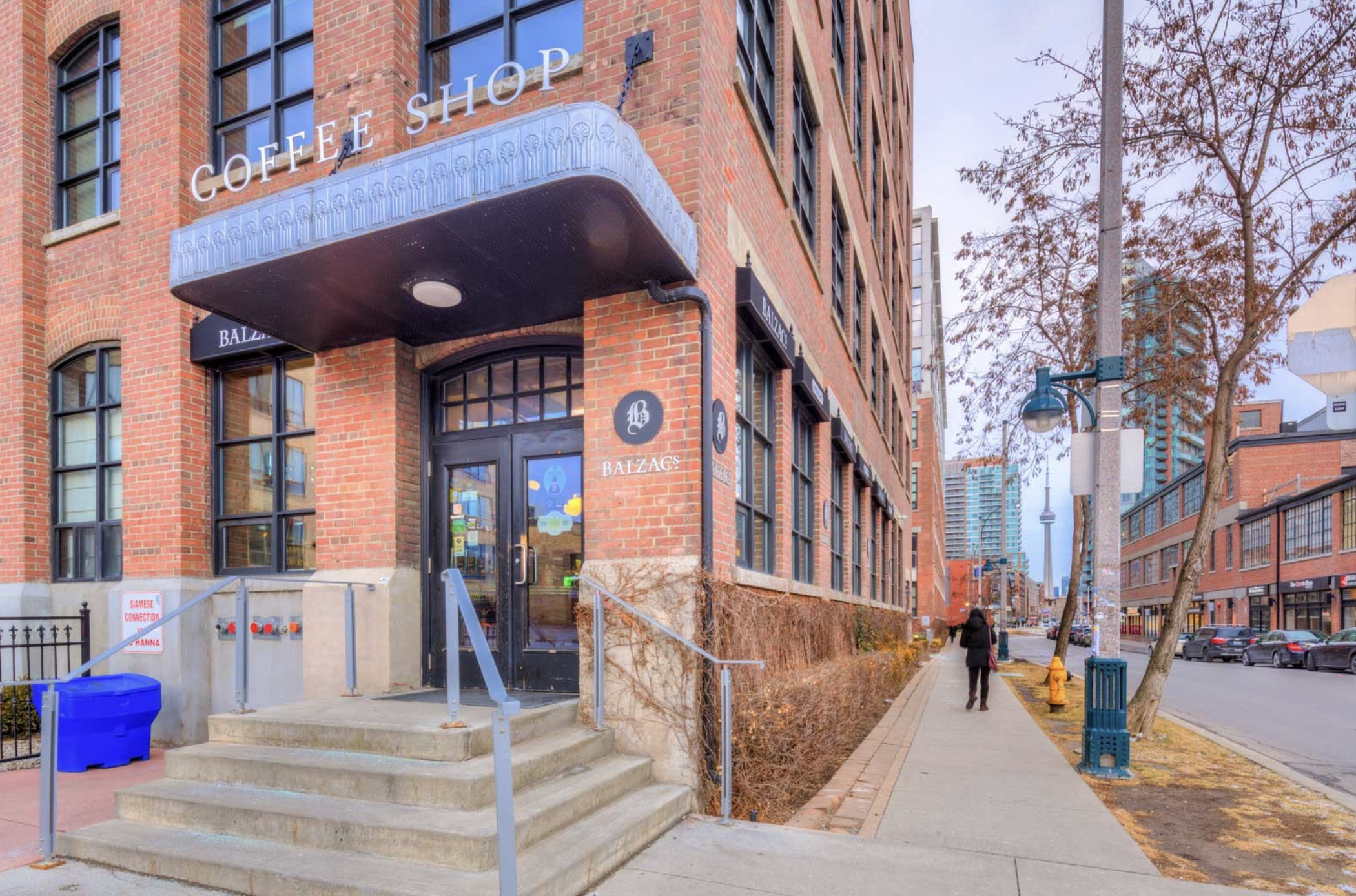
Toy Factory Lofts was originally built in the early 1900s and later became home to the Irwin Toy Company, one of Canada’s most recognized toy manufacturers. For decades, this was a working industrial building tied directly to production and distribution, which explains the strength and scale of the structure today.
The building was converted in 2008, preserving the original brick-and-beam architecture while integrating modern loft infrastructure. Unlike many Liberty Village buildings, Toy Factory retains authentic hard loft proportions rather than soft-loft styling.
With approximately 213 units, it is one of the larger true hard loft conversions in the west end, but the scale never feels anonymous. Wide corridors, thick masonry walls, and oversized warehouse windows maintain a strong industrial identity.
Ceiling heights generally range from 10 to 13 feet, and many suites feature exposed brick, timber beams, and substantial structural columns. The layouts feel expansive, and the window sizes make the interiors read larger than the numbers suggest.
KEY FACTS
//
KEY FACTS //
Architectural Details:
• Mix of hard loft and soft loft finishes
• Exposed timber posts and beams
• Large multi-pane warehouse windows
Amenities:
• 24 hour Concierge
• Gym
• Sauna
• Rooftop terrace
• Party room
• Media room
Original Use: Irwin Toy factory
Built: Early 1900s
Converted: 2008
Storeys: 8
Units: 218
Ceiling Heights: 9–12 ft
Unit Size Range: 644 sqft - 3026 sqft
Market Personality:
Liberty Village’s most credible hard loft conversion. Larger scale than boutique buildings, but trades with consistent demand due to true industrial architecture and neighbourhood walkability.
Buyer Profile:
Urban professionals, creative industry buyers, and Liberty Village loyalists who want authentic brick-and-beam architecture with full-service condo amenities.
WALLACE STATION LOFTS
📍 371 Wallace Ave
Neighbourhood: Junction Triangle
Avg $846 per square foot
BUILDING HISTORY & LOFT DETAILS
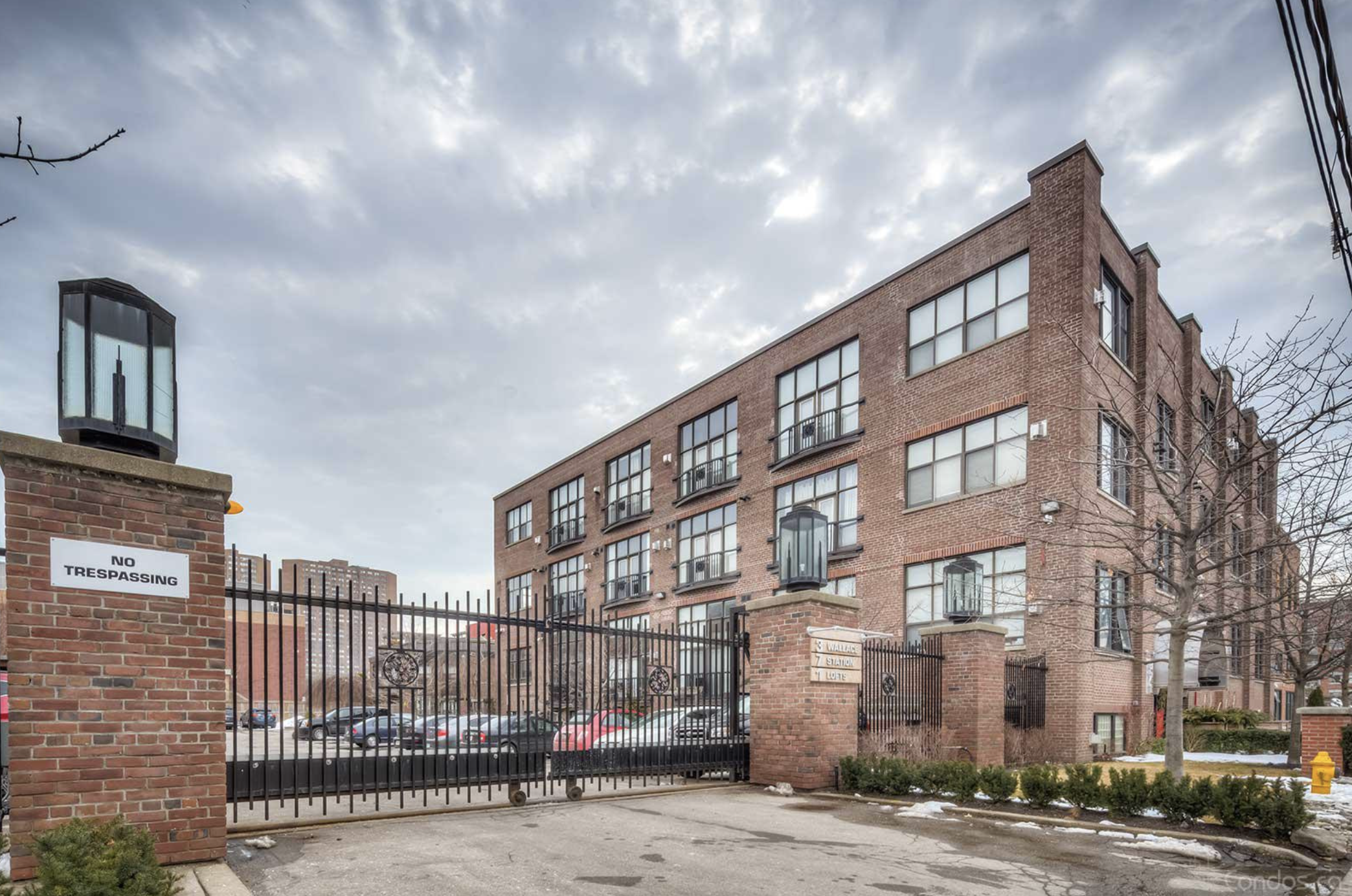
Wallace Station is a true industrial conversion, and it shows. Built in 1928–1929 for an adhesives company, later known as Nacan Products, it functioned as a manufacturing facility in a west-end corridor shaped by rail and industry.
Converted in 2007, Wallace kept the stuff that makes loft buyers obsess: thick brick, heavy wood structure, and serious volume. This is one of the most structurally “real” hard loft buildings on the list, which is why its price-per-foot often surprises people.
Architecturally, Wallace is known for massive Douglas fir beams held with cast-iron fittings, deep brick walls, and ceiling heights that can hit 14 to 18 feet in select units. Some units incorporate coach house-style forms, which makes layouts feel less standardized and more like private live-work spaces.
At $846 per square foot, it reads as undervalued relative to its structural quality. The discount is more about micro-location psychology than product weakness.
KEY FACTS
//
KEY FACTS //
Architectural Details:
• Massive wood beams
• Deep brick walls
• Coach house-style units in select suites
• Large industrial-scale windows
Amenities:
• Party room
• Gym
• Visitor parking
• Access to UpExpress
• Access to Railpath
• Pet friendly
Original Use: Adhesives factory
Built: 1928–1929
Converted: 2007
Storeys: 4
Units: 38
Ceiling Heights: 14–18 ft in select units
Unit Size range: 642 sqft - 2331 sqft
Market Personality:
Authentic Junction Triangle hard loft with real industrial character, strong community feel, and UP Express access that appeals to buyers who value connectivity without downtown intensity.
Buyer Profile:
Design-driven end-users and first-time hard loft buyers who prioritize brick-and-beam authenticity, neighbourhood culture, and easy UP Express commuting over Queen West flash.
WEST 40 LOFTS
📍 40 Westmoreland Ave
Neighbourhood: Dovercourt-Wallace Emerson-Junction
Avg $851 per square foot
BUILDING HISTORY & LOFT DETAILS
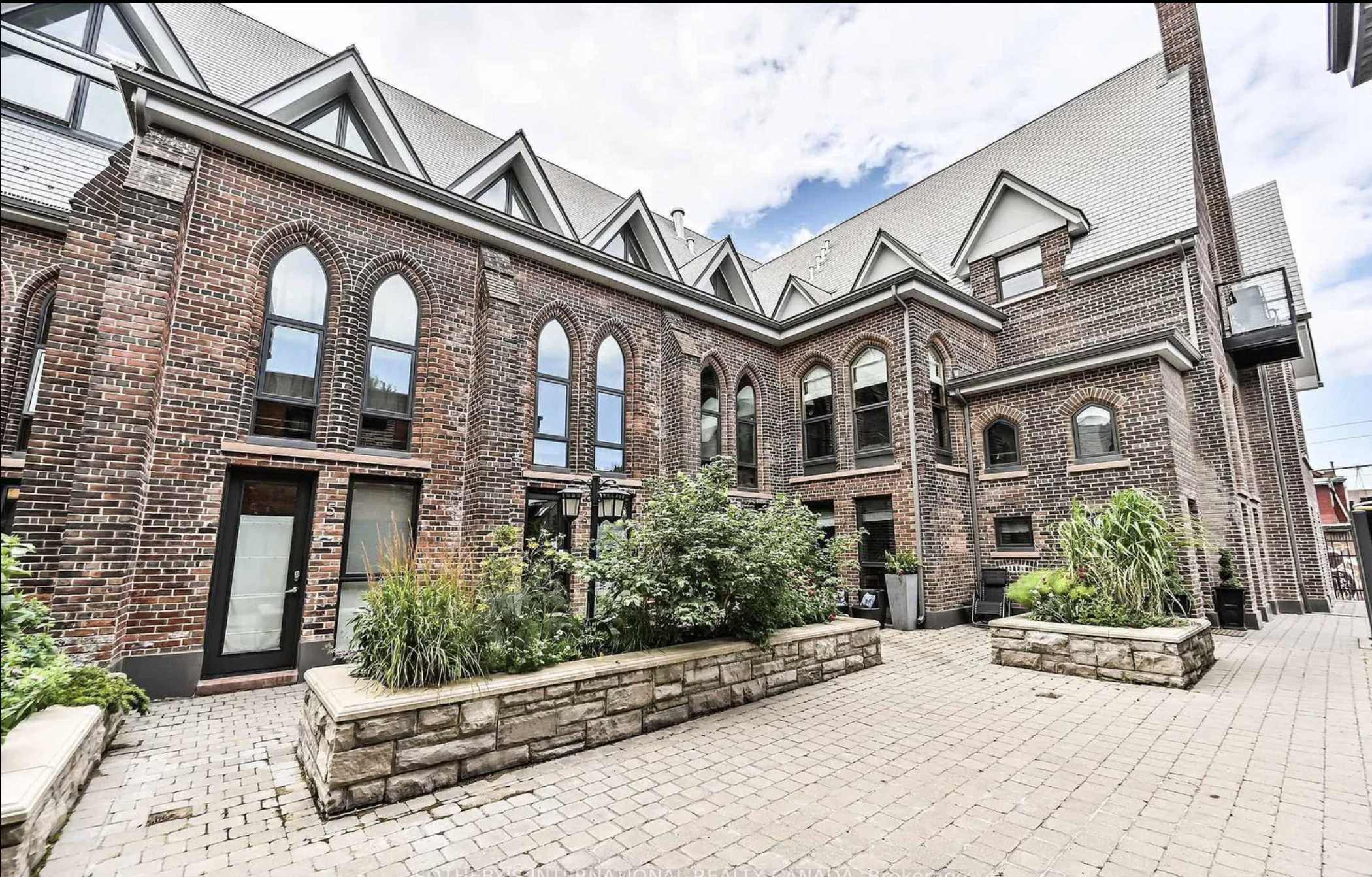
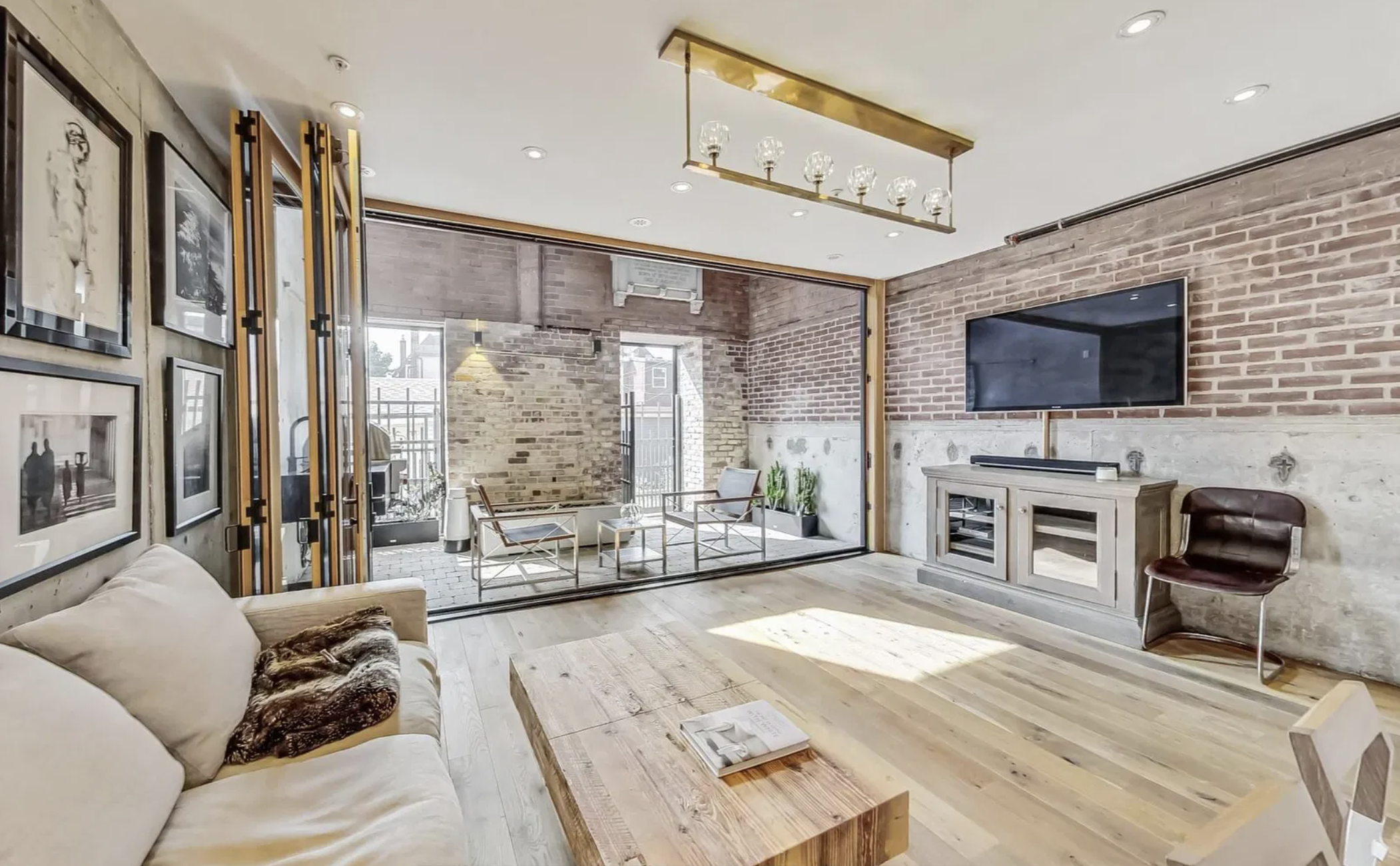
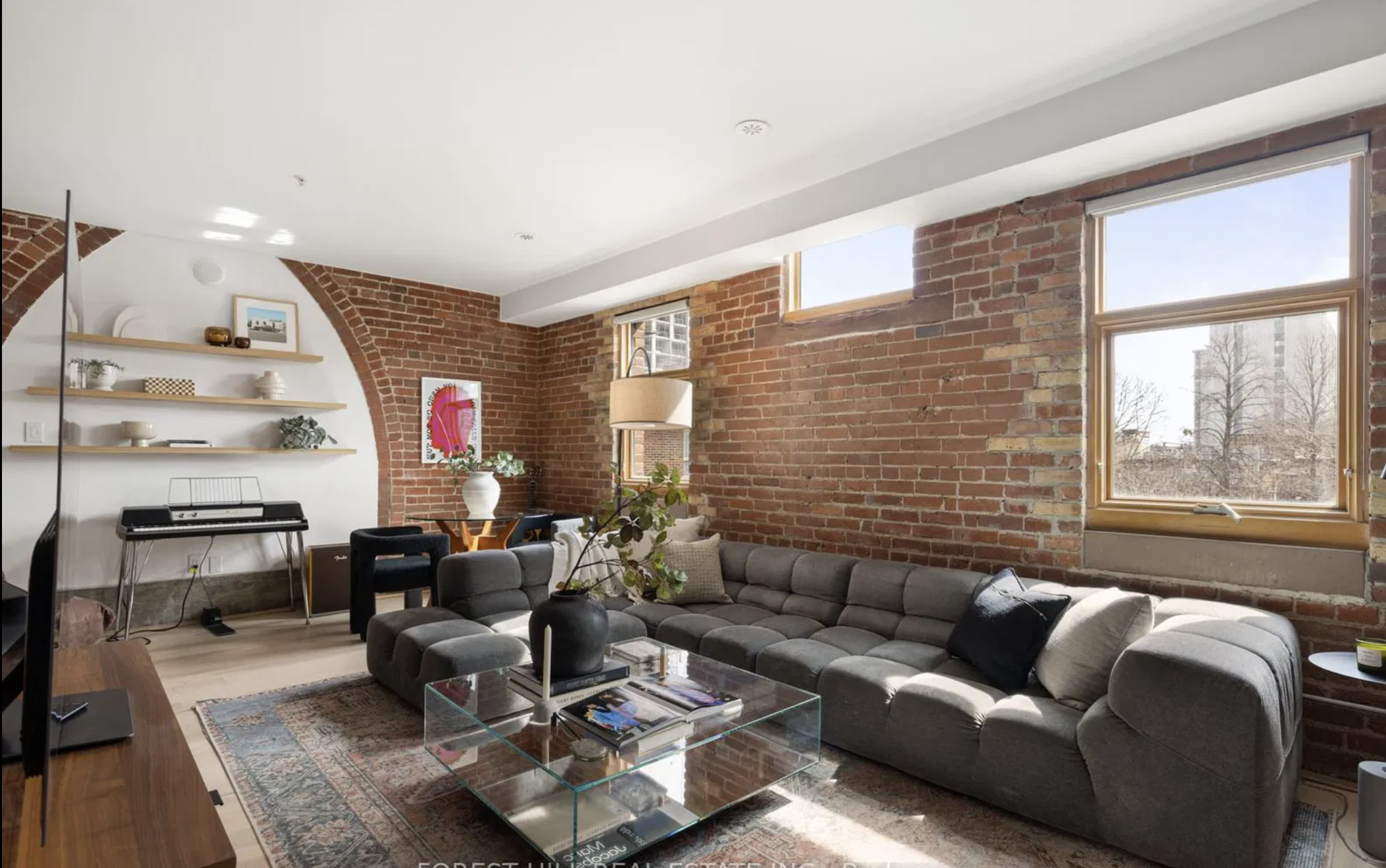
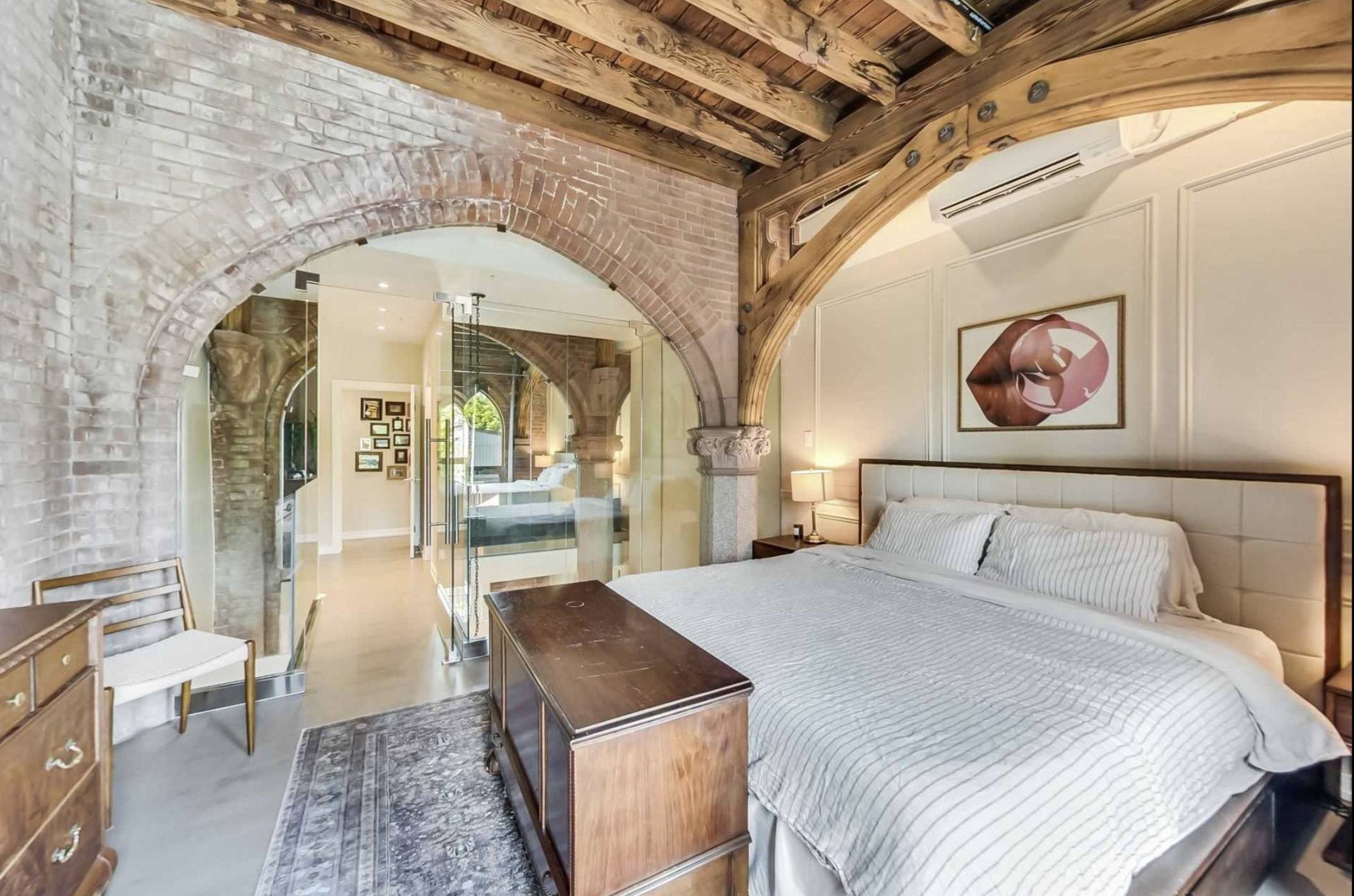
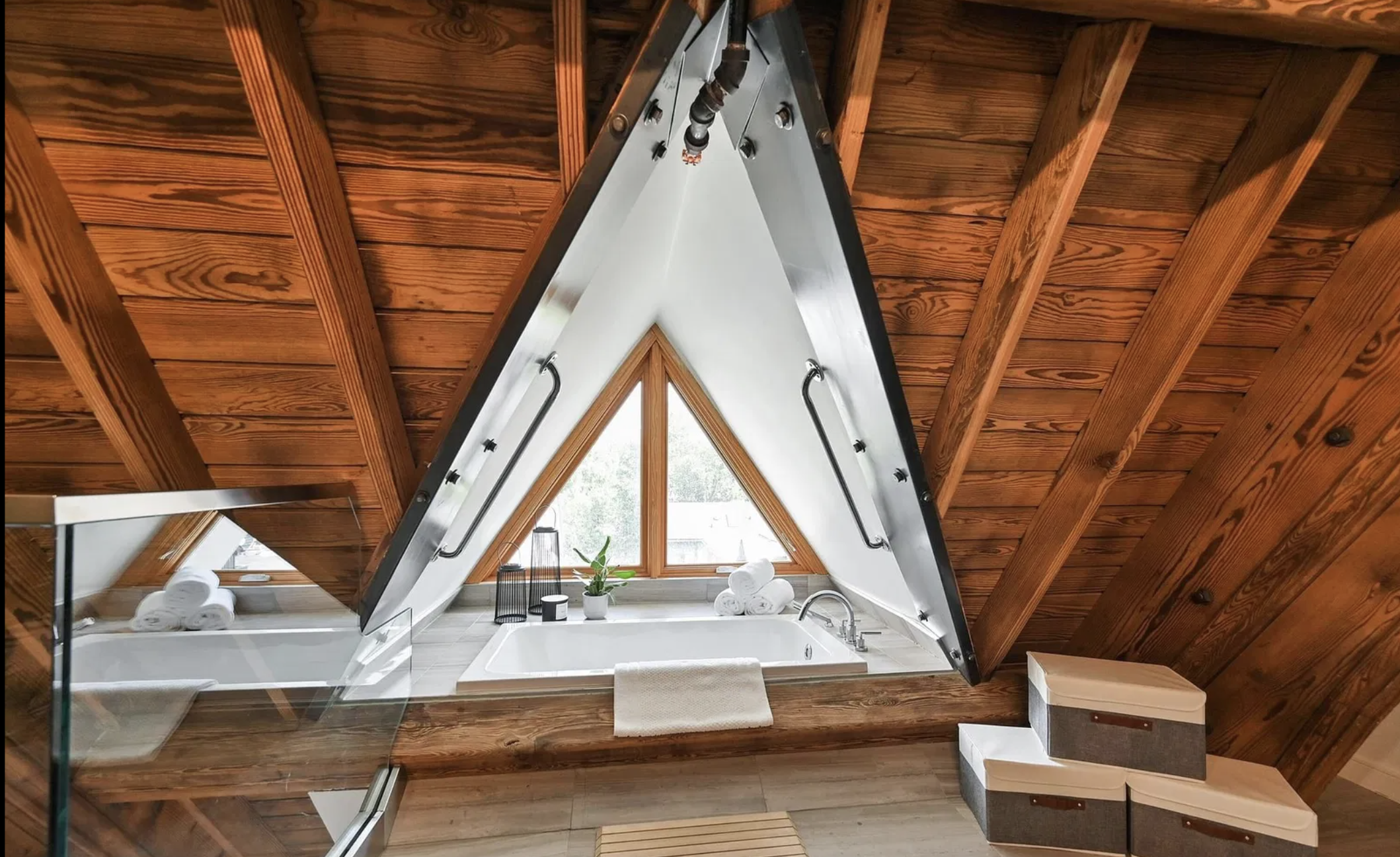
West 40 is one of the more “if you know, you know” buildings in the west end. Originally built in 1914 as the Church of St. Mary the Virgin and St. Cyprian’s, this Neo-Gothic structure served the neighbourhood for nearly a century before being thoughtfully converted into loft residences in 2012.
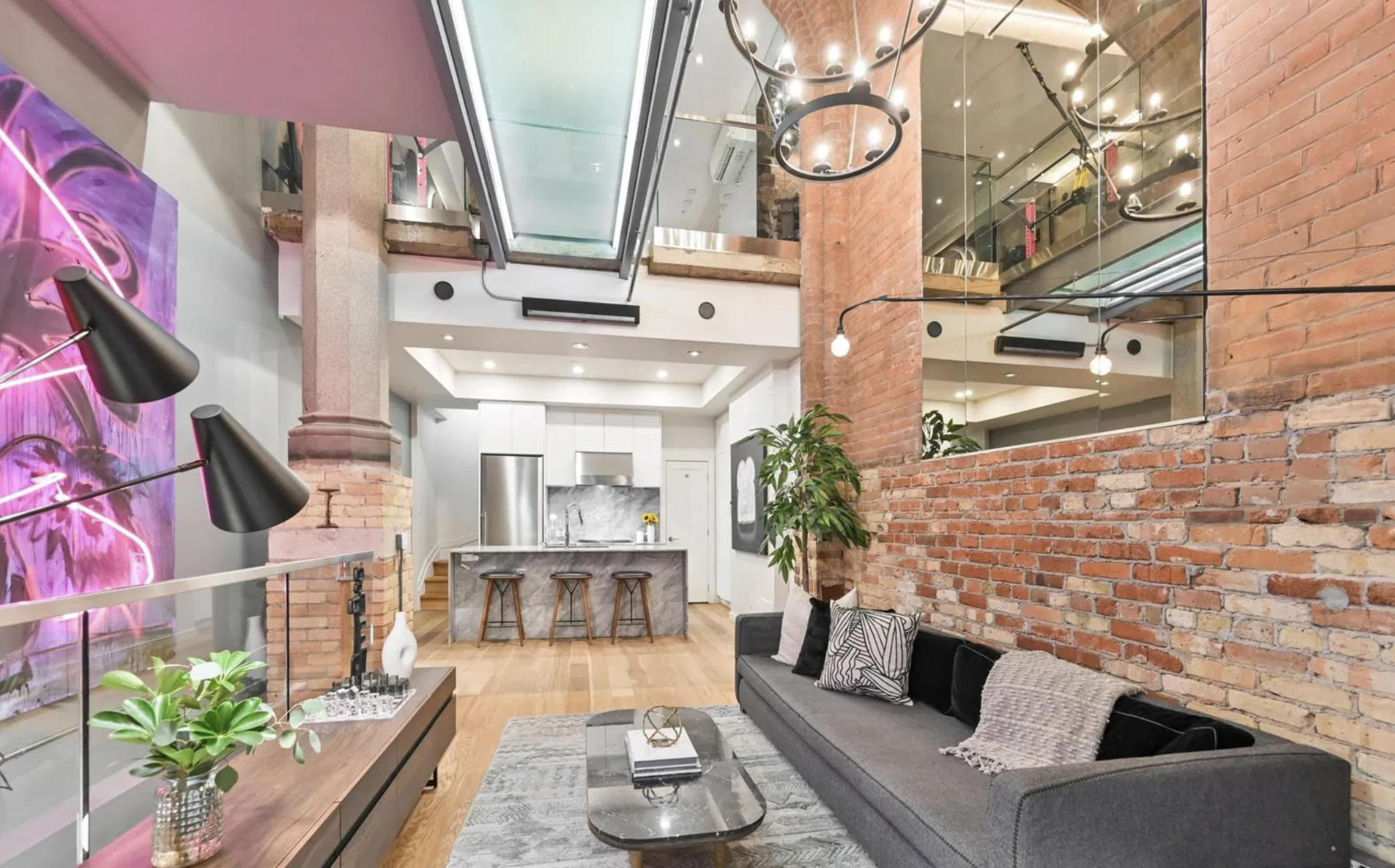
This is not a factory grid. Church conversions trade on drama. The defining appeal here is verticality, original masonry, and preserved architectural detail. The heavy brick walls, cathedral wood trusses, and distinctive window geometry create interiors that feel memorable the second you walk in.
With only 17 units, West 40 is intimate and highly specific. The layouts are irregular, the ceilings soar, and the scale reflects its ecclesiastical past. You are buying character and spatial drama, not uniformity.
At $851 per square foot, it sits in a more accessible pricing tier relative to other heritage lofts. That is often where the smartest buys hide. The broader market does not always fully price architectural nuance.
KEY FACTS
//
KEY FACTS //
Architectural Details:
• Original Neo-Gothic brick façade
• Cathedral ceiling proportions
• Exposed wood trusses
• Thick masonry walls
• Distinctive arched window geometry
Amenities:
• Boutique heritage conversion
• Underground Parking
• Limited shared amenities, design-forward focus
Original Use: Church of St. Mary the Virgin and St. Cyprian’s
Built: 1914
Converted: 2012
Storeys: 4
Units: 17
Unit Size range: 1325 sqft - 3027 sqft
Market Personality:
Under-the-radar church conversion with strong architectural identity and limited turnover.
Buyer Profile:
Established design-driven buyers who value space, uniqueness, heritage character, and boutique scale over standard condo amenities.
FOUNDRY LOFTS
📍 1100 Lansdowne Ave
Neighbourhood: Davenport / Junction Triangle
Avg $756 per square foot
BUILDING HISTORY & LOFT DETAILS
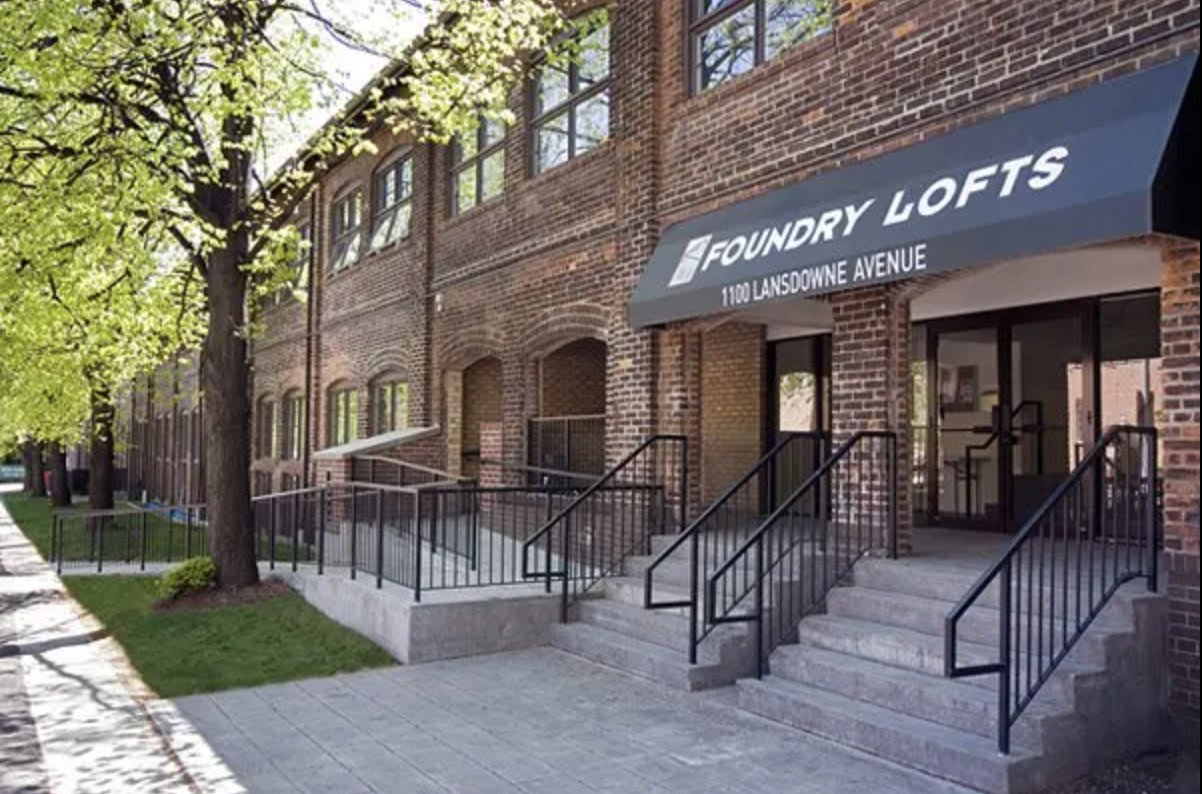
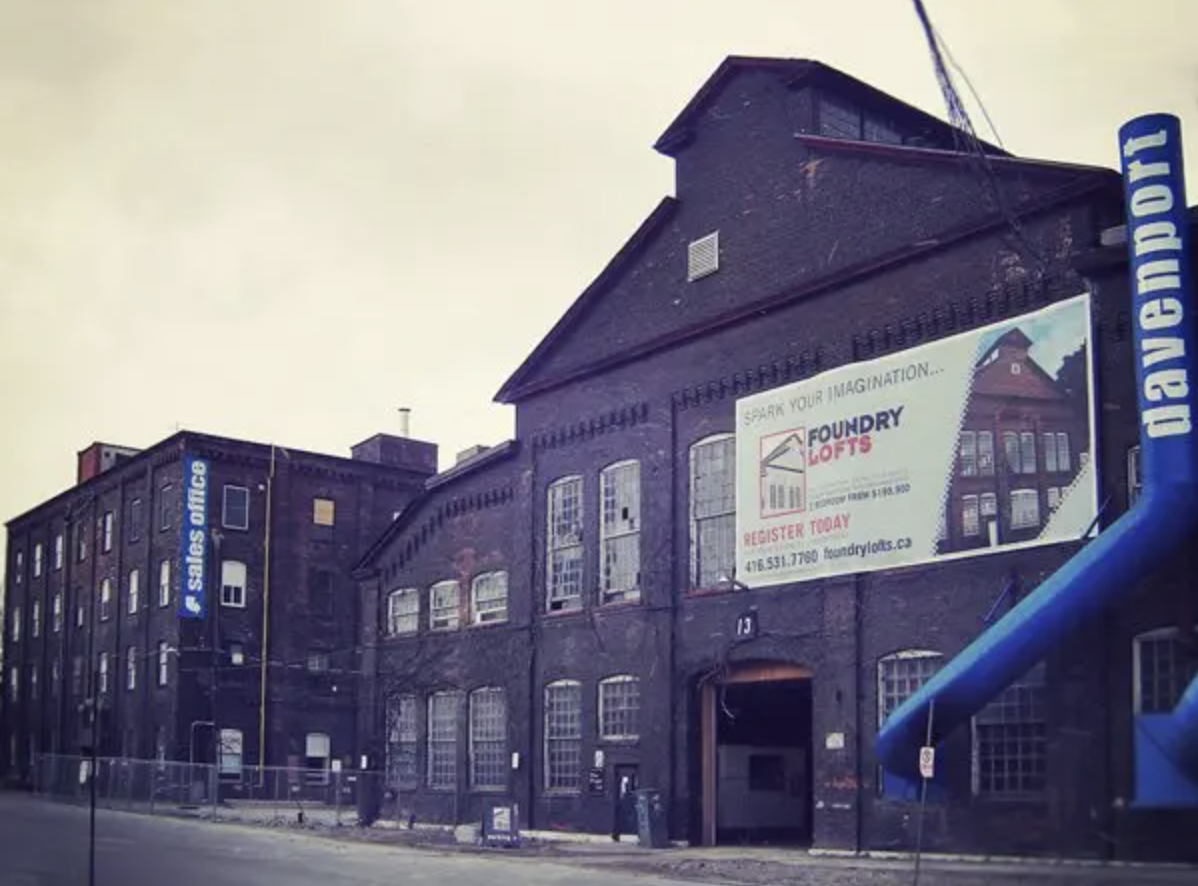
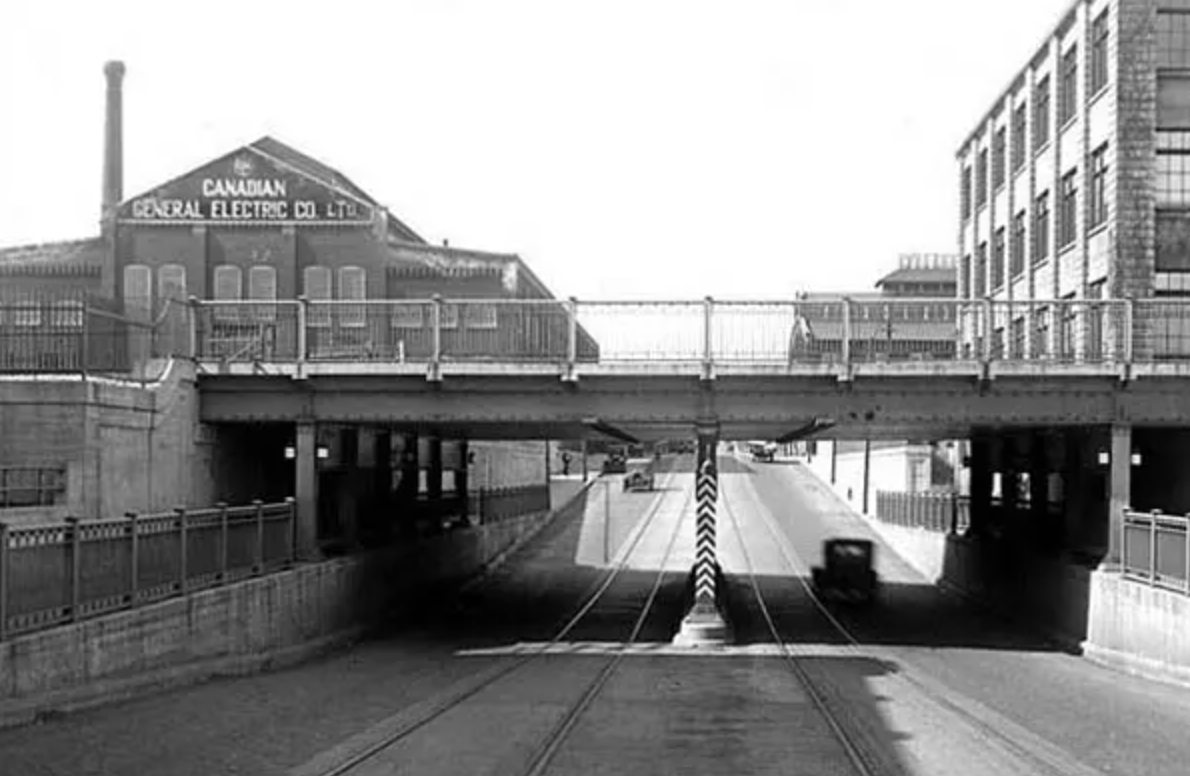
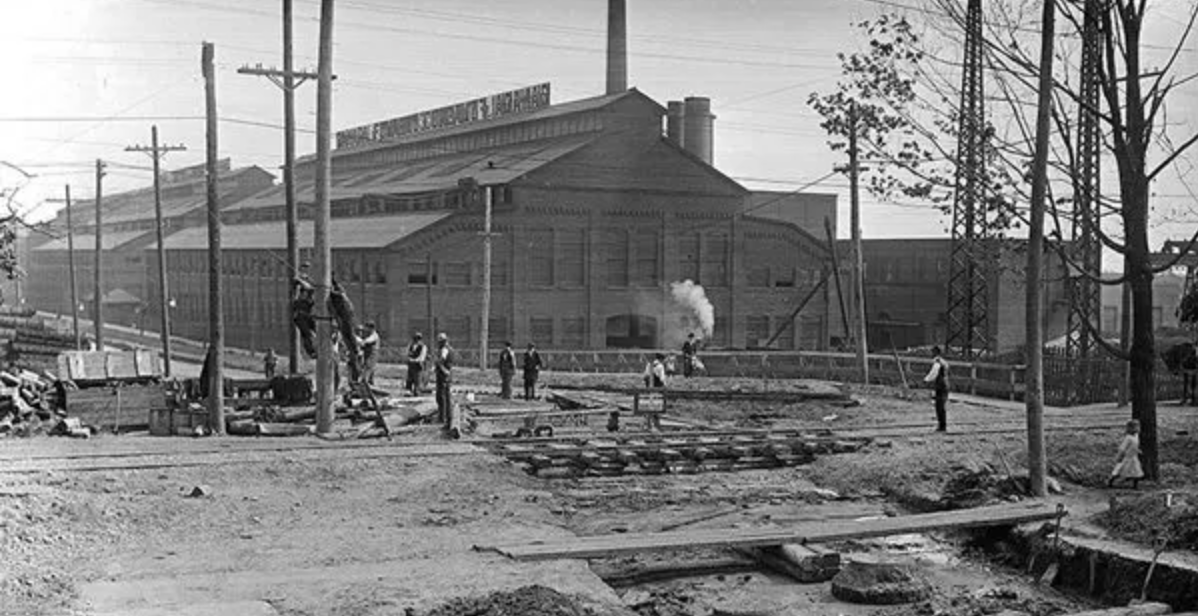
Foundry Lofts is one of the strongest industrial-scale conversions in Toronto’s west end. The building traces its roots to the Canada Foundry Company, part of a massive late 19th and early 20th century manufacturing complex tied to railways, steel production, and national infrastructure. This was heavy industry. Real production. Not light assembly.
The original structures date back to the early 1900s, when the site functioned as a working foundry before industrial decline and eventual redevelopment. The residential conversion was completed in 2008, transforming the preserved brick warehouse buildings into 104 loft residences while maintaining the raw scale of the original complex.
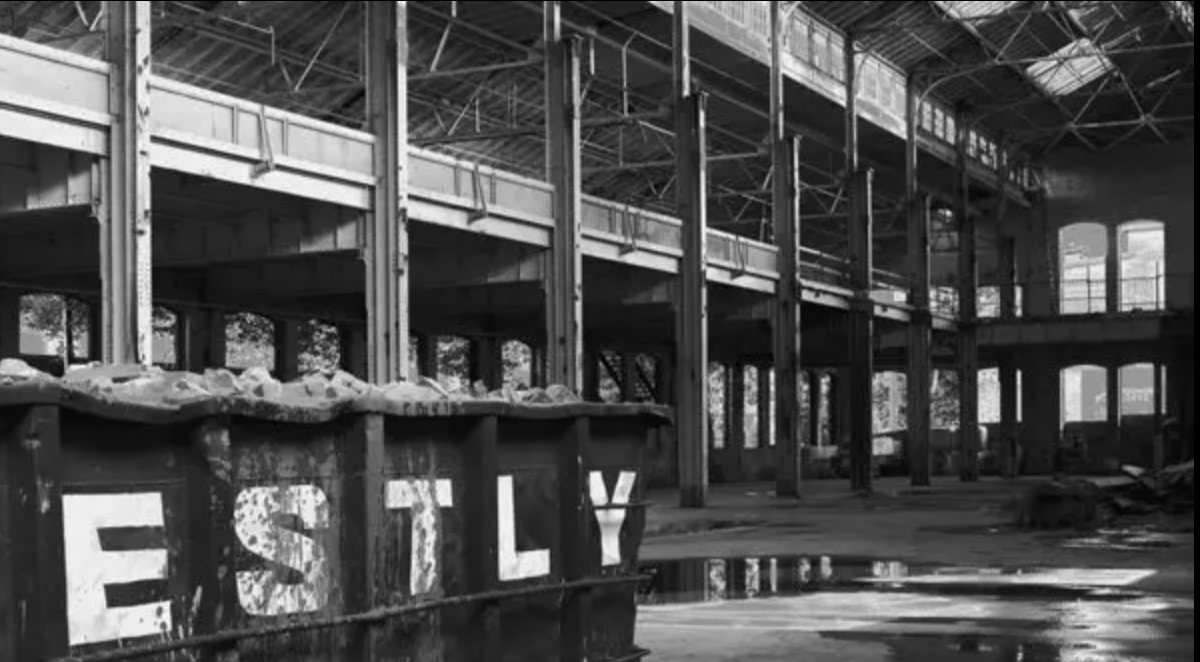
Architecturally, Foundry is less about cathedral drama and more about industrial mass. Deep red brick façades, oversized warehouse windows, exposed masonry, and preserved structural elements define it. The defining feature is the large interior atrium with skylights, acting as a communal internal courtyard that reinforces the original warehouse volume.
At $756 per square foot, Foundry is the value leader on this list. That pricing reflects neighbourhood perception more than architectural quality. For buyers who understand structural authenticity, it often reads as underpriced relative to its scale and conversion integrity.
KEY FACTS
//
KEY FACTS //
Architectural Details:
• Deep red brick façade
• Massive industrial windows
• Exposed brick interiors
• Central atrium layout
Amenities:
• Gym
• Party room
• Visitor parking
• Landscaped courtyard
Original Use: Canada Foundry Company industrial complex
Built: Early 1900s
Converted: 2008
Storeys: 4
Units: 104
Unit Size Range: 535–2,468 sq ft
Ceiling Heights: 10–12 ft
Market Personality:
Strong value-per-square-foot building with authentic industrial scale.
Buyer Profile:
First-time loft buyers & young couples/new families. Value-driven end-users who understand “bones” and are comfortable buying ahead of neighbourhood hype.
FINAL THOUGHTS: WHAT BUYERS ARE REALLY PAYING FOR
Hard loft pricing in Toronto is not random. It reflects architecture, scarcity, neighbourhood strength, and buyer psychology.
Some buildings command a premium because of scale and pedigree. Others trade lower not because they lack quality, but because the broader market hasn’t fully priced in their structural authenticity yet. The nuance matters.
If you are buying, the difference between a decorative loft and a true hard loft can impact resale strength, appreciation potential, and long-term satisfaction.
If you are selling, positioning matters just as much as pricing. Not all buyers understand loft value. The right marketing strategy highlights provenance, structure, and buyer psychology, not just finishes.
Lofts are a niche within Toronto real estate. They trade differently than condos. They attract a specific buyer pool. And they reward building-level expertise.
THINKING OF BUYING OR SELLING A HARD LOFT IN 2026?
If you’re thinking about buying or selling a loft in Toronto’s west end, the building matters more than the headline numbers.
Hard lofts don’t trade like typical condos. Ceiling height, layout, heritage status, buyer pool, and building reputation all change how value is created and protected.
If you want to understand how your specific loft, or the one you’re considering, fits into this market, I’m happy to break it down with you.
👉 Book a loft strategy call
👉 Request a custom building-level analysis
👉 Send me the loft you’re eyeing
Lofts are niche. Strategy shouldn’t be generic.