2026 Toronto Real Estate Forecast: What Changed, What’s Next, and What Actually Matters
If you’re searching for a 2026 Toronto real estate forecast, this isn’t a crash prediction and it’s not a rebound story either. It’s a reality check. This forecast is for buyers, sellers, renters, and investors who want to make smart decisions in 2026 without gambling on headlines.
When we left 2024, there was genuine optimism about the year ahead. Interest rates were coming down, buyers were re-engaging, and the expectation was that 2025 would mark a steadier, more confident return to normal. That sentiment didn’t last.
Economic uncertainty resurfaced quickly. Renewed global political tension and tariff concerns tied to the U.S. election cycle shifted confidence almost overnight. The economy didn’t break, but hesitation crept back in.
2025 didn’t push people out of the Toronto housing market. It taught them to pause.
Buyers became more selective. Sellers stayed anchored to past pricing. Transactions still happened, but they took more patience and better strategy. Condos felt the shift first, not because demand disappeared, but because expectations changed. What we’re heading into now isn’t a boom or a bust. It’s a reset.
As always, unexpected economic or political shifts could change this outlook. But based on what we know today, these are the trends that matter most in the Toronto real estate market in 2026.
The Core Theme: Real Estate Is Now a Lifestyle Investment
By the end of 2025, one thing became clear. Toronto real estate stopped behaving like a speculative asset and started behaving like a lifestyle investment.
A lifestyle investment isn’t about chasing short-term ROI. It’s about choosing a home that adds value to your day-to-day life, whether that’s location, flexibility, cash flow, lower stress, or simply a space that works for how you actually live. These decisions tend to be longer-term and more intentional.
Instead of asking, “How much will this be worth in two years?” people are asking, “Can I afford this comfortably?” and “Does this make my life better right now?” That shift explains almost everything we’re seeing in the Toronto real estate market in 2026.
My 7 Predictions for the Toronto Real Estate Market in 2026
1. Interest Rates and Mortgage Renewals Will Matter More Than Rate Cuts
By late 2025, the Bank of Canada had already done most of the heavy lifting. Rates fell from their 2024 peak and then stabilized, with messaging suggesting we’re near the lower end of the current cycle.
That said, we’re already seeing movement beneath the surface. Fixed mortgage rates have ticked up in recent weeks, moving from roughly 3.8 percent to closer to 4 percent. These aren’t dramatic jumps, but they’re a reminder that rates don’t move in a straight line.
In 2026, small, uneven rate upticks could be a recurring theme, especially with ongoing question marks around the Canadian economy. The bigger story, however, will be mortgage renewals.
Homeowners coming off ultra-low rates will face higher payments. Some will absorb the increase. Some will restructure. And some will be forced to sell, quietly adding supply.
This won’t create a flood of listings. But it will reshape inventory in subtle, important ways.
2. Rents Will Tighten Faster Than People Expect
Toronto rents are currently sitting near a multi-year low, giving renters some rare breathing room. But that window won’t stay open.
As more companies push employees back into offices in 2026, demand in the core will quietly increase. We’re already seeing signs of this, including multiple offers on rental properties, even while headline rental numbers still appear soft. T
his isn’t a sudden spike story. It’s a slow squeeze. More competition, fewer incentives, and landlords regaining confidence. Anyone weighing rent vs buy in Toronto in 2026 should factor that in (I break this down in more detail here).
3. Toronto Housing Prices in 2026 Will Diverge Across the GTA
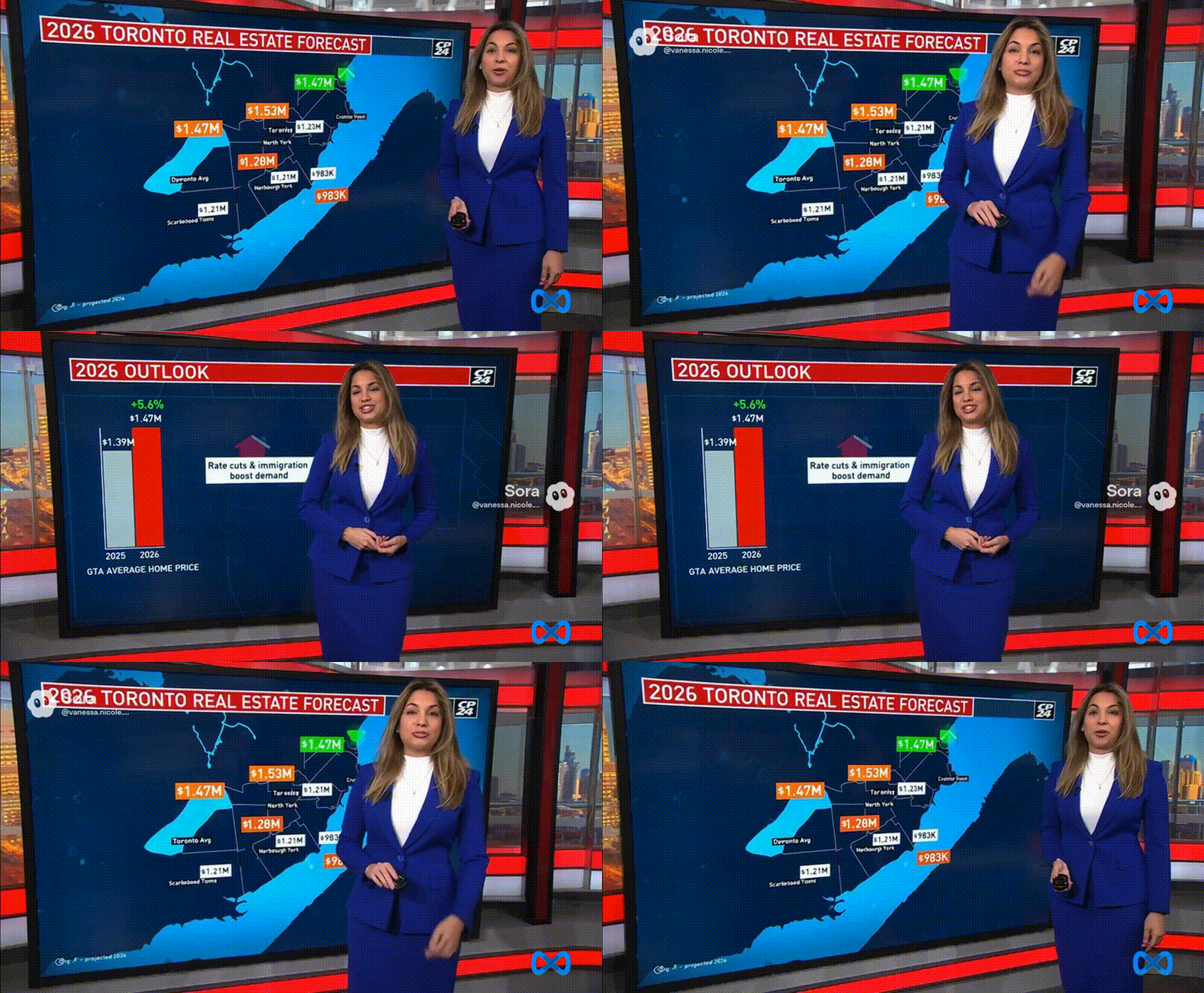
Market activity is likely to remain fairly flat through the winter, with any material shift unlikely before spring. Across the GTA as a whole, modest year-over-year softness is possible. But this won’t be uniform.
The downtown core of Toronto is likely to hold relatively steady through much of 2026, supported by rental demand, population growth, and long-term desirability. At the same time, more affordable markets outside the city, particularly those with improved transit access or growing employment hubs, could see stronger relative price performance.
Nothing dramatic. No sudden spikes. But in some cases, better momentum than the GTA average.
In 2026, location, livability, and price point will matter more than broad market trends.
4. “Waiting It Out” Will Finally Reach Its Expiry Date
For many people, the waiting game ends in 2026.
This applies to sellers waiting for 2022 prices to return, buyers waiting for a dramatic correction, and owners who bought at the peak and are now five years into ownership and ready for change. It also applies to families who grew during the pandemic and people who moved far from the city and are quietly done with the commute.
Eventually, the current economy stops feeling temporary and starts feeling like the new normal. When that mental shift happens, people move, even if conditions aren’t perfect.
Those who act won’t look lucky. They’ll look decisive.
5. Buyer Behaviour: It’s No Longer Economic, It’s Personal
If you’re asking “Should I buy a home in Toronto in 2026?”, you’re not alone. But the answer won’t come from headlines.
Expect more inventory, fewer chaotic bidding wars, and more time for buyers to inspect, negotiate, and think. This creates a calmer, more rational market, not a weak one.
Buyers in 2026 will fall into two camps. Those who remain cautious. And those who move forward anyway because life demands it. Promotions, separations, inheritance, burnout, opportunity. Decisions will be driven less by forecasts and more by personal thresholds.
6. Seller Strategy Will Matter More Than Ever
For sellers wondering “Is now a good time to sell a home in Toronto?”, 2026 offers clarity, but not shortcuts.
Buyers are no longer rushing. They’re comparing monthly costs, weighing lifestyle tradeoffs, and walking away from homes that feel overpriced or underprepared. Sellers who price strategically, prepare properly, and understand today’s buyer mindset will still sell well.
Sellers who insist on “testing the market” may be testing their own tolerance for waiting.
This isn’t a punishment cycle. It’s a realism cycle.
7. Toronto Condos: Selective Demand, Real Consequences
The Toronto condo market forecast for 2026 remains the most challenging segment.
Another wave of pre-construction condos sold between 2020 and 2022 is approaching completion. Many buyers paid peak prices per square foot and may struggle to qualify for financing at today’s valuations. Builders won’t absorb that risk. Buyers will either bring more cash to closing or walk away and lose their deposits.
On the resale side, condo prices are likely to hover closer to 2017–2018 levels through much of 2026. Cookie-cutter units will struggle. Boutique buildings and thoughtful renovations will stand out.
If you’re looking for a deeper dive into how and when this segment could recover, I break it down in more detail in my Toronto condo market rebound blog.
For many condo owners, this is a holding period. Meaningful upside likely belongs to 2028 and beyond.
What This Means for You
If you’re reading this and trying to decide whether to rent, buy, sell, hold, or do absolutely nothing, here’s the honest truth. This 2026 Toronto real estate forecast doesn’t reward guessing. It rewards clarity.
You don’t need perfect timing. You need a plan that fits your life, your cash flow, and your tolerance for uncertainty.
If you want to:
Talk through rent vs buy in Toronto with real numbers
Understand what your home or condo is actually worth today
Figure out whether waiting still makes sense for you
Build a strategy that doesn’t rely on blind optimism
Let’s talk. You can book a no-pressure conversation with me or reach out anytime. No sales pitch. No panic. Just clarity.
Because in this market, the smartest move isn’t being early or late.
It’s being intentional.
👉 Book a consultation or get in touch to talk Toronto real estate
—————————————————————————————————————————————————-
Quick FAQ: Toronto Real Estate in 2026
Is 2026 a good time to buy real estate in Toronto?
It depends on your life, not just the market. For buyers with stable income, realistic expectations, and a long-term plan, 2026 can be a good time to buy. The market is calmer, inventory is improving, and buyers have more room to negotiate. If you’re waiting for a dramatic crash, you may be waiting a long time.
Should I wait to buy a home in Toronto?
Waiting can make sense if you’re doing it intentionally. Waiting without a plan is where people get stuck. In 2026, many buyers will realize that “waiting it out” has an expiry date, especially as rents rise and life circumstances change. The question isn’t whether to wait, it’s what you’re waiting for.
Is renting or buying better in Toronto in 2026?
There’s no universal answer. Renting can make sense if flexibility matters or if it allows you to invest elsewhere. Buying can make sense if ownership improves your quality of life and your monthly costs are manageable. The rent vs buy decision in Toronto is now a lifestyle decision as much as a financial one.
Will Toronto home prices go up in 2026?
Price growth is likely to be uneven. Downtown Toronto is expected to hold relatively steady, while some more affordable markets outside the core may see modest gains. This isn’t a year for explosive appreciation, but it’s also not a year where prices broadly collapse.
What will happen to the Toronto condo market in 2026?
The condo market will remain selective. Well-located, well-managed buildings with good layouts will perform better than investor-heavy or cookie-cutter units. Some condo owners may need to hold longer than planned, especially those who bought in the last market peak. For many, 2026 is about patience, not profit.
Is now a good time to sell a home in Toronto?
Selling in 2026 can work very well if your home is priced correctly and prepared properly. Buyers are more thoughtful and less emotional, which rewards sellers who understand today’s market. Sellers expecting 2022 conditions may need to reset expectations or wait longer.
Will interest rates go down again in 2026?
Rates may move, but likely in small, uneven ways. We’ve already seen fixed rates tick up recently, and further volatility is possible. For most buyers and sellers, mortgage renewals and monthly payment comfort will matter more than headline rate cuts.
What’s the biggest mistake people could make in the 2026 Toronto market?
Making decisions based on fear, headlines, or outdated expectations. The market has changed. The people who do best in 2026 will be the ones who focus on clarity, cash flow, and how a move actually fits into their life.