
Every November, Black Friday convinces us that everything should be 40% off. Toronto real estate didn't get the memo. If you're a buyer looking for the next best thing to a deal, house hacking might be it.

This week, your inbox is drowning in doorbusters. There's half off sneakers, a free tote with every candle and a mattress that has apparently been on sale since 2019. Everyone is hunting for a deal, and the internet has a hack for finding every one of them.
Toronto sellers, meanwhile, aren't feeling the holiday spirit. Buyers can negotiate more than they could a few years ago, but nobody is knocking $200,000 off a detached house in the west end because it's the last Friday in November, and no seller has ever thrown a robot vacuum in with the keys.
There is one hack that actually works, though, and it lives downstairs. What if the more expensive house was actually the better deal? I don't mean because it has a nicer kitchen or a walk-in closet that could accommodate your entire personality. I mean because part of the house pays you every month.
What Is House Hacking?
House hacking is a real estate strategy where you buy a property, live in one part of it and rent out another part to help cover your mortgage and carrying costs. In Toronto, house hacking usually means buying a house with a basement apartment, living upstairs and renting the lower unit to a tenant.
Torontonians were doing this long before anyone gave it a name. The name just made it sound like a life hack instead of a landlord gig.
Instead of inventing two hypothetical properties, I found two detached houses on the very same Toronto street that sold in 2026. They're almost identical in size above grade, but one sold for $75,000 more and comes with a basement apartment.
Two Detached Houses on the Same Toronto Street
We're heading to Pendrith Street in Toronto's Dovercourt-Wallace Emerson-Junction neighbourhood. 7 Pendrith Street sold for $1,400,000 in July 2026, and 190 Pendrith Street sold for $1,325,000 in March 2026.
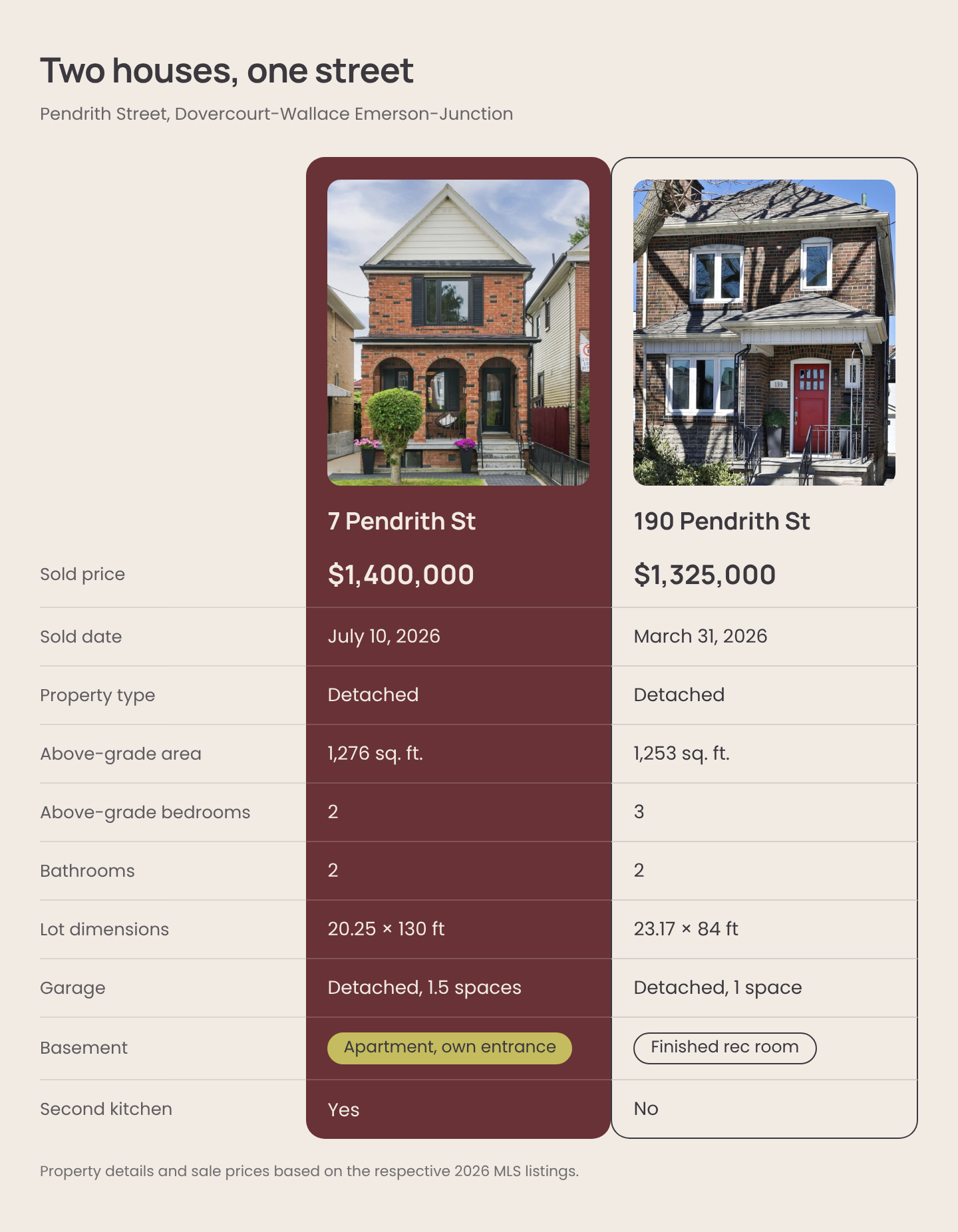
That's a difference of 23 square feet above grade, which is less than 2%. You lose more floor space than that to a sectional.
They're not twins, though. 7 Pendrith has a much deeper lot and a slightly bigger garage, 190 Pendrith has an extra bedroom above grade, and the two sold more than three months apart. The basement apartment doesn't get credit for the entire $75,000, but it does get to make its case.
Is a Basement Apartment Worth $75,000 More?
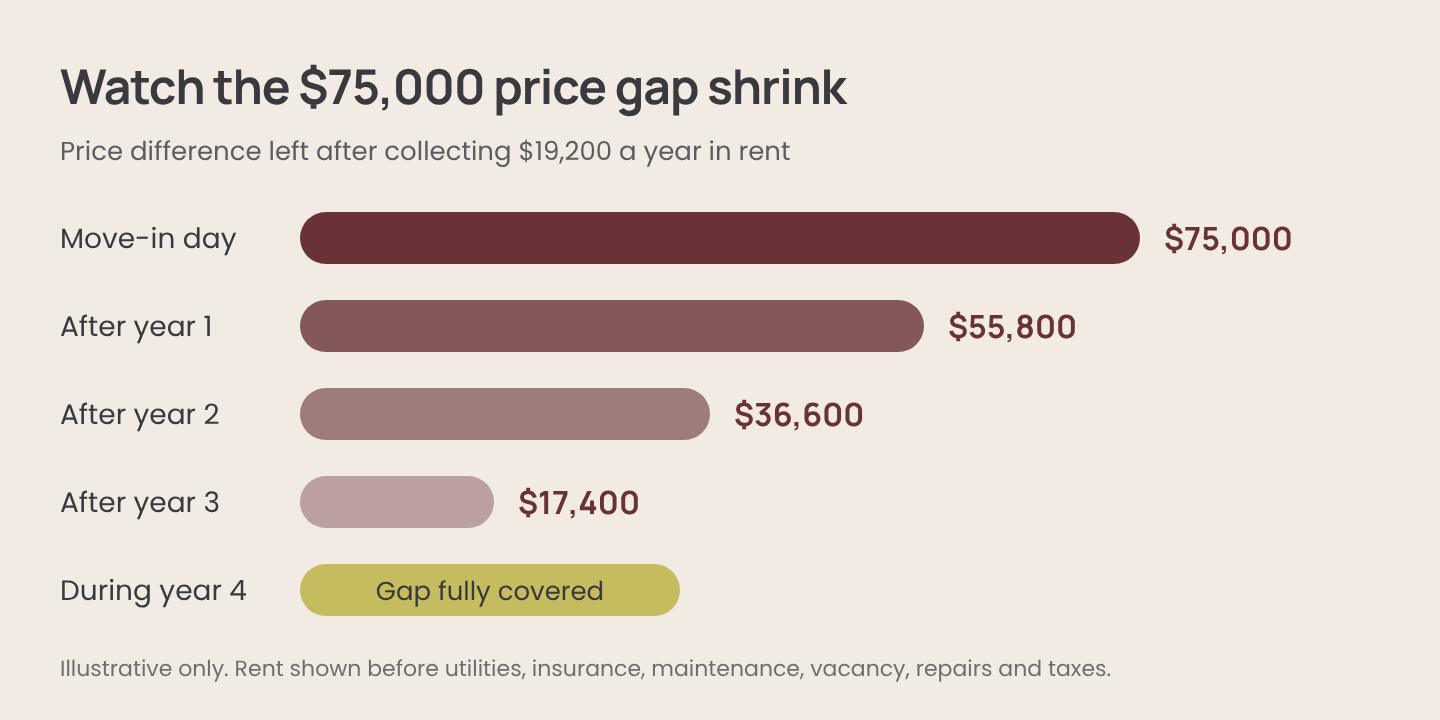
The buyer of 7 Pendrith paid $75,000 more than their neighbour down the street, so let's put that basement to work. For this example, I'm assuming the one-bedroom suite rents for $1,600 a month, or $19,200 a year.
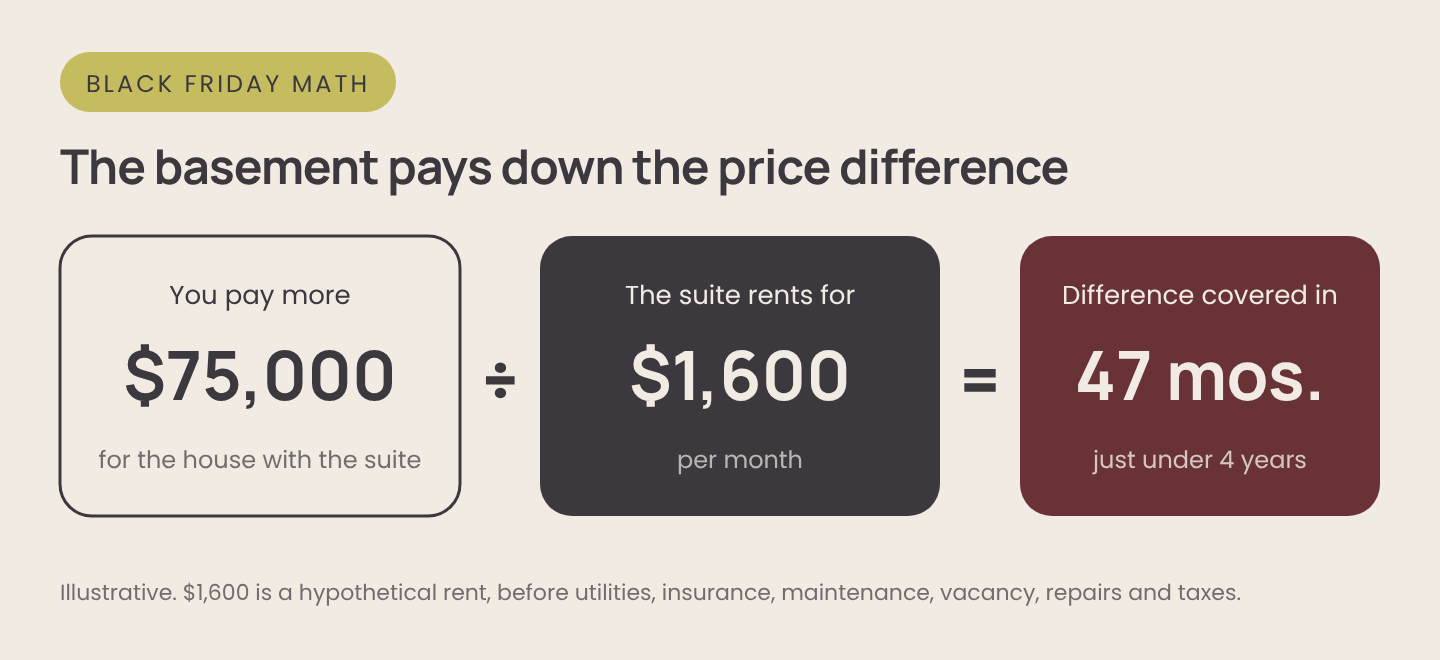
Divide the $75,000 premium by $1,600 a month and the basement covers the difference in about 47 months, or just under four years. After that, every rent cheque is money the buyer at 190 Pendrith simply doesn't have coming in.
What Does $75,000 More Cost You Each Month?
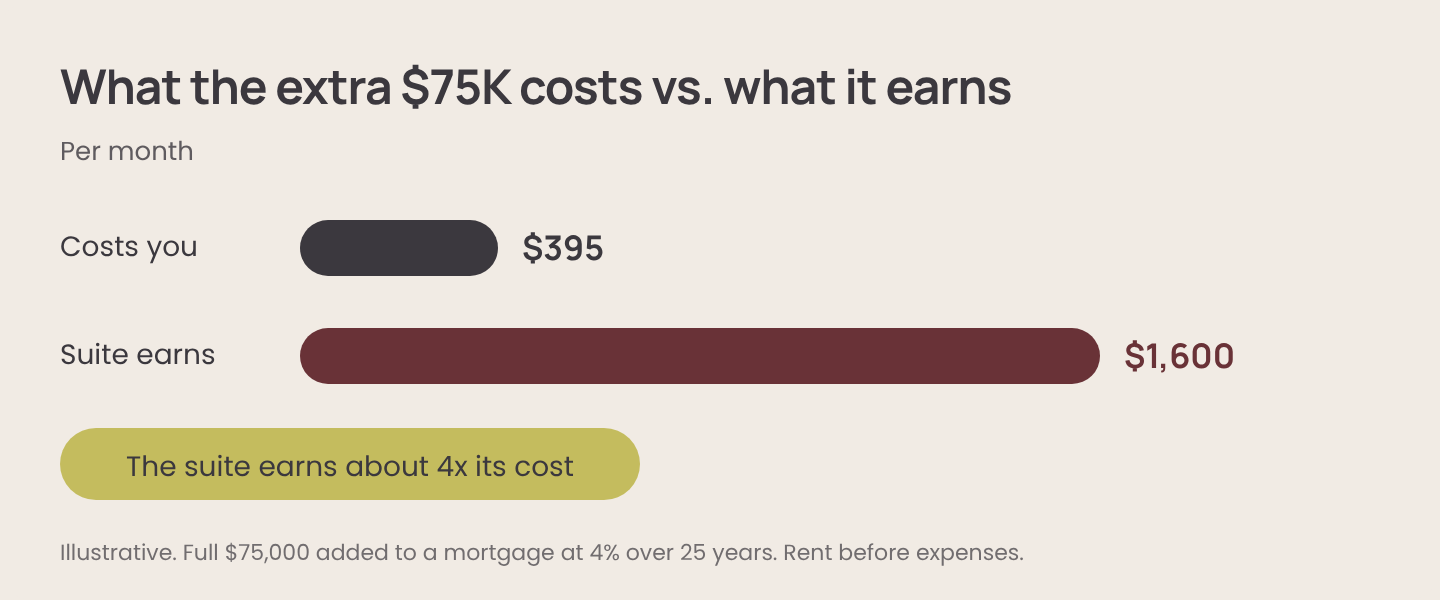
Most buyers don't pay the difference in cash, so here's the monthly version. Add the full $75,000 to your mortgage at 4% over 25 years and your payment goes up by about $395 a month. The suite could bring in $1,600, which means the basement earns roughly four times what it costs you. No doorbuster on earth can say that.
Every good deal has fine print, so here's mine. The $1,600 is my assumption, not a signed lease, and rent isn't profit. Hydro, repairs, insurance, vacancy and taxes all take a bite before anything lands in your pocket.
Still, it's worth asking yourself whether you're shopping by the price tag or by what the house can do for your household budget. You can probably guess where I land.
The Edge of the Coin: Build Your Own Basement Apartment
Every coin has three sides, and most house hacking articles forget about the edge. You don't have to buy the house with the suite. You can buy the house that could have one.
The buyer of 190 Pendrith paid less and got a finished basement. In Toronto, secondary suites are permitted in most houses, Ontario allows up to three residential units on many urban residential lots and the City of Toronto now permits multiplexes of up to four units across its residential neighbourhoods. You'll still need building permits and a unit that meets zoning, building and fire code requirements.
The financing has caught up too. Since January 15, 2025, homeowners have been able to use an insured mortgage refinance to help fund a secondary suite, borrowing up to 90% of the home's post-renovation value on homes up to $2 million, with amortizations of up to 30 years. The suite has to be self-contained, meet local bylaws and stay off Airbnb.
Building one takes permits, contractors and a healthy tolerance for drywall dust. Sometimes, though, the cheaper house is the one with more upside.
House Hacking Isn't Just About Collecting Rent
Most buyers shop with one question in mind: how much house can I afford? House hacking adds a second one: how much of this house can help pay for itself?
For someone buying their first freehold home, that second question can mean more savings, more breathing room or simply not eating toast for dinner in year one.
Your tenant may also chip in for hydro, gas and water, depending on the lease, the meters and Ontario tenancy rules. Put it in writing, especially in an older house where everything runs through one panel.
Then there's the part nobody posts on Instagram. Your tenant pays rent, but your furnace doesn't care. Appliances die, tenants move out and repairs never wait for a convenient month. A tenant won't erase the cost of owning a home. They'll help you carry it, and in a city where modest detached houses sell for well over a million dollars, that help is worth a lot.
Could Basement Rent Help You Qualify for a Mortgage?
It can. Some lenders will count part of the rent from a secondary suite when they decide how much you can borrow.
Just know that your lender will not be as excited about that $1,600 as you are. How much they count varies by lender and product, so have a mortgage broker review the property and the expected rent before you fall in love with a listing.
Not Every Basement Apartment Is a Legal Rental Unit
Here's where I put my real estate agent hat on. A second kitchen and a side door do not make a legal secondary suite, and plenty of Toronto listings advertise basement apartments that have never met a building inspector.
The listing for 7 Pendrith calls the lower level a basement apartment with a separate entrance and second kitchen, and also an in-law suite with income potential. I haven't verified its legal status for this article, and that's exactly the homework I'd do before writing an offer.
I'd check the permits and approvals, fire separation, exits, ceiling heights, windows and ventilation, plus what it would cost to bring the unit up to code. And if the suite comes with a tenant, the tenant usually comes with the house, along with their lease, their rent and their rights under Ontario law.
The City of Toronto's guide to secondary suites spells out the permit requirements. Read it before you buy, because a five-figure renovation discovered after closing is not the kind of surprise anyone wants under the tree.
Remember, You're Also Becoming a Landlord
House hacking means sharing your home with another household. You'll hear their music, they'll hear your blender and you'll all share a backyard.
For some people, that's a perfectly fair trade for $19,200 a year. For others, giving up the home office, the guest suite or the basement gym costs more than any rent cheque is worth.
You'll also take on obligations under Ontario's Residential Tenancies Act, from maintenance and repairs to rent increases and ending a tenancy. The numbers have to work, and so does the lifestyle.
What About Taxes on Basement Rent?
Yes, the CRA wants to hear about your new side hustle. Rental income generally needs to be reported, but some expenses may be deductible, including eligible portions of mortgage interest, property taxes, insurance, utilities and repairs. Your mortgage principal isn't deductible, and neither is the cost of your own living space.
Renting part of your principal residence can also affect your taxes when you sell, depending on how the space was used, whether you made structural changes and whether you claimed capital cost allowance. The CRA's rental income guide covers the basics. An accountant covers the rest, and they cost a lot less than a surprise from the CRA.
Your House Hacking Shopping List
Every good Black Friday shopper has a list. Here's mine for anyone eyeing a house with a basement apartment in Toronto.
Confirm whether the basement apartment is a legal secondary suite, and ask for permits.
Check ceiling height, fire separation, exits, windows and ventilation.
Find out whether there's an existing tenant, the current rent and the lease terms.
Pull comparable leases to see what similar units actually rent for nearby.
Understand how hydro, gas and water are metered and shared.
Ask your mortgage broker how much of the rent a lender will recognize.
Budget for maintenance, vacancy, insurance and repairs before you count a dollar of profit.
Talk to an accountant about rental income and your principal residence.
Be honest with yourself about whether you want to be a landlord.
My Take: The Cheapest House Isn't Always the Most Affordable One
So which Pendrith buyer won? Honestly, both of them did, and that's the point.
At 190 Pendrith, the buyer got three bedrooms above grade, a finished basement and the whole house to themselves for $1,325,000. At 7 Pendrith, the buyer paid $75,000 more for a deeper lot and a basement that can pay its own way. They had different plans, and they probably ended up as two very happy households.
What these two sales prove is that the price tag rarely tells the whole story.
Every house has three numbers: what it costs to buy, what it costs to own and what it can do for you. Most buyers only look at the first one.
I'd never tell you to pay a premium for a second kitchen without checking the market value, the realistic rent, the condition and the legal status. A stove in the basement isn't a business plan. But if you're open to having someone downstairs help pay for your home, house hacking might be the smartest thing you buy this Black Friday.

Frequently Asked Questions
What is house hacking in Toronto? House hacking in Toronto usually means buying a house with a basement apartment or secondary suite, living in the main part of the home and renting the other unit to help pay the mortgage and carrying costs.
Is house hacking legal in Toronto? Yes, but the rental unit must meet zoning, building code and fire code requirements, and you must follow Ontario's Residential Tenancies Act. A listing that advertises a basement apartment doesn't guarantee the unit is a legal secondary suite.
Can basement apartment rent help me qualify for a mortgage? Some lenders will count a portion of the rent from a secondary suite when you apply. How much they count varies, so speak with a mortgage broker before you shop.
Can I add a basement apartment to a house I already own? In many cases, yes. Secondary suites are permitted in most Toronto houses with the right building permits, and eligible homeowners can use an insured mortgage refinance of up to 90% of the home's post-renovation value to help pay for one.
Do I have to pay tax on basement apartment rent? Generally, yes. The CRA expects rental income to be reported, though eligible expenses such as a portion of mortgage interest, property taxes, insurance and utilities may be deductible.
Property information and sale prices are based on the respective 2026 MLS listings. The $1,600 rent is hypothetical and does not represent confirmed rental income. The monthly payment example assumes the full $75,000 is added to a mortgage at an illustrative 4% annual rate using Canadian compounding over a 25-year amortization, and excludes mortgage default insurance, land transfer tax and closing costs. Actual outcomes depend on financing, rent, vacancy, maintenance, insurance, utilities, repairs, taxes and other factors. This article is general information, not legal, tax or mortgage advice.
