
I Look at Toronto Real Estate Every Day. Here Are 10 Things I Wouldn't Buy (and Why)
Cheap flips, disappearing views, questionable investments and condos designed for people who apparently don't cook. Here are 10 Toronto properties that would make me think twice.

I look at Toronto real estate every day. It's literally my job, and after years of touring properties, reviewing listings and digging into the details buyers don't always see, I've developed some fairly strong opinions about what makes a good purchase. Some properties are genuinely exciting. Others make me wonder whether the listing agent and I are looking at the same house.
Sometimes it's a freshly renovated property that looks suspiciously like every other flip on the market. Sometimes it's a condo with maintenance fees that seem too good to be true. And sometimes it's an investment property where the projected returns require a level of optimism usually reserved for lottery tickets.
Here's the thing: just because a property is for sale doesn't mean it's worth buying. And just because something is discounted doesn't mean it's a deal. There are plenty of properties I'd happily recommend to the right buyer at the right price, but there are also some I'd approach with considerable caution.
So, in no particular order, here are 10 types of Toronto real estate I'd be reluctant to buy with my own money, and what it would take to change my mind.
1. A Cheaply Flipped House Wearing Expensive Makeup
You know the look. White oak-inspired flooring, a waterfall countertop, black fixtures and enough pot lights to illuminate Pearson Airport. The listing calls it luxury. I call it a renovation that deserves a closer look.
I'm not against flipped houses. I'm against paying a premium for cosmetic upgrades when nobody can explain what's happening behind the drywall. Did they update the electrical? Address the plumbing? Repair the foundation? Pull the necessary permits? Or did they spend six weeks making the property look expensive enough to justify another $200,000?
The problem isn't the new kitchen. It's the assumption that a new kitchen automatically makes the entire house worth more. I'd want to see documentation, quality workmanship, appropriate permits and a thorough inspection before paying a premium. Buyers can start by checking the City of Toronto's building permit and inspection information, although additional records and professional investigation may be necessary. I'm happy to pay for good renovations, but I'm considerably less enthusiastic about financing someone's excellent taste in cabinet handles.
What would change my mind? Proper permits where required, documentation of the work, a satisfactory home inspection and a price that reflects the actual quality of the renovation. If the improvements are more than cosmetic, I'm listening.
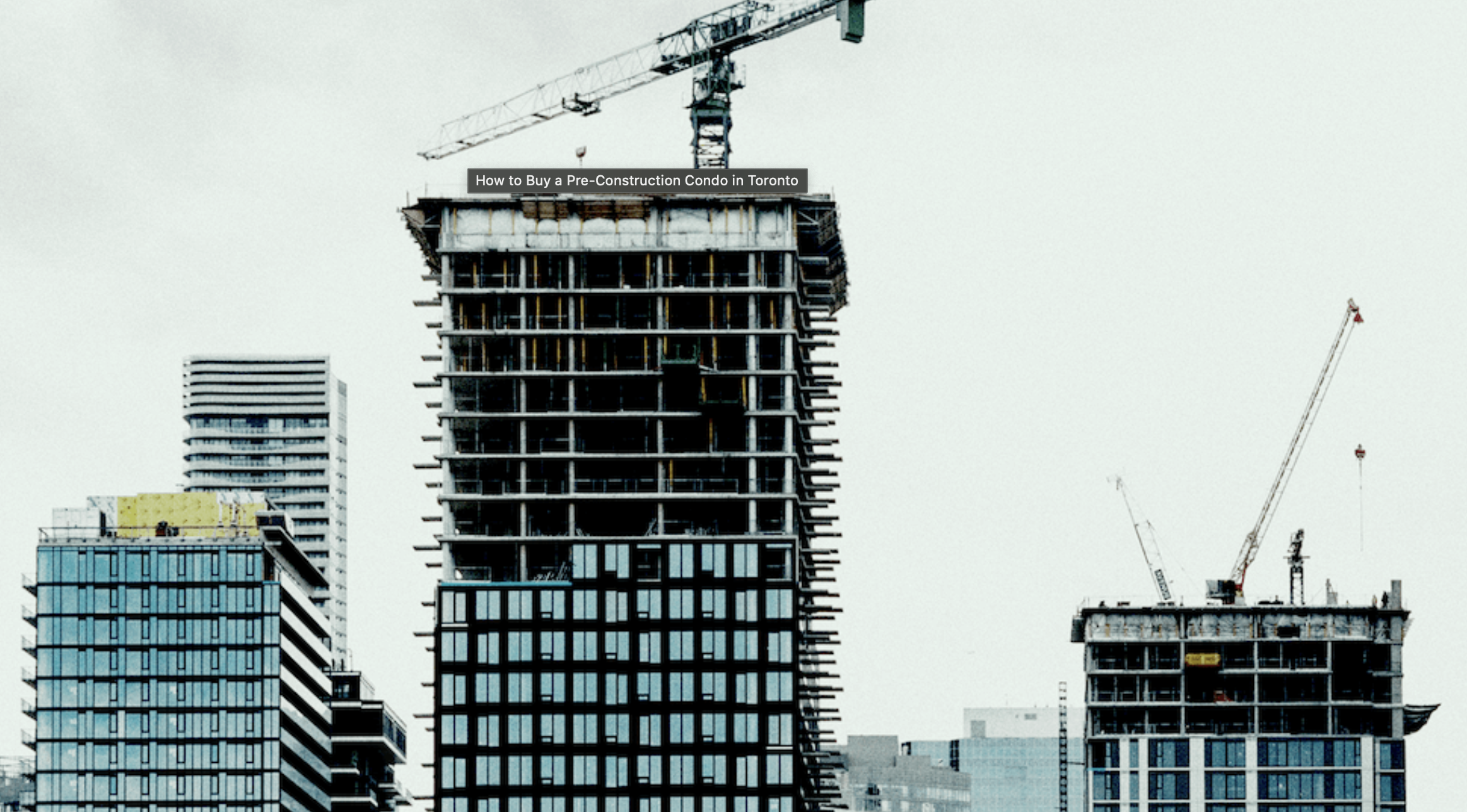
2. A Pre-Construction Condo Sold as a Guaranteed Investment
Remember when buying pre-construction in Toronto was practically considered a retirement plan? Buy a condo before it's built, wait a few years, watch the value climb and congratulate yourself on your financial genius. That strategy worked for some buyers, but it was never guaranteed, and recent market conditions have made the risks considerably harder to ignore.
Pre-construction buyers can face construction delays, unexpected closing adjustments, changing mortgage rates and appraisals that come in below their purchase price. Then there's the rental income. A developer's projected rent isn't a signed lease, and the market that exists when you sign the agreement might look very different when the building is finally ready.
I'd also want to understand the protections available if construction is delayed or the project is cancelled. Tarion explains the warranty and deposit protections available to new-home buyers, but those protections don't eliminate the financial risks associated with buying years before completion.
I'm not saying pre-construction is dead. But before buying, I'd want a purchase price supported by comparable resale properties, realistic rental projections, a clear understanding of closing costs and enough financial flexibility to handle an appraisal shortfall. The days of treating pre-construction like a guaranteed winning lottery ticket should be behind us.
What would change my mind? A purchase price that makes sense compared with resale properties, realistic rental projections and enough financial flexibility to handle delays, unexpected expenses or an appraisal shortfall. If the numbers still work without assuming significant appreciation, that's a much more interesting conversation.
3. A Condo With a Million-Dollar View That Might Disappear
Picture this. You're standing in a condo overlooking the Toronto skyline. The CN Tower is sparkling, the lake is shimmering and the sunset is doing an excellent job of convincing you to spend another $75,000. Now look down. See that parking lot across the street? I'd like to know what's happening with it.
Toronto is constantly changing, and today's unobstructed view can become tomorrow's view of someone else's living room. But losing the view isn't even my only concern. Depending on the size and complexity of the development, you could also be looking at four to six years of construction activity outside your windows. Think early morning noise, dust, heavy machinery, blocked streets, constant deliveries and a crane becoming a permanent fixture of your skyline. Even if the finished building doesn't completely obstruct your view, spending years living beside an active construction site isn't exactly the lifestyle most buyers imagine when they're touring a beautifully staged condo.
Before paying a premium for a view, I research nearby development applications, zoning and proposed construction. One of my favourite resources is UrbanToronto's Project Database, where you can explore proposed and active developments across the city. I also check the City of Toronto's Application Information Centre, which allows buyers to search for development applications by address and review available project details.
A proposed development isn't guaranteed to be built, and construction timelines vary considerably. But understanding what's planned for the surrounding area can help determine whether that premium is justified. Because paying extra for a beautiful skyline is one thing. Paying extra to spend the next five years watching someone build a condo directly in front of it is another.
What would change my mind? A thorough review of nearby development applications, a realistic understanding of potential construction disruption and a price that reflects the risk. If I'm paying a premium for the view, I'd want some confidence in what I'm actually paying for.

4. A Condo With Suspiciously Low or Ridiculously High Maintenance Fees
Nothing gets condo buyers excited quite like low maintenance fees. And I get it. Between mortgage payments, property taxes and everything else, lower monthly expenses sound wonderful. But fees that seem too good to be true can be just as concerning as fees that make you wonder whether you're paying for the entire building.
Low fees might reflect efficient management, fewer amenities or a newer building. They might also mean the reserve fund isn't adequately prepared for major repairs, leaving owners vulnerable to significant increases or special assessments. On the flip side, extremely high fees can affect affordability and resale value, especially when the building offers little to justify the expense.
I often tell buyers that purchasing a condo is a little like buying shares in a business. You're buying into a corporation, so who's running it? How are they managing the money? Are they making responsible financial decisions? And most importantly, do you trust them to protect your investment? Because when a condo corporation is poorly managed, it's the owners who ultimately pay for it, sometimes through higher fees, special assessments and declining property values.
Before buying, I'd want to understand what the fees cover, review the financial statements and reserve fund study, and investigate upcoming major expenses. The Condominium Authority of Ontario explains what buyers should look for in a status certificate, and I've covered more warning signs in my guide to Toronto condo maintenance fees in 2026.
What would change my mind? A financially healthy condo corporation, responsible management, a properly funded reserve and fees that make sense for the building. Low fees aren't always a bargain, and high fees aren't always a problem. It's the financial health of the corporation behind them that really matters.
5. A Beautiful House in a Location Nobody Wants to Talk About
Some Toronto listings deserve awards for creative photography. Beautiful kitchen, gorgeous backyard, perfectly staged living room and not a single photograph of the six lanes of traffic directly outside.
A great renovation doesn't change the location. Busy streets, train tracks, neighbouring commercial properties, awkward lots and other location compromises can affect both your enjoyment of a home and its resale value. And while some buyers genuinely don't mind traffic noise or value convenience over tranquillity, these compromises should still be reflected in the price.
I wouldn't automatically rule out a house because of its location, but I'd want to compare it carefully with similar properties in more desirable settings. If a seller expects the same price as a comparable home on a quiet, tree-lined street, we might have a problem. For buyers still deciding where to focus their search, my guide to the best Toronto neighbourhoods for first-time buyers in 2026 explores what different budgets can realistically buy. You can replace the kitchen, renovate the bathroom and completely transform the backyard. Moving the entire house three streets over is considerably more complicated.
What would change my mind? A meaningful discount compared with similar homes in better locations, and a buyer who's genuinely comfortable with the compromise. A busy street isn't necessarily a dealbreaker, but paying quiet-street prices for it might be.
6. A Condo Designed for Instagram Instead of Actual Humans
Toronto has produced some truly impressive condo floor plans over the years. Impressive in the sense that I occasionally wonder whether the architect has ever owned furniture.
I'm talking about kitchens with approximately eleven inches of counter space, bedrooms where the bed blocks the closet, living rooms that are technically living rooms but are also the hallway, and those mysterious triangular corners that somehow count toward the square footage. Small condos can be fantastic, and I'd happily take a well-designed 550-square-foot unit over a poorly designed 700-square-foot one, but functionality matters.
Can you fit a proper sofa? Is there enough storage? Can two people comfortably move around? Is there somewhere to prepare dinner that isn't directly on top of the stove? These are the questions I'd be asking before getting distracted by beautiful finishes and a clever furniture arrangement in the listing photos. This becomes especially important when shopping at lower price points, something I explore in my guide to Toronto condos under $500,000. A condo isn't just somewhere to take photographs. It's somewhere you have to live, ideally without using your dining table as permanent kitchen counter space.
What would change my mind? A layout that genuinely works for the buyer's lifestyle and a price that reflects any compromises. Square footage matters, but usable square footage matters more.
7. A Brand-New Property Where the Paperwork Doesn't Match the Marketing
New construction comes with a certain appeal. Everything is shiny, nobody has scratched the floors, the appliances haven't been used and it all feels wonderfully uncomplicated. Until you start asking for the paperwork.
This is particularly important with newly built or converted multi-unit properties in Toronto. If a property is being advertised as a legal fourplex, I want documentation confirming that it can lawfully operate as four separate residential units. I want to review the relevant permits, approved plans, inspection records and applicable occupancy requirements, and I want to know whether what's been built actually matches what's been approved.
Just because current zoning permits certain types of development doesn't automatically mean an existing property has received all the approvals required for its construction and use. The City's building permit and inspection resources are a useful starting point, but buyers may need additional records, professional verification and legal advice to establish the property's approved use. A beautiful new building is wonderful, but a beautiful new building with the correct paperwork is considerably more reassuring.
What would change my mind? Documentation confirming the property's lawful use, required approvals and completed inspections, with any discrepancies properly resolved. If I'm buying four legal units, I want proof of four legal units.
8. An Investment Property That Only Makes Money If It Appreciates
Here's a sentence that makes me nervous: "It's a great investment because Toronto real estate always goes up." First of all, no, it doesn't. Not every year, not every neighbourhood and certainly not every individual property.
Let's say you're considering a $600,000 condo that could rent for $2,400 a month. That's $28,800 in annual gross rental income before maintenance fees, property taxes, insurance, repairs, vacancy, financing costs and everything else that comes with being a landlord. Suddenly, that fantastic investment might not look quite so fantastic.
Negative cash flow doesn't automatically make a property a bad investment. Mortgage principal repayment and long-term appreciation can contribute to returns, and different investors have different financial goals. But if the entire strategy depends on the property increasing significantly in value, I'd want to understand exactly what happens if it doesn't. Toronto's market doesn't move in one direction indefinitely, something I've explored in my 2026 Toronto real estate forecast. Hope is lovely, but it's not something I'd use as the foundation of an investment spreadsheet.
What would change my mind? Conservative financial projections, manageable carrying costs and an investment strategy that doesn't require Toronto prices to rise every year. I'd want to see what happens to the numbers if rents stay flat, expenses increase or the property takes longer to appreciate than expected.
9. A Multi-Unit Property With Rental Income That Looks Better on Paper
Four units, four rental incomes and one beautiful investment opportunity. At least according to the listing. Multi-unit properties can be excellent investments, but there's a big difference between gross rental income and what an owner actually keeps.
Who pays the utilities? Are the heating and cooling systems rented? What are the maintenance costs? Are the advertised rents supported by signed leases? And what about property taxes? If a newly constructed or converted property hasn't been reassessed to reflect its completed use, the current tax bill may not be a reliable indicator of future expenses. That can make a substantial difference when calculating net operating income and capitalization rates. Buyers can also consult MPAC for information about Ontario property assessments.
I'd also want to verify the legal status of every unit, review existing tenancy arrangements and investigate outstanding maintenance or building issues. A property's financial performance should be supported by verified income, realistic operating expenses and proper documentation, not just optimistic projections. Because collecting $120,000 in annual rent doesn't mean you're making $120,000, although I'm sure the listing description would love you to believe otherwise.
What would change my mind? Verified leases, realistic operating expenses, an appropriate allowance for future property taxes and financial returns supported by actual numbers. If the investment still makes sense after accounting for the less glamorous expenses, now we're talking.
10. A Tenanted Property Being Marketed as Though the Tenants Don't Exist
This one really gets me. A listing advertises incredible rental potential, but the property already has tenants paying substantially below current market rents. And somehow, we're supposed to evaluate the investment based on what the property could rent for if those tenants weren't there. Except they are there.
In Ontario, buying a tenanted property doesn't automatically give the new owner the right to raise existing rents to market rates or require tenants to leave. There are legal protections governing rent increases, tenancy termination and vacant possession. The Government of Ontario outlines tenants' rights and the rules surrounding eviction, including situations involving a purchaser's intended personal use.
For investors, this means evaluating actual rental income and existing lease obligations, not hypothetical numbers based on everyone moving out tomorrow. For buyers who intend to occupy the property themselves, understanding the legal requirements and potential timelines is equally important. I'd want to review the leases, verify the rents, understand the tenancy situation and obtain appropriate legal advice before purchasing. Because tenants aren't an inconvenient footnote in a real estate investment. They're people with legal rights, and those rights don't disappear when the property changes hands.
What would change my mind? Full transparency about the existing tenancies, verified rental income, a purchase price supported by the property's actual circumstances and a clear understanding of Ontario tenancy laws. If the numbers work with the tenants who are already there, rather than imaginary future tenants paying imaginary future rents, it's worth considering.
So, Would I Actually Refuse to Buy All of These Properties?

Not necessarily, and that's probably the most important part of this entire article. A house on a busy street might be an excellent purchase at the right price. A tiny condo could be perfect for someone who values location over square footage. Even a property with significant issues can make sense when the buyer understands the risks and has the resources to address them.
The problem isn't always the property. Sometimes it's the price, sometimes it's the risk and sometimes it's the seller's expectations. Toronto real estate is expensive enough without paying a premium for problems you haven't properly investigated.
The goal isn't to find a property with absolutely no flaws. Good luck with that. The goal is to understand what you're buying, what it's actually worth and which compromises you're willing to make. If you're still working out your budget, start with my breakdown of how much income and savings you need to buy in Toronto in 2026. And if you've spotted a property with a few red flags that's been sitting on the market, you might also want to read my article about how much below asking price you can offer on a Toronto home in 2026.
Buying in Toronto? Let's Find Something Worth Buying.
Finding a property you love is the fun part. Knowing whether it's actually a smart purchase? That's where I come in.
I don't just help buyers find homes. I look at the numbers, question the asking price, investigate potential red flags and tell you when something doesn't add up. Because sometimes the best advice I can give you is to walk away.
Whether you're buying your first condo, moving up or looking for an investment property, I'd rather help you make a smart purchase than convince you to make any purchase.
Have a property in mind, or just starting your Toronto real estate search? Let's talk before you make your next move.
Frequently Asked Questions
What are the biggest red flags when buying a house in Toronto?
Poor-quality renovations, unpermitted work, water damage, location disadvantages and asking prices unsupported by comparable sales are all worth investigating. A home inspection and appropriate due diligence can help buyers identify risks before purchasing.
Are pre-construction condos a bad investment in Toronto in 2026?
Not necessarily. However, buyers should carefully evaluate the purchase price, financing requirements, closing costs, realistic rental income and the possibility that market values may change before completion.
Are low condo maintenance fees a red flag?
Not automatically. Low fees can reflect efficient management or fewer included services. Extremely high fees also warrant investigation. Buyers should review the reserve fund, financial statements, upcoming repairs and potential special assessments before deciding whether the fees are justified and sustainable.
How can I find out if a Toronto condo's view will be blocked?
Research nearby development applications through the City of Toronto and explore proposed or active projects through UrbanToronto. Keep in mind that development plans can change and an unobstructed view is rarely guaranteed. Buyers should also consider the potential disruption from years of nearby construction.
Is buying a tenanted property in Toronto risky?
It introduces additional legal and financial considerations. Buyers should review existing leases, verify rental income and understand Ontario tenancy rules, particularly if they intend to occupy the property or expect future rent increases.
